
Are In Ground Trampolines Right for Your Yard?
July 17, 2026
Best In Ground Trampoline for Active Families
July 19, 2026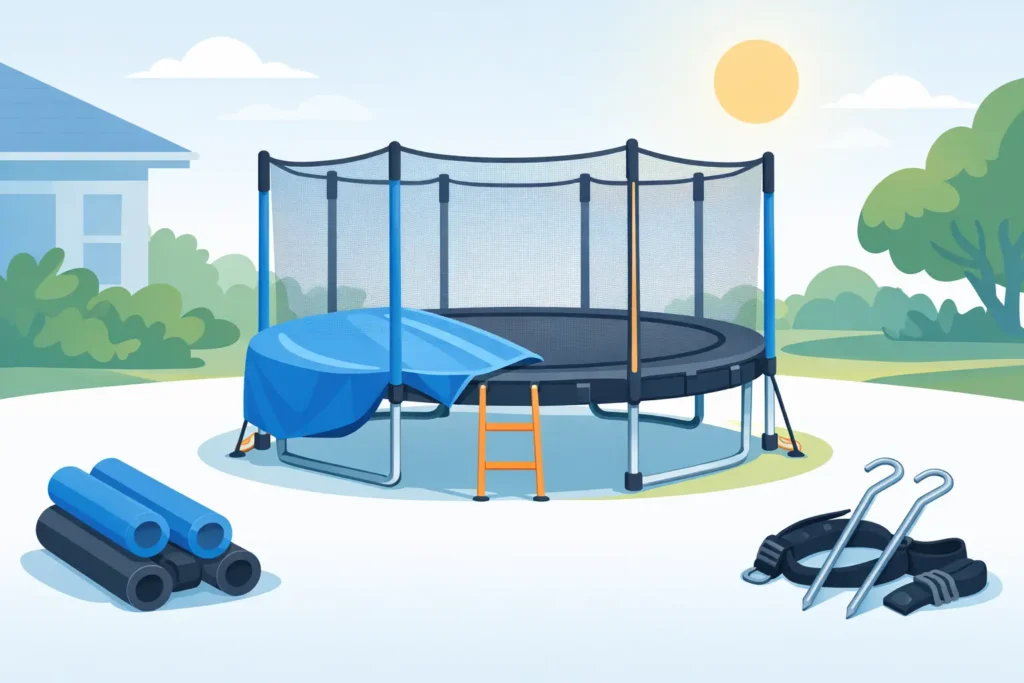
A premium in-ground trampoline changes how a backyard gets used. It becomes the place where kids burn off energy after school, teens gather with friends, and families make room for active play. The right trampoline accessories help protect that investment, support safer jumping, and keep the space looking as intentional as the rest of your landscape.
For most families, the best accessory is not the flashiest add-on. It is the one that solves a real need in your yard: a safety enclosure for active young jumpers, a weather cover for a seasonal home, or installation components that help the trampoline perform as designed for years. Start with safety and fit, then choose protection that matches your local weather and how often your family jumps.
Start With Safety-Focused Trampoline Accessories
An in-ground trampoline has a clean, low-profile appearance, but the jumping surface still needs thoughtful protection around it. A quality safety enclosure is often the first accessory families should consider, particularly when younger children will use the trampoline or when several kids are likely to play in the backyard at once.
A well-designed enclosure creates a clear jumping zone and helps prevent accidental falls off the edge of the mat. Look for a system made for your exact trampoline model and size. The fit matters. A round 10-foot trampoline needs different enclosure dimensions than a 14-foot round model or an 11-foot by 8-foot rectangular trampoline. Trying to adapt a generic enclosure can leave gaps, create uneven tension, or interfere with the way the trampoline sits within its retaining wall.
Material quality matters just as much as size. Strong netting, secure entry points, padded support poles, and corrosion-resistant hardware are all signs of a system built for family use. Premium systems with galvanized, rust-resistant steel are especially valuable in regions with wet springs, humid summers, coastal air, or regular snow.
An enclosure does not replace household rules. One jumper at a time is still the safer choice, especially for children of different ages and sizes. Parents should also make sure the entry is closed before jumping begins and inspect padding, netting, and attachment points on a regular schedule.
Padding Is a Small Detail With a Big Job
Frame and edge padding helps cover the areas around the jumping mat where a foot, hand, or knee could otherwise make contact with the structure. On an in-ground installation, padding also helps create a more finished visual transition between the trampoline and its surrounding surface.
Choose pads made for outdoor exposure, with durable covers that resist fading and moisture. If existing pads are cracked, thin, torn, or no longer stay securely in place, replace them before the next busy jumping season. A trampoline can still look usable while its protective padding has lost much of its value.
Weather Covers Protect the Parts You Cannot Always See
Rainwater, leaves, pollen, acorns, branches, and UV exposure all take a toll on outdoor equipment. A properly fitted weather cover is one of the most practical trampoline accessories for homeowners who want their backyard feature to stay cleaner and last longer.
For in-ground trampolines, covers do more than keep the jumping mat free of debris. They can reduce the amount of cleanup needed after storms and help shield the mat and pads from prolonged sun exposure. That means less time sweeping out leaves before a Saturday afternoon jump session and more time enjoying the trampoline.
The right cover depends on your climate and installation. A breathable cover can be useful where moisture is common because it helps avoid trapping excess condensation. In areas with frequent high winds, secure attachment points are essential. A loose cover can collect water, tear, or become a backyard nuisance after a storm.
Never assume a cover eliminates all maintenance. Remove standing water, clear heavy snow according to the manufacturer’s guidance, and check that debris has not blocked the drainage space beneath the trampoline. In-ground systems rely on good drainage to protect the jumping area and surrounding installation over time.
Seasonal Protection Is Different From Daily Cleanup
A lightweight cover may make sense if your family uses the trampoline regularly and simply wants to keep leaves and dirt off between jump sessions. A more protective seasonal cover is better for extended periods of nonuse, such as winter travel or a long stretch of harsh weather.
There is a trade-off: covering and uncovering the trampoline takes a few minutes, and some families will not do it every day. That is why it helps to be realistic. Select a weather protection routine your household will actually follow. For many homeowners, using a cover during storms, leaf-drop season, and extended absences delivers the most benefit without turning backyard fun into a chore.
Choose Accessories Made for Your Trampoline’s Shape and Size
Fit is a safety issue, not just a cosmetic one. An accessory made for a 12-foot round trampoline will not necessarily fit a 12-foot model from another manufacturer, and it should never be assumed to fit a rectangular system. Frame design, mat dimensions, spring configuration, retaining walls, and enclosure mounting points can all vary.
Before ordering, confirm the brand, model, shape, and exact dimensions of your trampoline. If you have an AkrobatUSA or Capital Play in-ground system, choose components designed specifically for that system whenever possible. Purpose-built accessories preserve the intended performance and clean integrated look of the installation.
This is particularly important when replacing a mat, safety net, pads, springs, or hardware. These are not interchangeable parts in the way a backyard chair cushion might be. The correct replacement component supports proper tension, reliable attachment, and the safe bounce families expect from a premium trampoline.
For homeowners still selecting a trampoline, consider accessories at the same time as the main system. A larger round model, such as a 12-foot or 14-foot trampoline, may suit a busy family with multiple children, but it also needs a correctly sized enclosure and cover. A compact rectangular format, such as 10-foot by 6-foot, can be a smart choice for a narrower yard, yet its accessories must match its distinct shape exactly.
Installation Accessories Help Preserve the In-Ground Design
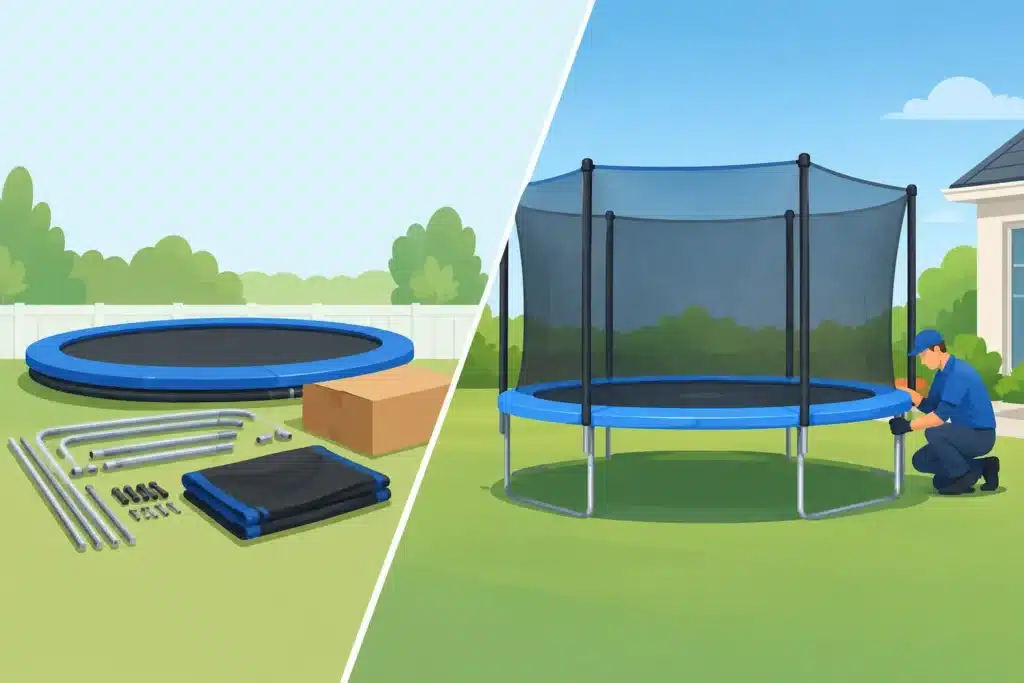
The beauty of an in-ground trampoline is that it feels like part of the backyard rather than equipment placed on top of it. That result depends on proper installation, including excavation, drainage, retaining-wall components, and a level finished surface around the trampoline.
Some installation-oriented accessories are easy to overlook because they are not the parts your children see when they jump. They may include retaining-wall systems, ventilation or drainage considerations, secure mounting hardware, and finishing elements around the perimeter. Yet these details help keep the installation stable and reduce the risk of water buildup below the mat.
Drainage deserves special attention. Every yard handles rain differently. Clay-heavy soil, sloped lots, areas near downspouts, and regions with substantial rainfall may require additional planning before installation. A trampoline pit that holds water can affect long-term performance and create avoidable maintenance concerns. It is worth discussing your yard conditions before the excavation begins, rather than trying to correct a water issue afterward.
If your landscape design includes turf, pavers, mulch, or a patio edge around the trampoline, plan a finished border that remains safe underfoot. The goal is an attractive, low-profile feature with clear access and no loose landscaping material likely to end up on the jumping mat.
Build a Simple Care Routine Around Your Accessories
High-quality materials give a trampoline a strong foundation, but a quick check before use keeps small issues from becoming bigger ones. Families do not need an elaborate maintenance program. They need a consistent one.
At the start of the season, inspect the mat for wear, make sure pads are firmly attached, check enclosure netting and zippers, and look over visible galvanized hardware for damage or movement. After major storms, remove debris and inspect the cover before folding it away. If a component has torn, stretched, or cracked, pause jumping until it is repaired or replaced.
It also helps to keep the jumping area clear. Toys, balls, garden tools, and furniture do not belong on the trampoline, even when it is covered. A clean surface supports safer play and prevents unnecessary damage to the mat or pads.
Buy for the Backyard You Actually Have
The best trampoline accessory plan reflects your family, your climate, and your yard. A household with toddlers may prioritize an enclosure and dependable edge padding. Families in areas with strong sun, falling leaves, or winter weather may get the most immediate value from a fitted weather cover. Homeowners building a permanent in-ground recreation space should put drainage and model-specific installation components at the top of the list.
Choose accessories that are made to work together, not products that merely appear close enough. That decision protects the performance, safety, and polished backyard look that made an in-ground trampoline worth choosing in the first place. With the right protection in place, your family can spend less time managing equipment and more time making memories outside.