
Trampoline Accessories That Protect Your Investment
July 18, 2026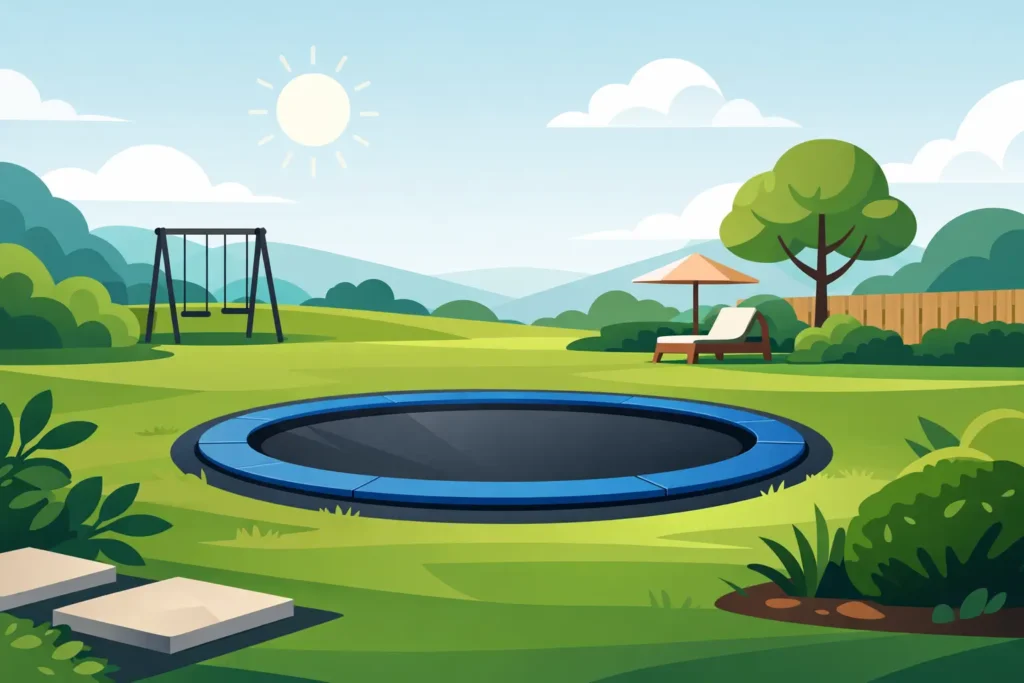
A trampoline can become the place where your kids burn off energy after school, teenagers gather with friends, and the whole family gets moving outside. In ground trampolines make that experience feel like a planned part of the backyard rather than a large piece of equipment sitting above it. Their low-profile look is a major draw, but the real decision comes down to safety, space, drainage, and choosing a system built to last.
For families making a long-term backyard investment, an in-ground model can be an excellent choice. It is not a shortcut installation, though. The best results come from matching the trampoline to your yard, preparing the pit correctly, and treating the safety enclosure as an essential part of the system.
Why Families Choose In Ground Trampolines
The first advantage is visual. Because the jumping surface sits near lawn level, an in-ground trampoline has a cleaner, more integrated appearance than a traditional above-ground model. It can fit naturally beside a patio, pool area, play space, or landscaped border without dominating the view from every window.
The lower entry height also makes getting on and off easier, especially for younger children. There is no ladder to climb, and the trampoline feels more accessible for everyday play. That does not mean children should jump without supervision or safety rules, but the lower profile can make the backyard layout feel more welcoming and intentional.
Families also appreciate how an in-ground installation encourages regular outdoor activity. A quality trampoline gives kids a reason to put down devices, move their bodies, practice coordination, and spend time outside. For active adults, it can also support low-impact cardio and a quick movement break close to home.
Still, low profile should never be mistaken for low risk. A trampoline remains a trampoline. One jumper at a time, an appropriate safety enclosure, adult guidance for younger children, and clear house rules all matter. Premium systems use durable mats, dependable springs or spring alternatives, rust-resistant galvanized steel frames, and designed-for-purpose retaining components because safety starts with materials as well as behavior.
Start With the Right Size and Shape
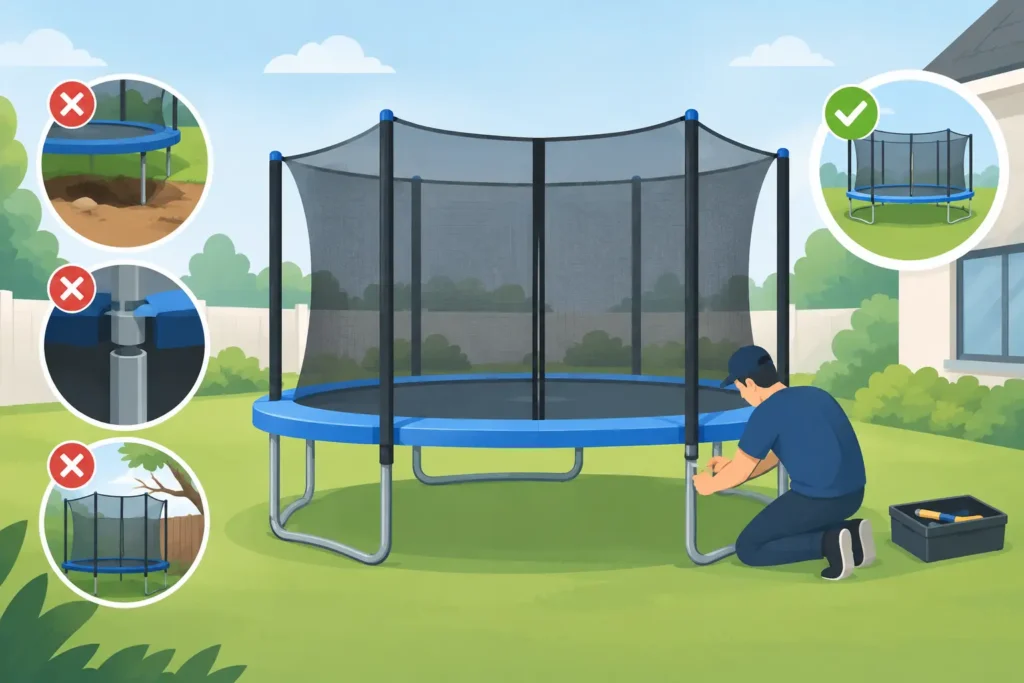
The best trampoline size is not simply the largest one that can fit in an open patch of grass. You need room for the unit, its enclosure, safe access, excavation, and a clear area around it. Avoid placing it directly beneath trees, near fences, against hardscape, or too close to pools, outdoor kitchens, and play structures.
A round trampoline is often the right fit for families who want a classic jumping experience and a flexible backyard footprint. A 10-foot round model can work well in more compact yards or for younger children. A 12-foot round option gives a growing family more comfortable jumping room, while a 14-foot round trampoline is better suited to larger yards, bigger kids, and frequent use.
Rectangular in-ground trampolines are a smart choice when your landscape has a long, narrow area or when you prefer a more tailored architectural look. Formats such as 10 feet by 6 feet and 11 feet by 8 feet can fit neatly along a patio edge or in a defined recreation zone. They are also appealing for jumpers who want a more consistent bounce across the mat.
Before choosing, measure more than once. Mark the proposed footprint with landscape paint, rope, or a garden hose, then walk around it. Consider gates, mowing paths, sprinkler heads, drainage routes, and the way your family actually uses the yard. A size that looks perfect on paper can feel cramped once you account for circulation and surrounding features.
Think About Who Will Use It Most
A younger child may be perfectly happy with a smaller round system, while a household with several children or teens will usually appreciate more jumping room. If the trampoline will become the neighborhood gathering spot, choose a size that supports your expected use without sacrificing the safe clear space around it.
It also helps to think ahead. Children grow quickly, and a premium trampoline is designed for years of use. Buying the smallest option solely to save space can lead to regret if your family outgrows it after a season or two. On the other hand, a very large trampoline in a tight yard can make the entire outdoor area less enjoyable. The right choice balances today’s needs with the life you expect your backyard to have over the next several years.
Installation Is Where the Investment Pays Off
An in-ground trampoline needs a properly excavated pit beneath the jumping mat. This space allows the mat to move freely and provides the depth required for the intended bounce. The pit dimensions, wall treatment, and air-flow needs should follow the manufacturer’s installation instructions for your specific trampoline model.
Drainage deserves special attention. Water collecting under a trampoline can create muddy conditions, damage the installation area, and shorten the life of surrounding components. A well-planned installation accounts for your soil type, local rainfall, slope, and runoff patterns. Depending on the site, that can mean a gravel base, drainage pipe, a sump solution, or another appropriate method recommended by an experienced installer.
Do not assume every flat-looking lawn is ready to excavate. Call utility-location services before digging and check for irrigation lines, electrical wiring, septic components, tree roots, and underground drainage. If your property has a high water table, heavy clay soil, a steep grade, or an unfamiliar irrigation layout, professional site guidance is worth the cost.
The retaining wall around the pit matters, too. It helps keep soil from moving into the open space under the trampoline and supports a clean, stable perimeter. A premium in-ground system is engineered as a complete installation, not as an above-ground trampoline dropped into a hole. That distinction affects safety, durability, bounce quality, and the finished appearance.
Plan the Location Before You Order
Choose a spot with enough sun and visibility from the home. Parents often prefer a location they can see from the kitchen, family room, or patio. A visible trampoline makes casual supervision easier and helps it remain part of family life instead of becoming a forgotten corner of the yard.
At the same time, think about seasonal conditions. Low areas that stay wet after storms may require more extensive drainage work. Areas beneath mature trees may mean constant leaf cleanup, falling branches, and root complications. A slightly less obvious location with dry ground and good access can be the better long-term choice.
Safety Features Are Not Optional Extras
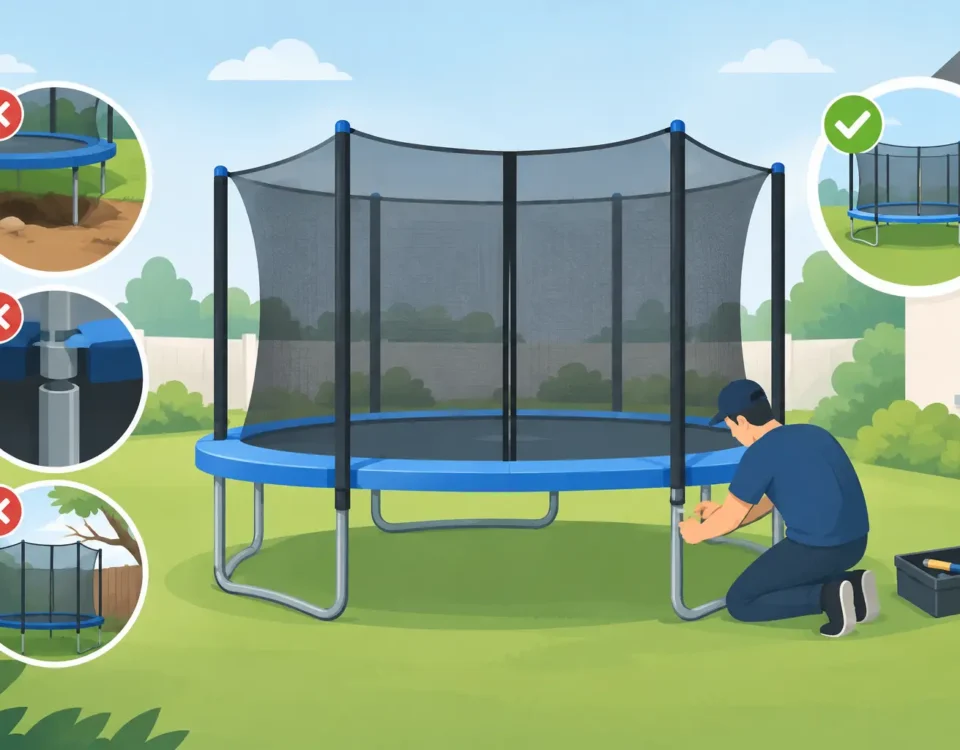
A safety enclosure should be part of the plan from the beginning. It helps establish a controlled jumping area and provides a physical boundary during active play. Look for an enclosure designed to work with your trampoline’s size and shape, with durable netting, secure entry, padded support structures, and a stable attachment system.
Quality construction matters because this equipment lives outdoors. Galvanized, rust-resistant steel helps the frame stand up to rain, humidity, and changing temperatures. Strong materials, secure frame connections, durable jumping surfaces, and a meaningful warranty all contribute to a trampoline that can handle years of family use.
Accessories can protect that investment as well. A properly fitted weather cover helps keep leaves, debris, and excess moisture out of the jumping area when the trampoline is not in use. Regular inspections are equally valuable. Check the mat, enclosure net, padding, frame connections, and surrounding ground periodically, especially after severe weather or winter conditions.
Set family rules early: one jumper at a time, no flips unless a trained adult has determined they are appropriate, no roughhousing, and no jumping when the mat is wet. These rules may not sound exciting, but they help protect the fun that makes a trampoline worth having.
Is an In-Ground Model Worth It?
For homeowners who value a polished backyard design, dedicated outdoor activity, and long-term durability, an in-ground trampoline can be worth the additional planning and installation cost. It becomes a destination in the yard, not a seasonal toy that gets ignored after the novelty fades.
The trade-off is clear: you are committing to excavation, drainage preparation, and a permanent location. Renters, families planning to move soon, or homeowners who frequently redesign their yards may prefer an above-ground option. But if you are creating a backyard meant for years of birthdays, weekend play, and everyday movement, the permanence can be a benefit.
Lets Buy Trampolines helps families compare premium round and rectangular options built for that kind of lasting use. Choose a size that gives your jumpers room to enjoy themselves, build the installation around proper drainage and safety, and give your family a backyard feature they will be excited to use every day.