
In Ground Trampoline Excavation Requirements
July 26, 2026
Adult In-Ground Trampoline Exercise: A Smart Workout
July 28, 2026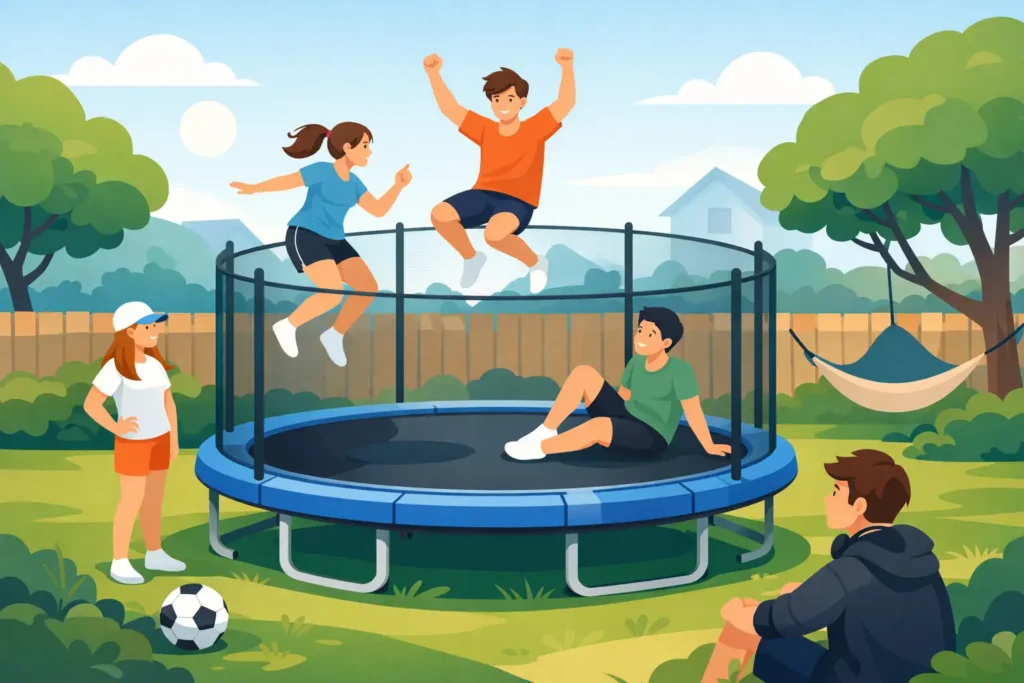
Teenagers do not use a trampoline like toddlers do. They jump higher, stay out longer, invite friends over, and quickly expose the limits of a small or lightly built backyard setup. The best trampoline for teenagers backyard use needs room for confident movement, a safety system that matches their energy, and materials built to handle years of regular use.
For many families, an in-ground trampoline is the right answer. It creates a clean, low-profile recreation space that looks intentional in the landscape while giving active teens a place to move, practice skills, and spend more time outside. Choosing well starts with an honest look at how your teenagers will use it, how many jumpers your household expects, and how much open yard you can dedicate to the installation.
What Teenagers Need From a Backyard Trampoline
A teenager may be close to adult height, but that does not mean every trampoline is an appropriate fit. Their longer stride, higher bounce, and greater body weight make jumping space and frame quality especially important. A premium trampoline should feel stable under energetic use rather than strained or crowded.
Size matters first. A 10-foot round in-ground trampoline can be an excellent choice for one teen at a time in a more compact yard. It offers a meaningful jump area without taking over the property. A 12-foot round is often the sweet spot for families who want more room for a growing teen and occasional supervised use by siblings. For larger yards, households with multiple active kids, or teens who want the broadest round jumping surface, a 14-foot model provides a more generous experience.
Shape changes the feel of the jump, too. Round trampolines naturally guide jumpers toward the center, which is useful for family recreation and general backyard play. Rectangular models provide a longer, more consistent jump path and can fit neatly into narrower landscape zones. An 11-foot by 8-foot or 10-foot by 6-foot rectangle can be a smart choice when your teen wants a more athletic feel but your yard does not have space for a large round system.
The right choice is not simply the biggest trampoline available. It is the model that gives one jumper enough usable space, leaves room for a proper safety enclosure, and fits your yard without crowding fences, patios, trees, or utility areas.
Best Trampoline for Teenagers Backyard Use: Start With Safety
Older kids sometimes assume they have outgrown trampoline rules. Parents know better. Teenagers may have better coordination, but their higher jumps and willingness to try bigger tricks can raise the consequences of a poor setup. The safest trampoline is one with quality construction, an enclosure designed to keep jumpers in the jumping area, and clear household expectations.
An in-ground design brings the trampoline surface closer to lawn level. That lower profile can reduce the visual bulk of a traditional above-ground frame and makes stepping on and off easier. It also creates a more polished backyard look, especially when the trampoline is placed within a planned play or recreation zone.
Do not treat the enclosure as an optional add-on for teenage users. A properly designed safety enclosure creates a defined jumping space and helps prevent a misstep from becoming a fall off the side. Look for durable netting, secure attachment points, padded supports, and a dependable entry system. The frame should use rust-resistant galvanized steel so it can stand up to changing seasons and years of outdoor exposure.
The simplest safety rule remains one of the most valuable: one jumper at a time. A larger trampoline gives a teen more room to move, but it does not make simultaneous jumping risk-free. Set expectations early about one-at-a-time use, no roughhousing, and no unsupervised flips unless a qualified coach has taught the skill and you are comfortable with the activity.
Choose a Size That Fits the Way Your Family Lives
Before falling in love with a particular diameter or rectangular format, map out the installation area. Measure the intended location and consider the full footprint of the trampoline, safety enclosure, drainage needs, and surrounding clearance. A beautiful in-ground installation should feel like part of the yard, not like an obstacle placed in the middle of it.
A 10-foot round model works well when one teenager is the primary user and space is limited. It is also a practical option for families who want to preserve room for a patio, pool, garden, or pet area. The trade-off is straightforward: it is less forgiving if multiple children want to use the trampoline throughout the day, even if they take turns.
A 12-foot round provides a strong middle ground. It is large enough to feel exciting for teens yet manageable for many suburban backyards. If your family expects the trampoline to become a daily after-school destination, this size often delivers the long-term value parents want.
A 14-foot round deserves consideration when you have a spacious lawn and several children who will rotate through the trampoline. It offers more freedom for a taller jumper and can remain relevant as younger siblings grow. It also requires a larger excavation area and more careful planning, so it is best for homeowners ready to make the trampoline a permanent backyard feature.
Rectangular formats are worth a close look for athletic teens or landscape-conscious homeowners. Their straight sides can align well with a fence line or side-yard recreation area, while the longer jumping lane suits controlled practice and movement. The correct rectangular size depends heavily on the available width, so measure carefully rather than assuming a rectangle automatically saves space.
Premium Materials Pay Off During the Teen Years
A trampoline that is fine for occasional small-child play may not be the right long-term choice for a teen household. Older users place more demand on the jumping mat, springs, frame connections, and enclosure. This is where premium materials and a strong warranty become more than product details – they protect your investment and support safer, more reliable family use.
Look for a heavy-duty galvanized steel frame that resists rust, especially in regions with humid summers, snow, coastal air, or frequent rain. Strong frame construction helps the trampoline maintain its shape and stability over time. Commercial-grade materials in the mat, padding, and netting can also make a noticeable difference when the trampoline becomes part of your family’s weekly routine rather than an occasional weekend activity.
Weather protection deserves attention as well. A quality weather cover helps protect the jumping surface from leaves, dirt, and seasonal debris when the trampoline is not in use. It is particularly helpful for families who travel often or use the trampoline less during part of the year. A cover does not replace routine inspection, but it can help keep the system cleaner and ready for the next good jumping day.
Plan the Installation Before You Buy
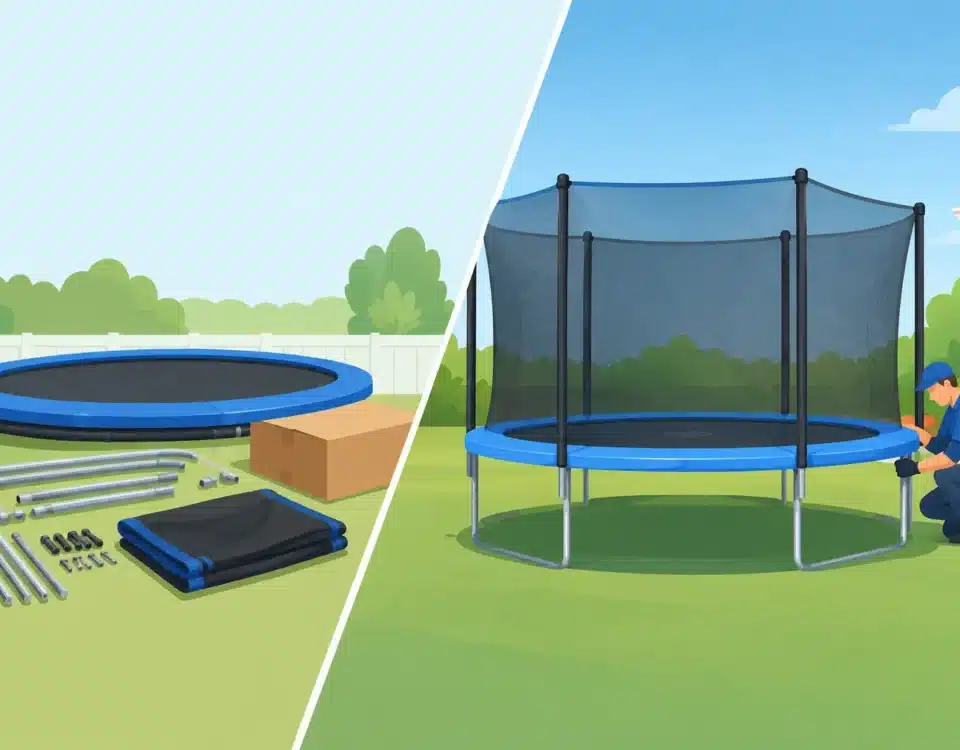
In-ground trampolines require excavation, drainage planning, and careful site preparation. That work is part of what gives the finished system its integrated appearance and low-profile appeal. It is also why families should make installation decisions before the trampoline arrives, not after.
Choose a location with open sky above the jumping area. Avoid low branches, overhead structures, and areas where water naturally collects after rain. The site should be away from hard surfaces and should leave enough room around the enclosure for normal yard activity. If you are unsure about soil conditions, drainage, or the best placement, speak with an experienced installer or contact the trampoline team before placing your order.
Think beyond the excavation itself. Plan how lawn equipment will move around the finished installation, where debris will collect, and whether future landscaping changes could affect access. These details help the trampoline remain a welcome feature rather than a maintenance headache.
Make the Backyard a Place Teens Want to Be
The best backyard recreation investment is one that keeps earning its place after the first burst of excitement. For teenagers, a premium in-ground trampoline can be an easy reason to step away from screens, get moving after school, and spend time with friends and siblings outdoors.
Give them a trampoline with enough room, a dependable enclosure, durable rust-resistant materials, and a location that feels like it belongs in your yard. When the setup is planned for the teenagers they are now, not the little kids they used to be, it can become the place where ordinary afternoons turn into the family memories you will be glad you made room for.