
How to Choose a Trampoline for Multiple Children
September 16, 2026
How to Protect Trampoline Padding in Every Season
September 20, 2026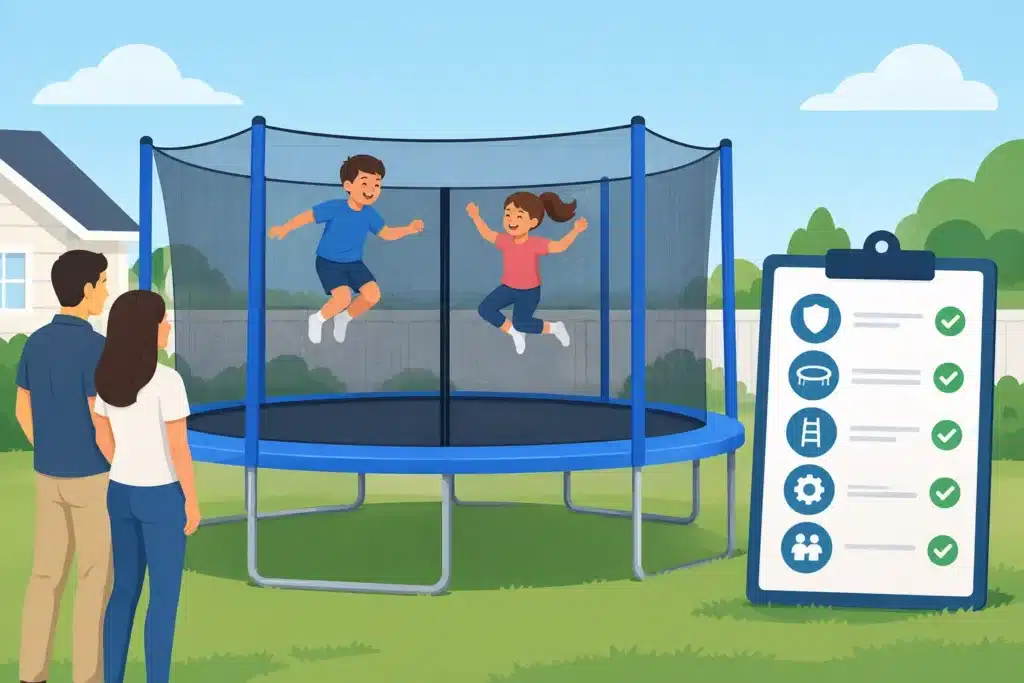
A trampoline can become the most-used part of the backyard – the place where kids burn energy after school, siblings invent games, and teens get outside without being asked twice. But a premium in-ground trampoline is not an impulse purchase. This trampoline buyer checklist helps you make a confident choice based on safety, space, installation, and the way your family will actually use it.
Start With the Backyard, Not the Product Photo
A trampoline may look perfectly sized online and still be wrong for your yard. Before choosing a round or rectangular model, measure the open area where it will be installed and consider the full safety zone around it. You need more than the dimensions of the jumping surface. Leave clear space away from fences, trees, patio furniture, swing sets, retaining walls, and overhead branches.
For an in-ground system, the site also needs to support excavation. A relatively level part of the yard is usually easier and more cost-effective to prepare than a sloped location. Think about drainage early, too. A trampoline pit should not become the lowest point where stormwater collects. If your yard has heavy clay soil, a high water table, or a slope that directs runoff toward the intended location, plan for professional site advice before excavation begins.
Placement affects daily use as much as installation. Many families prefer a location visible from the kitchen, family room, or patio so adults can keep an eye on play. At the same time, avoid putting the trampoline directly beneath messy trees or in a spot where water routinely pools.
Choose a Shape That Fits How Your Family Jumps
Round trampolines are a natural choice for many families. Their shape tends to guide jumpers toward the center, which works well for general backyard play and younger children. A 10-foot round model can suit a more compact yard or a smaller household, while 12-foot and 14-foot options give active families more room to move.
Rectangular trampolines create a different jumping experience. They provide a longer, more defined jumping area and can be a smart fit for narrow or carefully planned yards. Sizes such as 10-foot by 6-foot and 11-foot by 8-foot work especially well when a round footprint would crowd landscaping or patio space. They also appeal to older children, teens, and adults who want a more consistent bounce for exercise, skill-building, and active play.
Bigger is not automatically better. A larger trampoline needs more excavation, more clearance, and more backyard real estate. Choose the largest size that gives your family room to jump safely without compromising the rest of the yard.
Put Safety Equipment at the Center of the Decision
Safety should never be an accessory considered after the trampoline arrives. A quality safety enclosure helps keep jumpers within the intended play area and should be part of the original purchase plan, especially for homes with younger children or frequent neighborhood visitors.
Look for an enclosure designed to work with the exact trampoline model and installation style. The net should be securely supported, properly tensioned, and easy for adults to inspect. A good system creates a protected jumping space without making entry awkward or leaving gaps where a child could slip through.
The frame, pads, and spring system deserve the same attention. Premium systems use strong, galvanized steel to resist rust and hold up through changing seasons. Thick protective padding should cover the springs and frame edges, while materials should be made for repeated outdoor use rather than one short summer of play.
Set family rules before the first jump, not after the first close call. One jumper at a time is the safest approach, particularly when users vary widely in age or size. No flips without appropriate skill and supervision, no roughhousing, and no jumping when the surface is wet. The best equipment supports safer play, but active adult guidance still matters.
Use This Trampoline Buyer Checklist Before You Order
A few minutes of planning can prevent the expensive frustration of choosing a model that does not fit the property or the family. Confirm these details before making your final decision:
- Measure the trampoline location, including a clear buffer around the full perimeter.
- Decide whether round or rectangular shape better fits your space and intended use.
- Match the jumping area to your children’s ages, number of users, and expected frequency of play.
- Include a compatible safety enclosure, protective pads, and weather cover in the budget.
- Review the excavation depth, drainage needs, soil conditions, and access for installation equipment.
- Check frame construction, rust resistance, warranty coverage, and replacement-part availability.
This is also the moment to think ahead. A trampoline selected for a preschooler may need to serve a teenager within a few years. Families who expect frequent use often benefit from choosing a size and build quality that will continue to feel right as children grow.
Understand What In-Ground Installation Requires
The low-profile look of an in-ground trampoline is one of its biggest advantages. It blends naturally into the landscape, avoids the visual bulk of an above-ground frame, and can make access easier for younger jumpers. That integrated appearance, however, requires thoughtful preparation below ground.
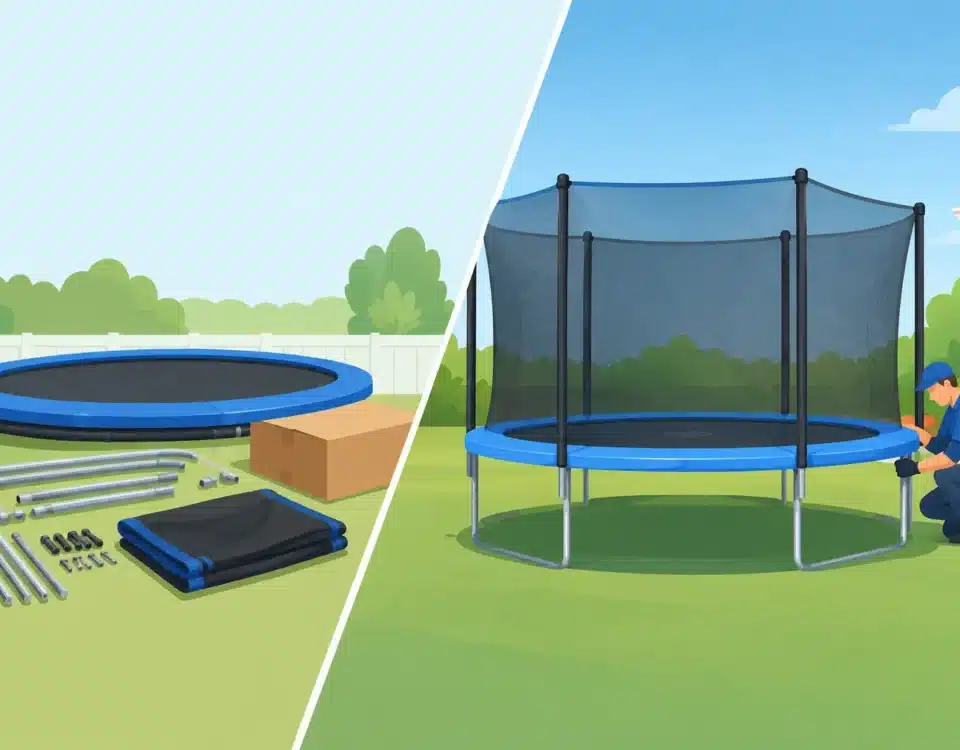
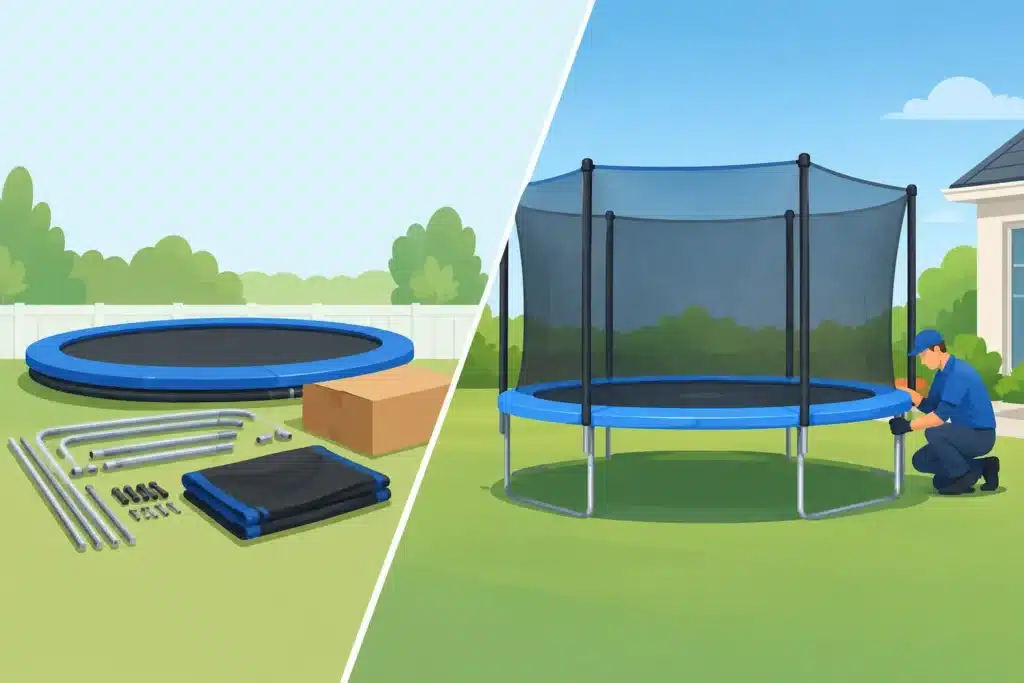
Installation typically involves excavating a pit to the dimensions required by the manufacturer, shaping the sides correctly, and creating a stable base. Airflow beneath the jumping mat is essential for proper performance, so the pit cannot simply be a hole with a trampoline dropped into it. Drainage is equally essential. Depending on the property, the plan may include a drainage layer, drain pipe, or another method for moving water away from the pit.
Some homeowners have the tools and experience to manage parts of the project themselves. Others prefer to hire a landscaper, excavator, or contractor. The right path depends on soil, terrain, local conditions, and your comfort level with site work. Ask for installation requirements before scheduling excavation, because a pit that is too shallow, too deep, or poorly drained can create avoidable problems.
Do not forget access. A contractor may need a route through a side gate or across part of the yard for equipment and materials. Protect irrigation lines, underground utilities, and landscaping before work begins. Calling for utility locating service is a practical step before any digging starts.
Buy for All-Season Durability
A premium trampoline should be built for real backyard conditions: hot sun, summer storms, fallen leaves, temperature swings, and the occasional soccer ball landing where it should not. Galvanized, rust-resistant steel gives the frame a stronger defense against moisture. Commercial-grade materials and dependable stitching help the mat, pads, and enclosure withstand repeated use.
Even durable equipment benefits from care. A weather cover can protect the jumping surface from debris and help keep the trampoline cleaner during periods of low use. It is particularly useful in fall, during vacations, or when nearby trees drop leaves, needles, or small branches. Remove standing water, inspect the enclosure and pads regularly, and check that hardware remains secure.
Winter care depends on your local climate and the manufacturer’s instructions. In areas with heavy snow or ice, owners may need to remove snow accumulation and take additional precautions. The goal is not to make maintenance complicated. It is to protect a long-term backyard investment with simple, consistent attention.
Budget for the Complete Backyard Feature
The trampoline price is only one part of the project budget. Include the safety enclosure, cover, delivery, excavation, drainage materials, installation labor if needed, and any landscape restoration around the finished system. A realistic budget makes the purchase feel far more rewarding because there are no major surprises halfway through the project.
Value is about more than finding the lowest initial price. A less expensive trampoline that needs early replacement, lacks a reliable enclosure, or is not designed for in-ground installation can cost more in frustration and upgrades. A well-built system with strong materials, clear installation guidance, and meaningful warranty support is designed to serve the family for years.
At Lets Buy Trampolines, families can choose premium in-ground options sized for compact yards, active households, and everything in between. The best choice is the one that fits your property, protects your jumpers, and gives everyone a reason to spend more time outside.
When you picture the first afternoon your family uses the finished trampoline, picture the years after that, too. Choose the system that makes room for safe play, growing kids, and the everyday backyard memories that are worth building around.