
How to Install an In Ground Trampoline Safely
July 20, 2026
Best Cover for an In-Ground Trampoline in Winter
July 22, 2026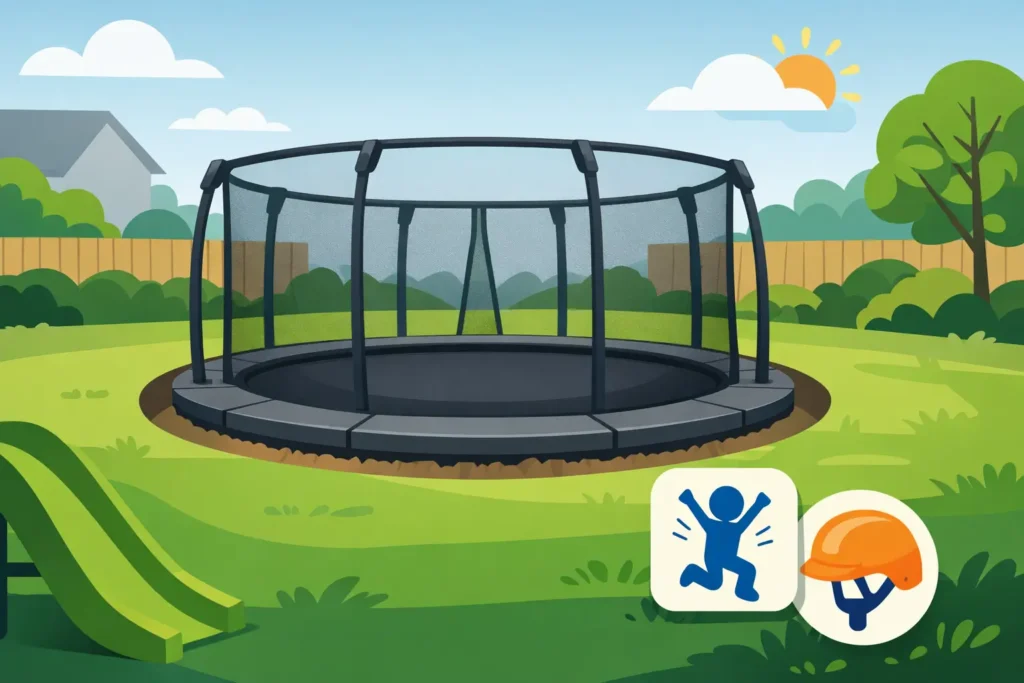
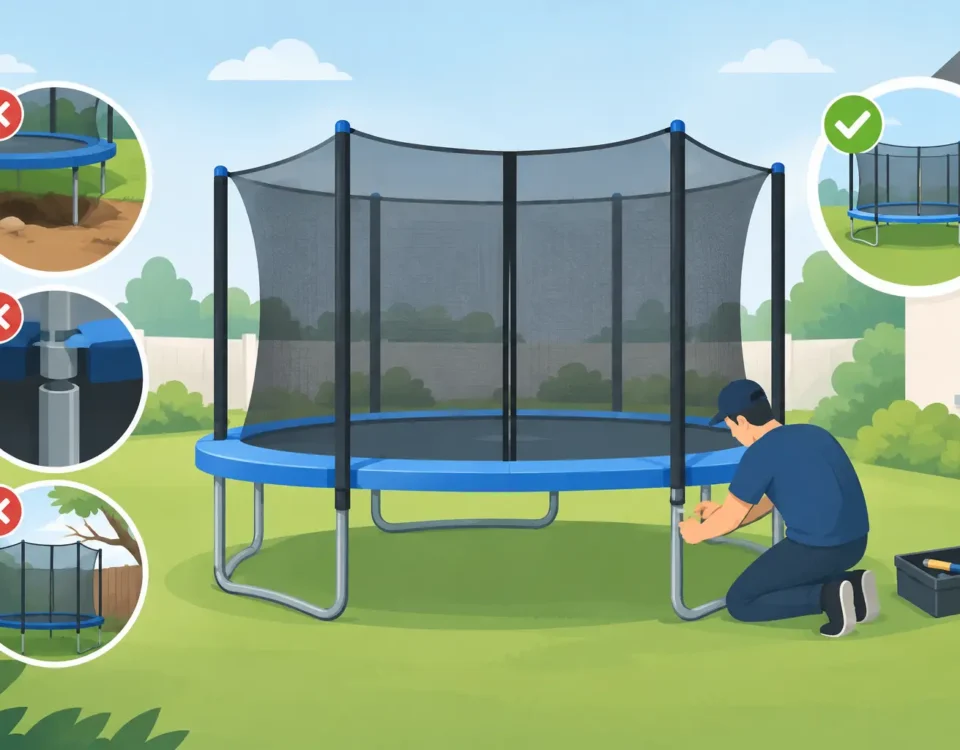
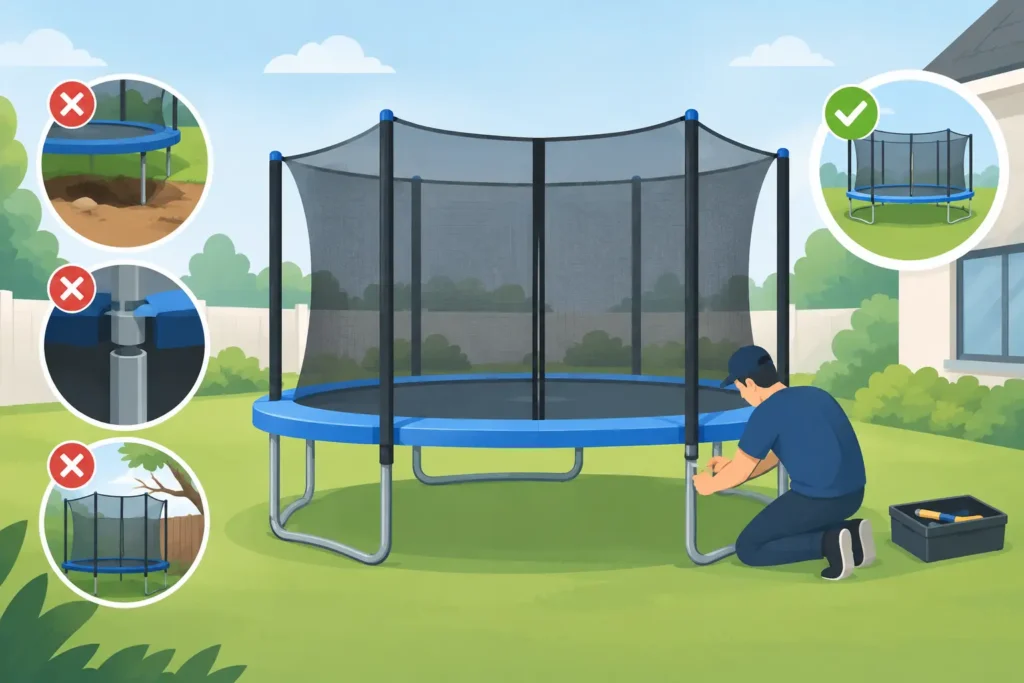
A trampoline set flush with the lawn looks cleaner, feels easier for kids to access, and can become the backyard feature everyone uses. But the lower profile does not replace the need for an in ground trampoline safety enclosure. The enclosure is the system that helps keep enthusiastic jumpers on the mat, gives parents clearer boundaries, and makes daily play feel more controlled.
For families investing in a premium in-ground trampoline, safety should be designed into the plan from the beginning – not treated as an accessory to add later. The right enclosure must fit the exact trampoline model, work with the installation layout, and stand up to years of sun, rain, active kids, and frequent use.
Why an In Ground Trampoline Safety Enclosure Matters
An in-ground trampoline removes the high step-up of a traditional above-ground frame. That is a real advantage for smaller children, for older kids coming and going during play, and for a backyard landscape that needs to stay open and attractive. Yet the jumping surface still creates height, momentum, and the possibility of an off-center landing.
A quality enclosure creates a visible, physical boundary around the jumping area. When a child loses balance near the edge, the netting is there to help redirect them toward the mat rather than allowing them to leave the trampoline. It also gives parents a clear rule that is easy to understand: jumping happens inside the enclosed space.
The enclosure is especially valuable when siblings, neighborhood friends, and children of different ages use the trampoline. It cannot make unsafe behavior safe, and it does not eliminate the need for adult supervision. It does, however, add a meaningful layer of protection during the normal slips, awkward landings, and bursts of excitement that come with active outdoor play.
What a Quality Safety Enclosure Should Include
Not all nets, poles, and attachment methods are built for the demands of a permanent backyard installation. A premium enclosure should be designed as part of the trampoline system, with components that fit securely and preserve the intended bounce and clear jumping space.
Strong netting and secure entry
Look for durable, UV-resistant netting that holds its shape through long summers outdoors. The mesh should be fine enough to create a dependable barrier while still allowing parents to see clearly into the trampoline. Visibility matters. You want to check on younger children from the patio or kitchen window without a blocked view.
The entry point deserves equal attention. A secure, easy-to-use door or zipper system helps keep the enclosure closed while the trampoline is in use. Teach children to close it every time they enter or exit. It is a small habit that supports safer routines.
Padded poles positioned outside the jumping area
An enclosure needs support, but those supports should not crowd the jumping zone. Well-designed systems position poles around the perimeter and cover them with protective padding. This helps keep hard structural components away from active jumpers.
The padding should be weather-resistant and securely fastened. Loose or deteriorated padding is not just unattractive – it can expose the parts it is meant to cover. During routine checks, inspect pole padding for tears, fading, shifting, or straps that no longer hold firmly.
Frame connections made for the exact model
A safety enclosure is not a one-size-fits-all purchase. Round 10-foot, 12-foot, and 14-foot trampolines have different perimeter measurements, and rectangular systems require their own purpose-built design. An enclosure that does not match the frame can sag, create gaps, or place unnecessary stress on connection points.
Choose a system made for your trampoline’s shape and size. This is particularly important with in-ground installations because the frame, retaining wall, drainage plan, and enclosure supports all need to work together. A properly matched setup looks better, performs better, and avoids the frustration of trying to adapt parts that were never meant to fit.
Match the Enclosure to Your Family and Backyard
The best trampoline size is not automatically the largest one your yard can hold. Think about who will use it, how often they will jump, and how much open space you want around it. A 10-foot round model can be an excellent fit for younger children and smaller yards. A 12-foot or 14-foot round trampoline gives growing families more jumping room, while rectangular options can suit narrower spaces or families who prefer a longer, more controlled jumping lane.
Your enclosure should follow that same decision. It needs enough interior clearance for jumpers to move naturally without feeling boxed in, while still maintaining a tight, stable perimeter. If your children are teenagers, frequent jumpers, or likely to invite friends over, prioritize a size and enclosure combination that gives them room to play without crowding.
Keep the surrounding landscape in mind, too. Plan for clear space away from trees, fences, patio furniture, grills, retaining walls, and hard surfaces. The enclosure is a critical safety feature, but it should not be asked to compensate for a poorly chosen location. A clean, open placement gives everyone more room to approach, enter, and supervise the trampoline comfortably.
Installation Details That Affect Enclosure Performance
In-ground trampoline projects require more preparation than setting a frame on level grass. Excavation depth, drainage, soil conditions, and retaining-wall construction all influence the long-term performance of the system. The safety enclosure should be part of these conversations before the first shovel goes into the ground.
Make sure the installation plan accounts for the enclosure’s mounting points and support poles. Depending on the design, supports may connect to the trampoline frame or require designated locations around the perimeter. Those areas need to remain stable, accessible, and correctly aligned after landscaping is complete.
Drainage is another practical concern. Water collecting beneath the jumping mat can affect the pit and may create muddy conditions around the frame. Proper drainage helps protect your investment and makes it easier to inspect the lower components of the trampoline. It also reduces the temptation to let children jump when the surface is wet or conditions are slippery.
For a high-ticket, permanent backyard feature, professional installation guidance is often worth it. If you are coordinating excavation yourself, take time to confirm measurements and enclosure requirements before ordering. Lets Buy Trampolines can help families select a compatible system and prepare for a more confident installation.
Set Rules That Make the Enclosure More Effective
Even the best materials work best alongside consistent family rules. The simplest rule is also one of the most valuable: one jumper at a time. Multiple jumpers can create unpredictable rebounds, especially when children of different sizes are sharing the mat.
Children should enter and exit through the designated opening, never climb over the net, and avoid flips or advanced tricks unless they have appropriate training and supervision. Keep shoes, toys, balls, and sharp objects off the trampoline. The mat should be dry and free of debris before anyone jumps.
Parents should also check the enclosure regularly. Walk around the perimeter and look for net tears, loose ties, worn straps, damaged pole pads, open seams, or a door closure that no longer works correctly. After a major storm, heavy snowfall, or strong winds, take a few minutes to inspect the system before returning it to use.
Weather protection helps extend the life of the trampoline and enclosure components. A properly fitted weather cover can keep leaves and debris out during downtime, though it should be used according to the product instructions and removed before jumping. Seasonal care is far easier than replacing neglected parts later.
A Safer Backyard Feature Built for Real Family Life
A premium in-ground trampoline is more than a place to burn energy after school. It can be the setting for weekend play, active family time, birthday gatherings, and the kind of outdoor memories that do not involve a screen. Choosing a properly fitted safety enclosure helps protect that experience without taking away the open, low-profile look that made an in-ground trampoline appealing in the first place.
Give your family a space that invites movement and supports smart play habits. Select the right size, plan the installation carefully, inspect the enclosure often, and keep the rules clear. Then let the backyard do what it should: bring everyone outside for another hour of fun.