

Trampoline Buyer Checklist for Safer Family Fun
September 18, 2026
Choosing a Trampoline for Daily Family Use
September 22, 2026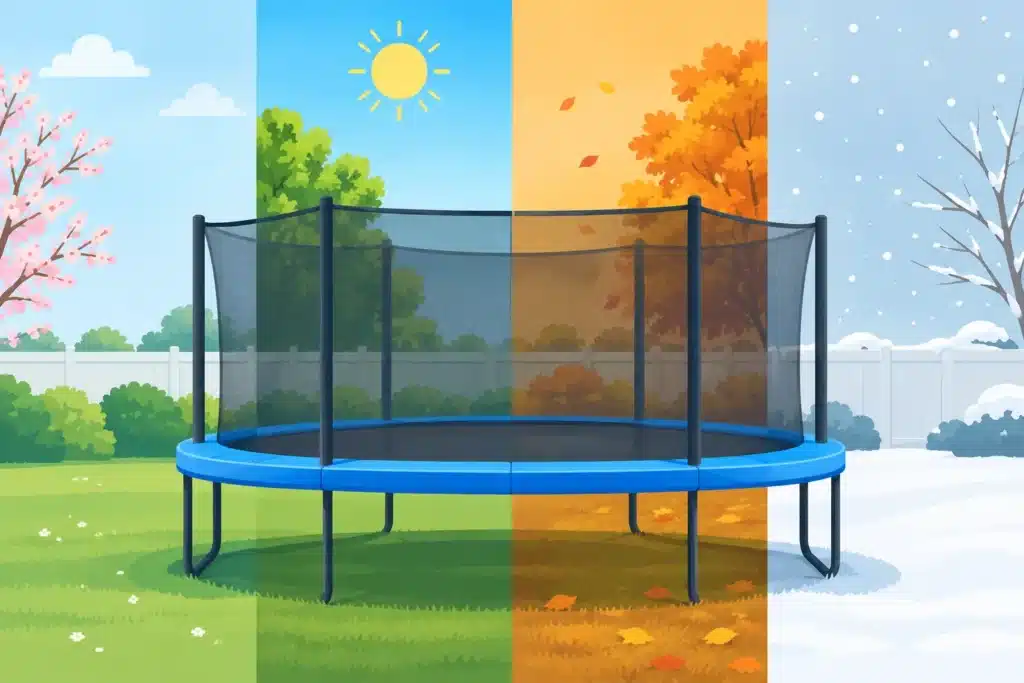
A trampoline pad can look fine one week and start cracking at the edges the next, especially after a hot summer or a wet winter. Knowing how to protect trampoline padding helps preserve the soft barrier between jumpers and the frame, keeps your backyard looking cared for, and protects the long-term value of your family’s in-ground trampoline.
Padding does not receive the same attention as the frame, springs, or safety enclosure, but it works hard every time someone jumps. It absorbs sun, moisture, shoes, toys, and the occasional forgotten garden tool. A few simple habits can make a meaningful difference in how long it stays cushioned, secure, and ready for safe family fun.
Why Trampoline Padding Wears Out
Quality trampoline padding is built for outdoor use, but no pad is completely immune to weather and daily use. Ultraviolet rays are usually the biggest concern. Prolonged direct sun can fade the outer vinyl, dry it out, and eventually cause splits along seams, straps, or high-contact areas.
Rain creates a different problem. Water that sits on the pad can work into stitching or small surface scratches. In cold climates, trapped moisture can freeze and expand, putting extra stress on the cover material. On an in-ground trampoline, poor drainage around the trampoline pit can add to that exposure by keeping the area damp longer than it should be.
Normal play also matters. Kids climbing onto the edge, sitting on the pads, or landing near the frame creates concentrated wear over time. That does not mean the trampoline cannot be enjoyed fully. It means the padding deserves routine care, just like any premium backyard feature.
How to Protect Trampoline Padding With Routine Care
The best protection is consistent, not complicated. Make a quick visual check part of your family’s regular trampoline routine. Before a busy weekend of jumping, look for loose straps, torn stitching, thin spots, puddles, and areas where the pad has shifted away from the frame.
Keep the pads clean and dry
Dust, pollen, leaves, grass clippings, and bird droppings can hold moisture against the surface. Brush away loose debris with a soft broom or cloth. For a more thorough cleaning, use mild soap, lukewarm water, and a soft sponge. Rinse lightly, then let the pads air-dry completely before covering them or allowing children to jump.
Avoid bleach, abrasive cleaners, solvent-based products, and stiff scrub brushes. These can damage the protective surface and shorten the life of the padding. A pressure washer may seem efficient, but it can force water into seams and weaken stitching, so it is best avoided.
Use a properly fitted weather cover
A weather cover is one of the most effective ways to shield trampoline padding from sun, falling debris, rain, and snow. The fit matters. A cover that is too loose can collect water, flap in the wind, and rub against the pads. One that is too tight may put strain on the padding or frame attachment points.
Use a cover designed for your trampoline’s shape and dimensions, whether you have a round 10-foot, 12-foot, or 14-foot model or a rectangular in-ground system. Secure it according to its instructions, particularly before storms or extended periods away from home. Remove standing water promptly so the cover does not sag and transfer that weight to the padding.
A cover is excellent for protection during downtime, but it should not trap moisture underneath. After rain, lift or remove it long enough for the pads and jumping surface to dry when conditions allow.
Keep sharp objects and rough play off the edge
Trampoline pads are not a seating area, a table, or a place to set sports equipment. Keep bikes, lawn tools, outdoor furniture, pet toys, and sharp-edged items away from the perimeter. Encourage children to enter through the designated enclosure opening rather than climbing across the pads.
This small rule protects the pad material and supports safer jumping habits. The goal is not to make outdoor play feel restrictive. It is to keep the safety system working the way it was designed.
Protect Trampoline Padding Through Changing Weather
Your local climate should shape your maintenance plan. Families in sunny southern states may need to focus on UV exposure, while northern homeowners should prepare for snow and freeze-thaw cycles. In many parts of the country, spring pollen and autumn leaves are the biggest recurring cleanup issues.
Summer sun and storms
During high-heat months, check the pads every few weeks for fading, stiffness, or small cracks. A weather cover helps when the trampoline will not be used for several days, but avoid covering damp pads after a thunderstorm. Let them dry first.
Trim back branches that hang above the trampoline. Falling sticks, sap, and heavy leaf buildup can damage the padding and leave stains that are harder to remove later. If a storm is expected, confirm that the cover, enclosure, and pad attachments are secure.
Fall leaves and debris
Leaves left on a wet trampoline can stain the vinyl and keep moisture against the pad surface. Clear them regularly with a soft broom. This is also a smart time to inspect the area around an in-ground trampoline for blocked drains, compacted soil, or landscaping that directs runoff toward the pit.
Winter snow and ice
Do not let heavy snow build up for long periods. Its weight can strain the cover and keep moisture pressed against the padding. Use a soft broom to gently remove loose snow when it is safe to do so. Never chip at ice with a shovel, rake, or sharp tool.
Whether to leave pads installed all winter depends on your climate, storage space, and manufacturer guidance. In regions with severe snow, ice, or long stretches of freezing weather, removing and storing pads in a clean, dry indoor location can be the best choice. If removal is impractical, use a fitted weather cover and inspect the system whenever conditions are safe.
In-Ground Trampolines Need Good Drainage
An in-ground trampoline creates a beautiful, low-profile backyard play space, but the surrounding landscape must move water away efficiently. Padding that stays damp because of poor drainage will age faster, even if it is made with premium outdoor materials.
After a heavy rain, check beneath the edge of the pad and around the trampoline pit. Water should not pool near the frame or remain underneath the jumping area. Keep drainage channels, gravel zones, and vents free of mulch, leaves, soil, and grass clippings.
Good airflow is just as valuable as good drainage. Avoid piling lawn furniture, storage bins, or dense landscaping directly against the trampoline edge. The area needs room to dry after rain and morning dew. If you notice persistent moisture, address the drainage issue before replacing pads, or the new padding may face the same problem.
Know When Padding Needs Repair or Replacement
Cleaning can improve appearance, but it cannot restore worn-out cushioning or damaged protective material. Replace trampoline padding if you see exposed foam, wide cracks, loose sections that no longer cover the frame, broken attachment straps, or seams pulling apart.
Small surface marks are often cosmetic. A tiny nick may not require immediate replacement if the foam remains covered and the pad stays firmly secured. Still, monitor it closely. Damage at seams, corners, or frame-contact points tends to spread faster than damage in low-stress areas.
Do not use duct tape as a long-term repair for safety padding. It can peel in heat and moisture, create a rough edge, and hide a problem that needs a proper fix. For a premium family trampoline, correctly fitted replacement pads are the safer and more durable solution.
Make Pad Checks Part of Family Trampoline Time
A quick check takes less than a minute. Before children start jumping, make sure the pads sit flat, cover the frame completely, and have no visible tears or loose fasteners. After yard work, storms, or a long stretch without use, take a closer look before reopening the trampoline for play.
This routine protects more than the padding. It helps your family spot changing conditions around the enclosure, frame, jumping mat, and in-ground installation before they become bigger repairs. With clean, secure pads and a dry trampoline area, your backyard is ready for the kind of active afternoons children remember long after they have outgrown the trampoline.