

Choosing a Trampoline for Daily Family Use
September 22, 2026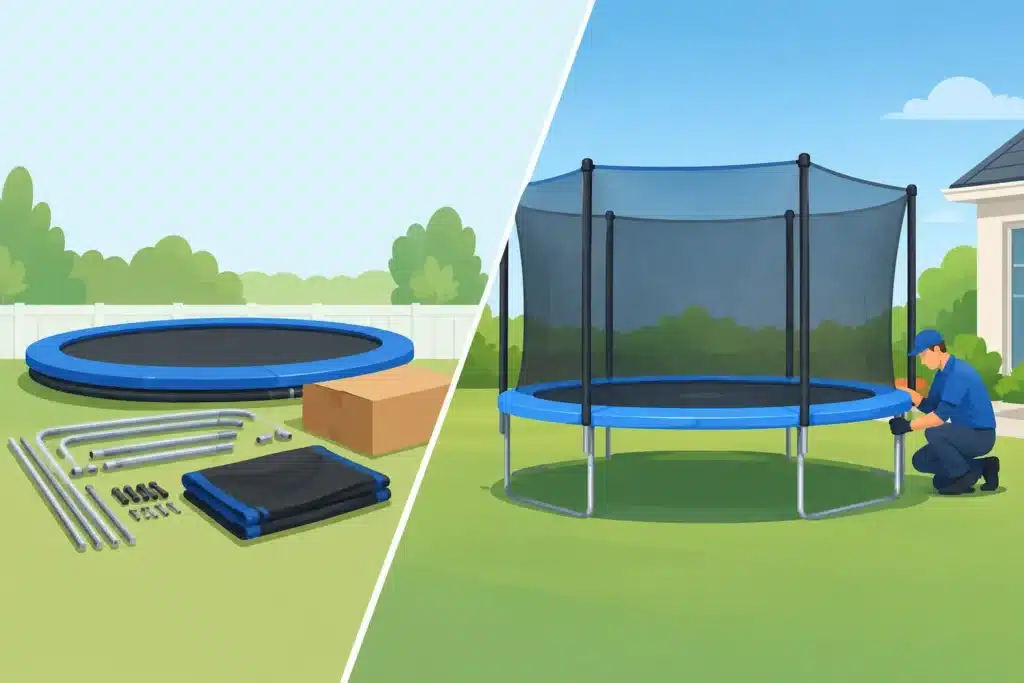
A premium in-ground trampoline can become the most-used feature in your backyard. It gives kids a reason to head outside, gives active families a place to move, and keeps the jumping surface low and visually integrated with the landscape. But before the first jump, homeowners face a meaningful decision: trampoline kit versus professional installation.
The right answer depends on more than whether you can use a shovel or hire a contractor. It comes down to your yard’s soil, drainage, slope, access, local requirements, schedule, and comfort level with a project that affects both safety and long-term performance. A quality trampoline kit can make installation more manageable, while professional installation can bring welcome confidence when excavation conditions are complex.
What an In-Ground Trampoline Kit Includes
An in-ground trampoline kit is not simply an above-ground trampoline placed in a hole. Premium systems are designed for below-grade installation, with durable galvanized, rust-resistant steel frames, jumping mats, springs or spring systems, protective padding, and components that support proper airflow beneath the mat. Depending on the model, a safety enclosure, retaining-wall solution, weather cover, or installation accessories may also be part of the package or available separately.
For families choosing a 10-foot, 12-foot, or 14-foot round trampoline, or a compact rectangular option such as a 10-foot by 6-foot or 11-foot by 8-foot model, the kit provides the equipment itself. The homeowner is still responsible for preparing the site correctly. That usually means planning the location, marking the footprint, excavating the pit, managing soil removal, creating drainage, assembling the frame, and finishing the surrounding landscape.
A well-designed kit gives you the superior materials and safety-focused equipment needed for the project. It does not eliminate the need for careful site preparation.
Trampoline Kit Versus Professional Installation: The Real Difference
The biggest distinction is responsibility. With a kit-only purchase, you control the labor, timeline, excavation approach, and local contractor choices. With professional installation, an experienced installer or landscape contractor takes on much of the physical work and project coordination.
Neither approach automatically produces a better backyard. A capable homeowner with a level yard, good drainage, access to equipment, and a clear plan can create an excellent result. On the other hand, a professional may be the smarter investment for a straightforward yard if you have limited time, do not own the necessary tools, or would rather spend weekends enjoying family time than managing an excavation project.
The quality of the trampoline still matters in both cases. Commercial-grade materials, a strong galvanized frame, durable padding, and a properly fitted safety enclosure support safer, longer-lasting play. Installation determines whether those premium components are given the stable, dry setting they need to perform as intended.
When a Kit Makes Sense
A kit can be a great choice for homeowners who enjoy hands-on projects and have the right conditions. It is especially appealing when you already work with a trusted landscaper, excavator, or builder who can handle the digging and drainage portion. You maintain flexibility while choosing the professionals you want for specific tasks.
DIY-oriented installation can also help you coordinate the trampoline project with a larger backyard renovation. If you are adding a patio, regrading a lawn, installing irrigation, or building a retaining wall, your existing landscape crew may be able to prepare the trampoline area at the same time. That can reduce duplicate equipment trips and make the final design feel intentional.
A kit is not necessarily a one-person weekend project. Even smaller round models require precise measurements, excavation planning, and multiple stages of assembly. The work becomes much easier when you have reliable help, the right equipment, and a realistic schedule.
What You Need to Plan Before Choosing a Kit
Start with the trampoline footprint, then allow open clearance around it. The jumping area is only one part of a safe setup. Consider nearby fences, trees, patios, play structures, utility lines, roof edges, and areas where children may run or gather.
Next, think about what is under your lawn. Clay-heavy soil, rocky ground, a high water table, tree roots, or a sloped yard can quickly turn a simple excavation into a more involved project. Call the appropriate utility-location service before digging, and check local permit, zoning, and homeowner association requirements. Requirements vary by community, so never assume an in-ground trampoline is treated the same way everywhere.
Drainage deserves special attention. Water collecting beneath the jumping surface can create muddy conditions, affect the pit walls, and make future maintenance more difficult. A properly planned drainage solution may include gravel, a drain, or a pump arrangement based on your property’s conditions. If you are uncertain about where water moves after a heavy rain, bring in a local excavation or drainage professional before you break ground.
When Professional Installation Is Worth It
Professional installation is often the best fit when safety, speed, and peace of mind are your top priorities. A qualified installer can assess the site, calculate the excavation dimensions, manage soil removal, address drainage, assemble the frame, and help create a clean finished edge around the trampoline.
This route is especially valuable for yards with slopes, poor drainage, difficult access, heavy clay, extensive roots, or stone. It is also a strong choice for families investing in a larger 12-foot or 14-foot round trampoline, or a rectangular model intended for frequent use by several children. The larger the project, the more helpful experienced planning becomes.
Professional installation can protect the investment in another important way: it reduces the temptation to cut corners. An excavation that is too shallow, walls that are not stable, a frame that is not level, or inadequate air circulation can affect the trampoline’s performance. A professional crew should understand that an in-ground trampoline needs more than a hole of roughly the right size.
Before hiring anyone, ask whether they have experience with in-ground trampoline installations or comparable excavation work. Confirm who handles permits if needed, how drainage will be evaluated, how excavated soil will be removed or reused, and whether landscaping restoration is included. Request a written scope of work so you understand what is covered and what remains your responsibility.
Comparing Cost, Time, and Control
A kit-first approach may appear less expensive because you are not paying a full-service installation crew. That can be true, particularly when you already own equipment or have affordable access to a trusted local contractor. Still, build a complete budget before deciding. Excavator rental, delivery, fuel, soil hauling, gravel, drainage materials, electrical work for a pump if required, edging, sod repair, and labor can add up.
Professional installation costs more upfront, but the price may include capabilities that are difficult to duplicate on your own. A crew can often complete excavation and placement much faster than a homeowner learning as they go. For busy parents, that time has real value. It may also help prevent a half-finished backyard project from sitting open through a rainy week or a family event.
Control is the main advantage of the kit route. You choose every timeline detail, every subcontractor, and every landscaping finish. Professional installation trades some of that direct control for expertise and convenience. The best decision is the one that matches your budget, skills, yard conditions, and available time without compromising safe setup.
Keep Safety at the Center of the Project
An in-ground profile can make a trampoline feel more accessible and blend beautifully into a family backyard, but lower height does not remove the need for smart safety habits. Choose a model with strong safety features, use a properly fitted enclosure when appropriate, supervise younger children, and set clear jumping rules. One jumper at a time is the safest standard for recreational use.
Protect the equipment after installation, too. A weather cover can help keep leaves and debris out when the trampoline is not in use. Periodically inspect padding, enclosure connections, the mat, frame, and surrounding ground for wear, shifting, standing water, or damage. Premium galvanized steel is built for durability, but regular care helps your backyard investment stay ready for years of active play.
For many families, the best path is a quality in-ground trampoline kit paired with local professional help for excavation and drainage. That combination lets you choose the premium model and size that fit your family while bringing in expertise where the ground work matters most. Lets Buy Trampolines can help you select a safety-focused system that turns your backyard plan into a place for energetic afternoons, confident play, and memories worth repeating.