

Capital Play Durability for Active Family Backyards
October 2, 2026
What Makes Trampolines Expensive? A Clear Look
October 6, 2026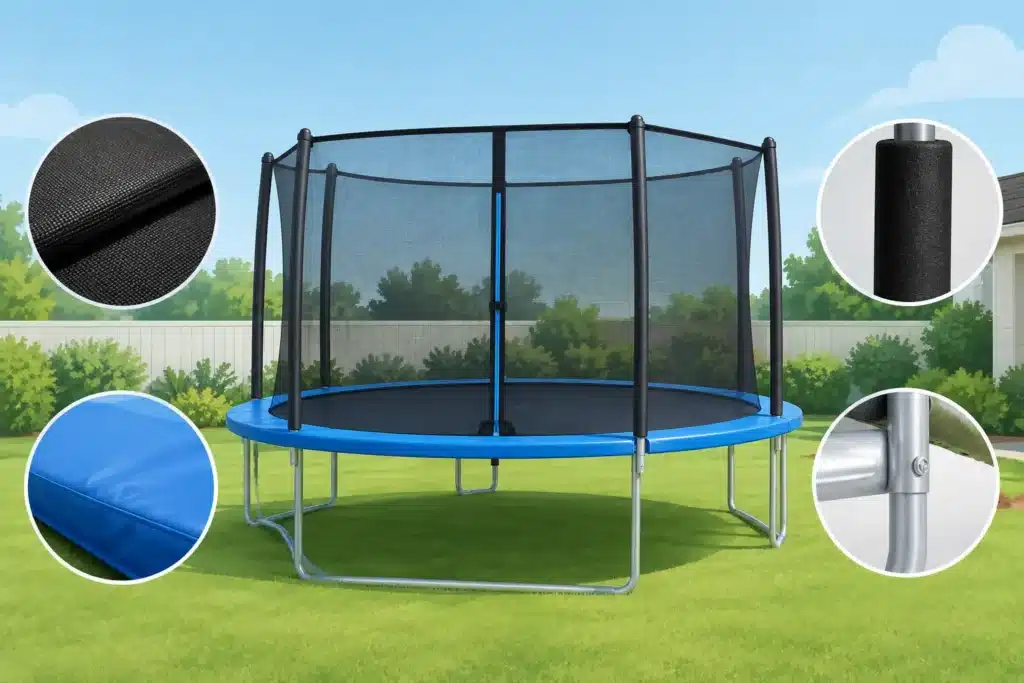
A trampoline may look simple from above, but the materials beneath every jump determine how safe, durable, and enjoyable it will be for your family. The right backyard trampoline materials can stand up to hard play, changing seasons, and years of outdoor use without turning your backyard investment into a frequent repair project.
For an in-ground trampoline, material quality matters even more. The frame, jumping mat, safety padding, enclosure, and below-ground drainage work together as one system. Choosing premium components gives children and teens a dependable place to burn energy while helping your backyard keep the clean, low-profile look homeowners want.
Backyard Trampoline Materials Start With the Frame
The frame is the foundation of the entire trampoline. It carries the force of every landing, holds the mat at proper tension, and supports the safety enclosure. A weak frame can flex excessively, corrode early, or lose its shape over time. That affects bounce quality and can compromise the fit of the pads and net.
Look for heavy-duty galvanized steel. Galvanization coats steel with zinc to help prevent rust, which is especially valuable in humid climates, rainy regions, and backyards with regular lawn irrigation. Premium in-ground trampoline systems use rust-resistant galvanized frames designed for outdoor exposure and repeated family use.
Thickness and construction matter alongside the finish. A stronger steel frame is better prepared for active kids, teenagers, and households where the trampoline will see daily use. It may cost more upfront than a lightweight recreational model, but it is the kind of difference families appreciate after several seasons outside.
For in-ground installations, the frame should also be designed to sit securely at grade. It needs to maintain its shape around the excavation and create a clean transition between the trampoline and surrounding lawn, pavers, or landscaping.
Springs and the Jumping Mat Create the Bounce
A great trampoline bounce is not just about how high someone can jump. It should feel controlled, responsive, and consistent from one side of the mat to the other. That performance comes from the relationship between the springs, frame, and jumping surface.
Premium springs are typically made from galvanized steel to resist corrosion and maintain tension. Longer or more carefully engineered springs can provide a smoother, deeper bounce, though spring design always depends on the trampoline’s size, shape, and intended user capacity. A 10-foot round trampoline will feel different from an 11-foot by 8-foot rectangle, and that is normal.
The jumping mat should be made from durable, UV-resistant polypropylene fabric. This material is woven to flex with each jump while allowing air to pass through. Airflow reduces the resistance a jumper feels on descent and helps the mat perform more naturally.
Do not judge a mat by color alone. A dark, clean-looking surface may still be thin or poorly finished at the edges. Pay attention to reinforced stitching, secure attachment points, and materials intended for long-term sun exposure. Constant ultraviolet light is tough on outdoor fabrics, so UV protection is a practical feature, not a marketing extra.
Safety Pads Need More Than a Soft Surface
The padding around the edge of a trampoline is one of the most visible safety features, but not all pads offer the same level of protection. Their job is to cover the springs and frame while creating a forgiving barrier if a jumper lands near the perimeter.
High-quality pads combine thick foam with a weather-resistant outer cover. Closed-cell foam is a strong choice because it is less likely to absorb water than open-cell foam. The outer cover should resist sun damage, rain, and temperature swings while remaining securely positioned around the frame.
Padding that shifts, tears, or becomes waterlogged can expose springs and hard frame sections. That is why pad attachment matters. Strong straps, ties, or integrated fastening systems help the pads stay where they belong during energetic play and windy weather.
Check the pad coverage as well. The best design covers the entire spring area, rather than leaving gaps at the edges. Families with younger children should be especially careful here, since little jumpers do not always land in the center of the mat.
The Safety Enclosure Is a Material Decision Too
A safety enclosure helps keep jumpers on the trampoline, making it a key part of a family-focused setup. The netting should be durable, tightly woven, and built to handle repeated contact without sagging or tearing prematurely.
Look for weather-resistant mesh and sturdy enclosure poles. The poles should have protective foam sleeves and secure connections, while the net should attach in a way that limits gaps between the jumping surface and enclosure. A properly designed entrance is equally important. It should close securely without becoming frustrating for children or adults to use.
An enclosure is not a substitute for active supervision or sensible trampoline rules. One jumper at a time is still the safest approach for most families. But a quality net creates an essential layer of protection during everyday backyard fun.
In-Ground Materials Include What You Cannot See
An in-ground trampoline is more than an above-ground model placed in a hole. It requires a properly prepared excavation and materials that manage water, airflow, and soil conditions below the jumping surface.
Drainage is one of the biggest considerations. Rainwater must have a path away from the trampoline pit so it does not collect beneath the mat or around the frame. Depending on the yard, this may involve gravel, drainage pipe, a dry well, or another site-specific solution. The right approach depends on local soil, slope, groundwater conditions, and rainfall patterns.
Ventilation also matters. When someone jumps, air beneath the mat needs room to move. An in-ground system designed for proper airflow helps preserve the trampoline’s response and reduces pressure below the surface. This is one reason it is worth selecting a trampoline specifically engineered for in-ground installation rather than trying to adapt a standard above-ground model.
Retaining walls or pit liners may also be needed to support the excavation. These materials should be selected with the soil type and installation plan in mind. Sandy soil, dense clay, and sloped yards can require different preparation. A thoughtful installation protects the trampoline system and keeps the surrounding landscape looking finished.
How to Judge Material Quality Before You Buy
Product descriptions can use similar words, but the details reveal the real difference between a short-term purchase and a long-term backyard feature. Start by checking whether the frame and springs are galvanized, whether the mat and pads are UV-resistant, and whether the enclosure components are built for outdoor use.
Then consider the warranty. A strong warranty often reflects confidence in the materials, particularly for the frame and jumping surface. It is also smart to choose a retailer that can answer practical questions about installation, replacement parts, weather covers, and the right size for your yard.
A weather cover can extend the life of your trampoline materials by keeping leaves, debris, and standing water off the jumping surface during periods of nonuse. In areas with severe winters or heavy storms, seasonal care is a worthwhile part of protecting your investment.
Match Materials to Your Family and Backyard
The best material package depends on who will use the trampoline and how often. A family with two young children may prioritize a secure enclosure, full pad coverage, and a manageable round size. A household with older kids or active adults may want a larger jumping area, a rectangular format, and a frame designed for more frequent, energetic use.
Your available space matters too. A 10-foot or 12-foot round in-ground trampoline can be a great fit for many suburban yards, while a 14-foot round model gives growing families more room to play. Rectangular options can work especially well in narrower spaces or alongside patios and structured landscape plans.
Before choosing, plan for the full installation footprint, including the excavation, enclosure, access around the trampoline, and drainage needs. The goal is not simply to fit a trampoline into the yard. It is to create a backyard feature your family can use confidently for years.
A premium in-ground trampoline should feel like a permanent invitation to get outside, move more, and make memories together. Choose materials that support that promise, then let your backyard become the place everyone wants to be. When you are ready to build that space, Lets Buy Trampolines can help you choose with confidence.