

In Ground Trampoline Drainage Solutions That Work
July 25, 2026
Best Trampoline for Teenagers’ Backyards
July 27, 2026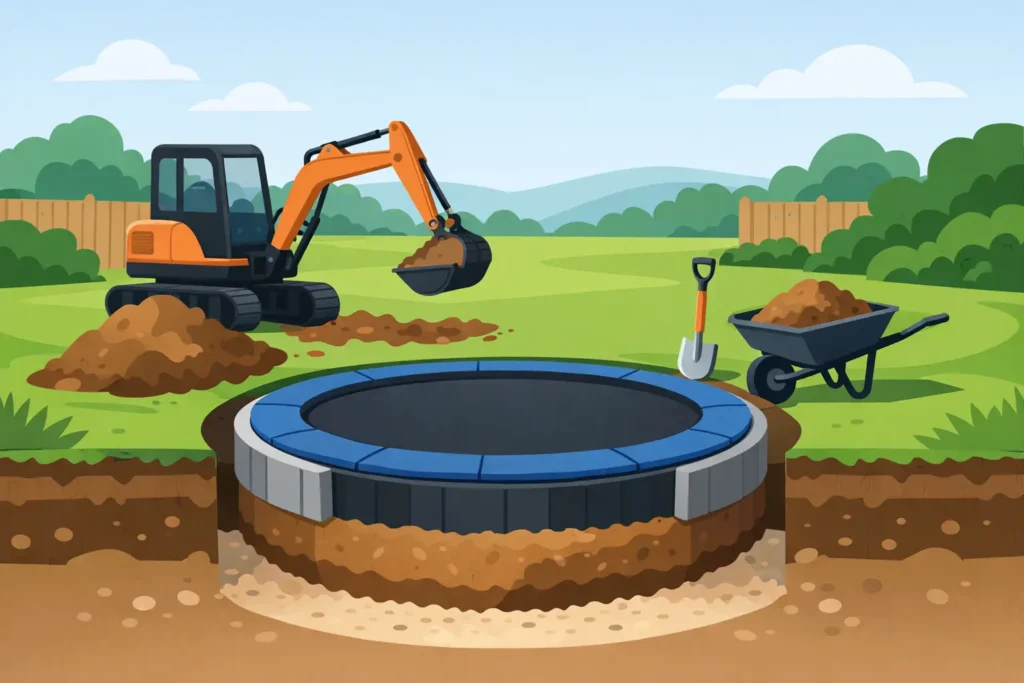
A beautiful in-ground trampoline starts below the surface. Understanding in ground trampoline excavation requirements before equipment arrives helps prevent the costly problems families want to avoid: standing water in the pit, a trampoline that sits too high, unstable soil walls, or a backyard project that stalls halfway through installation.
An in-ground system can create a clean, low-profile play space that blends into your landscape while giving kids and teens a place to burn energy outdoors. But it is not simply a standard trampoline placed in a hole. The excavation must support the specific trampoline model, allow proper airflow beneath the jumping mat, manage water, and leave enough room for safe access and installation.
Start With Your Trampoline’s Exact Dimensions
The trampoline frame size is only one part of the excavation plan. A 10-foot round trampoline, for example, does not automatically mean a 10-foot round hole. Premium in-ground systems use a designed air-flow system under the mat, and the pit shape, depth, and clearance must match the manufacturer’s installation instructions.
Before marking the yard, confirm the dimensions for the exact model and shape you plan to install. Round 10-foot, 12-foot, and 14-foot trampolines all require different footprints. Rectangular models, such as 10-foot by 6-foot and 11-foot by 8-foot options, need careful corner measurements and more attention to keeping the excavation square.
Do not guess based on a neighbor’s installation or an online photo. The frame must sit at the intended finished grade, while the space below the mat allows air to move as a jumper lands. If the pit is too shallow, bouncing performance can suffer and the mat may contact the ground. If it is too deep, the frame may sit below the lawn level and create a trip point or drainage issue.
In Ground Trampoline Excavation Requirements for a Safe Site
A successful installation begins with a location that works for both play and construction. Choose a reasonably level part of the yard with open space around the trampoline. Avoid placing it directly beneath tree limbs, near fences, next to hardscape edges, or where roof runoff pours into the area.
Call 811 before digging so underground utility lines can be marked. This is essential even in a yard that looks clear. Irrigation lines, electrical wiring for landscape lighting, drainage pipes, and cable lines may cross areas you would not expect.
Also check local rules before the excavation starts. Permit requirements vary by municipality and homeowners association. Some communities have rules about setback distances, fencing, drainage changes, or the placement of backyard recreation equipment. A quick check before work begins is far easier than moving a nearly finished project later.
Allow room around the frame
The excavation needs working space around the frame, not just a tight opening that matches it. Installers need room to position the retaining wall or pit structure, assemble the galvanized steel frame, tension the mat, and fit safety components correctly.
The finished play area also needs clear space above and around it. Keep the trampoline away from patios, swing sets, outdoor kitchens, trees, walls, and other hard objects. A safety enclosure adds protection, but it does not make a crowded location safe.
Plan for the finished lawn level
The goal is usually a frame that sits flush, or nearly flush, with the surrounding grass. That polished look is one reason families choose an in-ground trampoline, but it depends on careful grade planning.
Measure from the lawn’s final height, not from an area that will later receive sod, mulch, or additional soil. If landscaping is still changing, establish the final grade first. A frame buried too low can collect grass clippings and runoff, while a frame left too high loses the integrated look and may create an edge children can catch a foot on.
Depth and Pit Shape Matter More Than Most Families Expect
In-ground trampoline pits are commonly shaped with a deeper center and sloped sides, rather than having straight vertical walls. This shape creates the clearance needed below the center of the mat while reducing the amount of soil removed. It also supports the airflow that helps an in-ground trampoline deliver a responsive bounce.
The correct depth depends on the trampoline’s design and installation system. Follow the product-specific excavation drawing exactly, including center depth, edge depth, slope, and any required wall components. Premium in-ground systems are engineered as complete installations. Changing the recommended pit shape to save digging time can affect performance and safety.
Soil conditions may change the plan. Firm, well-draining soil can often hold a clean slope, while loose sand, soft fill, or clay may need more support. In some yards, a contractor may recommend a retaining solution or a reinforced wall system to help prevent erosion and soil movement over time.
Never assume a vertical dirt wall will remain stable, especially after rain or freeze-thaw cycles. A collapsing pit wall can damage the trampoline and create a serious hazard. If the excavation soil looks unstable, pause and get advice from an experienced excavation or landscape professional.
Drainage Is Not an Optional Upgrade
Water is the biggest long-term threat to an in-ground trampoline pit. Rain naturally moves to low areas, and an excavation is a low area by design. Without a drainage plan, the pit can become muddy, hold standing water, invite mosquitoes, and place unnecessary moisture around the frame and components.
Start by looking at how water already moves through your yard. If the proposed site sits at the bottom of a slope or receives runoff from downspouts, select another location or address the drainage before installation. Redirecting roof water away from the area is often one of the simplest and most valuable steps.
The best drainage method depends on soil type, local rainfall, water table, and the layout of the property. Some installations use a gravel drainage layer and a drain route to a suitable discharge point. Others may need a French drain, dry well, sump arrangement, or professional grading work. Your local rules may control where water can be discharged, particularly near property lines or stormwater systems.
Do not send drainage water toward your foundation, neighboring property, or a place where it will create a new problem. If water regularly stands in your yard after a normal rain, bring in a drainage professional before committing to the trampoline location.
Choose Equipment That Supports Long-Term Installation
Excavation is a significant part of the investment, so it makes sense to pair it with a trampoline built for years of family use. Look for rust-resistant galvanized steel, strong frame construction, purpose-built in-ground components, and a safety enclosure designed for the model.
A high-quality cover can also help protect the jumping surface from leaves, debris, and weather when the trampoline is not in use. It does not replace proper drainage, but it can make seasonal care easier and help keep the pit area cleaner.
At Lets Buy Trampolines, families can compare round and rectangular in-ground options based on backyard space, number of users, and how the trampoline will be used. A larger round model often suits active family play, while a rectangular format can be a smart fit for a narrower yard or more focused jumping practice. The right choice is the one that fits your space without forcing shortcuts in excavation or safety clearance.
Decide Who Will Do the Digging
A handy homeowner may be able to manage a straightforward excavation with rented equipment, but professional help is often worth considering. The project involves more than removing dirt. It requires accurate layout, safe slopes or wall construction, soil disposal, drainage planning, and restoration of the surrounding lawn.
Get a clear plan before hiring an excavator. Provide the trampoline’s installation specifications and ask how the contractor will handle spoil soil, drainage, access for machinery, and damage to existing turf or irrigation. If equipment must pass through a gate, measure that access point before scheduling work.
For many families, the smoothest approach is to have the site excavated and prepared by a qualified local professional, then follow the trampoline manufacturer’s assembly instructions closely. This can protect your investment and leave you with a backyard feature that looks intentional rather than improvised.
A little planning below ground creates the kind of play space families enjoy above it: clean, secure, inviting, and ready for years of backyard memories. Measure carefully, respect the drainage plan, and build the foundation for safer jumping from the first shovel of soil.