
Springless Versus Spring Trampoline: Which Wins?
August 11, 2026
Trampoline Safety for Your Family Backyard
August 15, 2026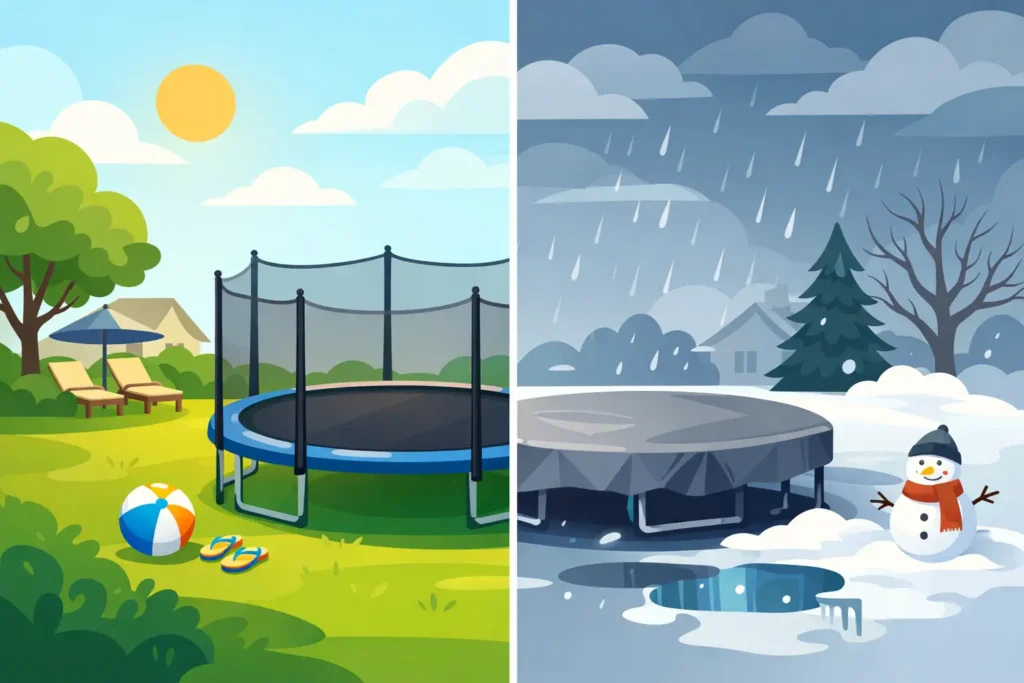
A premium trampoline is made for the backyard, not for being hauled into the garage after every jump session. But can trampolines stay outside in every season without losing safety, bounce, or long-term value? Yes, when you choose outdoor-rated materials, prepare the site correctly, and give the trampoline a little regular attention. The weather does not automatically ruin a quality trampoline. Neglect is usually the bigger problem.
For families investing in an in-ground trampoline, that distinction matters. A well-planned installation gives kids and teens a dedicated place to move, play, and build confidence outdoors. Protecting that investment means treating weather readiness as part of the installation plan, not an afterthought.
Can Trampolines Stay Outside All Year?
Most quality trampolines are designed to stay outdoors year-round. Galvanized, rust-resistant steel frames, weather-conscious jumping mats, and durable safety systems are built for normal exposure to sun, rain, and changing temperatures. That is exactly what a backyard trampoline should handle.
Still, “outdoor-rated” does not mean maintenance-free. UV exposure can gradually weaken padding and enclosure netting. Repeated moisture can find its way into worn frame coatings or hardware. Heavy snow can add more weight than a trampoline frame, springs, and mat should carry for long periods. High winds can shift or damage above-ground models that are not properly anchored.
An in-ground trampoline has a few advantages here. Its low-profile design is naturally less exposed to wind, and it blends beautifully into a landscaped yard. However, proper drainage is essential. Water should never be allowed to collect below the jumping surface or remain trapped against the frame. A professional-quality in-ground installation includes a drainage plan so rainwater has somewhere to go.
What Weather Does to a Trampoline
Different conditions call for different precautions. Families in dry, sunny climates will focus more on UV protection, while homeowners in northern states may need a winter plan for snow and freeze-thaw cycles.
Sun and summer heat
Sunlight is often the slowest, least noticeable source of wear. Over time, ultraviolet rays can fade and dry out vinyl padding, netting, and stitching. A high-quality trampoline starts with better materials, but even premium components benefit from protection when the trampoline will not be used for a while.
Check safety pads regularly for cracks, stiffness, or exposed foam. Inspect the enclosure net for fraying, loose stitching, and openings near the zipper or entry point. If the surface becomes extremely hot in direct sun, ask children to wear socks or wait for it to cool before jumping. Bare feet and hot black trampoline materials are not a great combination.
Rain and standing water
A light rainstorm is not a reason to panic. Trampoline mats are designed to shed water through their weave, and galvanized frames are made to resist rust. The concern is standing water, especially under an in-ground trampoline.
Before installation, make sure the excavation and drainage design suit your yard’s soil and slope. Clay-heavy soil, a low-lying yard, or an area near downspouts may require extra drainage attention. After a major storm, take a quick look beneath the trampoline and around the surrounding edge. Persistent puddling should be corrected before it affects the structure or creates muddy, slippery conditions.
Never let anyone jump on a wet mat. Wet surfaces can be slick, and a soaked safety enclosure is less comfortable and harder to inspect. Wait until the mat, pads, and netting have dried fully.
Snow, ice, and freezing temperatures
Cold temperatures alone generally are not the issue. Heavy, wet snow and ice accumulation are. Snow loads can stretch the mat, strain springs, bend components, and put unnecessary pressure on an enclosure.
Remove loose snow with a soft broom from the ground whenever possible. Do not use a shovel, metal rake, sharp tool, or excessive force on the mat. Avoid chopping ice off a trampoline. It is better to let it melt naturally than risk tearing a mat or damaging protective padding.
In regions with long, snowy winters, a weather cover can help keep debris and light snowfall off the jumping surface. It is not a substitute for monitoring accumulation. If your family will not use the trampoline for months, seasonal storage of removable pads and enclosure components may be worthwhile, provided you can keep them clean, dry, and protected from pests.
Wind and storms
Above-ground trampolines need secure anchoring because wind can lift or move them. In-ground systems sit lower and are less vulnerable to this issue, but severe weather still deserves attention. Close and secure the enclosure entrance, remove loose toys, and inspect the area after strong storms.
If branches hang over the trampoline, trim them before storm season. Falling limbs can damage even the strongest frame and create a serious safety hazard. Leave enough open space around the trampoline during site selection, not only for safe jumping but also to reduce exposure to trees, fences, roof edges, and other obstacles.
Use a Cover, but Use It Wisely
A weather cover is one of the simplest ways to protect a trampoline from leaves, dirt, pollen, and direct sunlight during periods of nonuse. It also makes spring cleanup much easier for busy families.
The key is choosing a cover that fits the trampoline’s shape and size and does not trap significant water. A loose, poorly fitted cover can sag, collect rainwater, and become more trouble than help. Remove pooled water promptly, and do not put a cover over a trampoline that is already wet if it will stay covered for an extended time. Trapped moisture encourages mildew and can shorten the life of pads and fabric components.
For in-ground trampolines, use a cover designed for the system rather than improvising with a tarp. A heavy tarp may block drainage, create unsafe pooling, or rub against the frame and mat in windy conditions.
A Simple Seasonal Care Routine
A trampoline does not need constant work, but a short check at the right times can prevent a small issue from becoming an expensive replacement. At the start of each season, inspect the mat, frame, springs or springless components, safety pads, net, and all connection points. Look for rust, tears, stretched areas, missing hardware, loose fasteners, or worn stitching.
During the active jumping season, give the trampoline a quick visual check every few weeks. This is especially helpful after intense rain, a windstorm, or a backyard gathering with lots of energetic jumpers. Clean away leaves and debris so moisture does not stay trapped around the edges.
A few habits make a meaningful difference:
- Keep one jumper on the trampoline at a time unless the manufacturer specifically states otherwise.
- Keep shoes, balls, lawn equipment, and pets off the jumping surface.
- Replace damaged pads, nets, and hardware promptly instead of hoping one more season will be fine.
- Maintain clear space around the trampoline, including beneath low branches and away from hard landscape features.
These are not just longevity tips. They help preserve the safe, predictable jumping environment parents want.
Material Quality Changes the Answer
Not every trampoline should be expected to live outdoors for years. Entry-level models may use thinner frames, lighter coatings, lower-density foam, or fabric that breaks down more quickly in sun and rain. They can look similar at first, but backyard weather reveals the difference over time.
For a long-term family installation, look for rust-resistant galvanized steel, high-quality protective padding, a dependable enclosure system, and components supported by a strong warranty. The right size also matters. A 10-foot round in-ground trampoline can be an excellent fit for a compact yard and younger jumpers, while 12-foot and 14-foot round options give growing families more jumping room. Rectangular systems can make especially smart use of a narrower or more structured landscape.
Lets Buy Trampolines helps families match those choices to their yard, household, and installation plans. The goal is not simply to buy a trampoline that fits in the space. It is to choose one that will remain a safe, attractive part of the backyard through years of changing weather and changing kids.
When Should You Bring Parts Inside?
You usually do not need to disassemble a quality trampoline for every winter or storm. But removable components deserve extra care if they are already showing age, if your area has extreme winters, or if the trampoline will sit unused for an extended period.
Safety pads and enclosure netting are the parts most likely to benefit from seasonal storage. Only store them after they are completely dry. Fold them loosely, keep them off a concrete floor if possible, and protect them from rodents, moisture, and direct heat. Label hardware and take a few photos before removal so reassembly is easy when warmer weather returns.
If you prefer to keep everything installed, use the cover, clear snow and debris, and inspect the system as soon as spring arrives. Either approach can work. Your local climate, storage space, and the trampoline manufacturer’s care guidance should decide what makes the most sense.
A trampoline that stays outside can become one of the most-used spaces in your yard. Give it a dry, well-planned home, protect the parts that take the most weather exposure, and keep safety checks part of your family’s regular backyard routine. Then it will be ready when the next sunny afternoon turns into hours of laughter, movement, and memories.