

Can Trampolines Stay Outside? Family Guide
August 13, 2026
Are Trampolines Safe for Toddlers? What Parents Need
August 17, 2026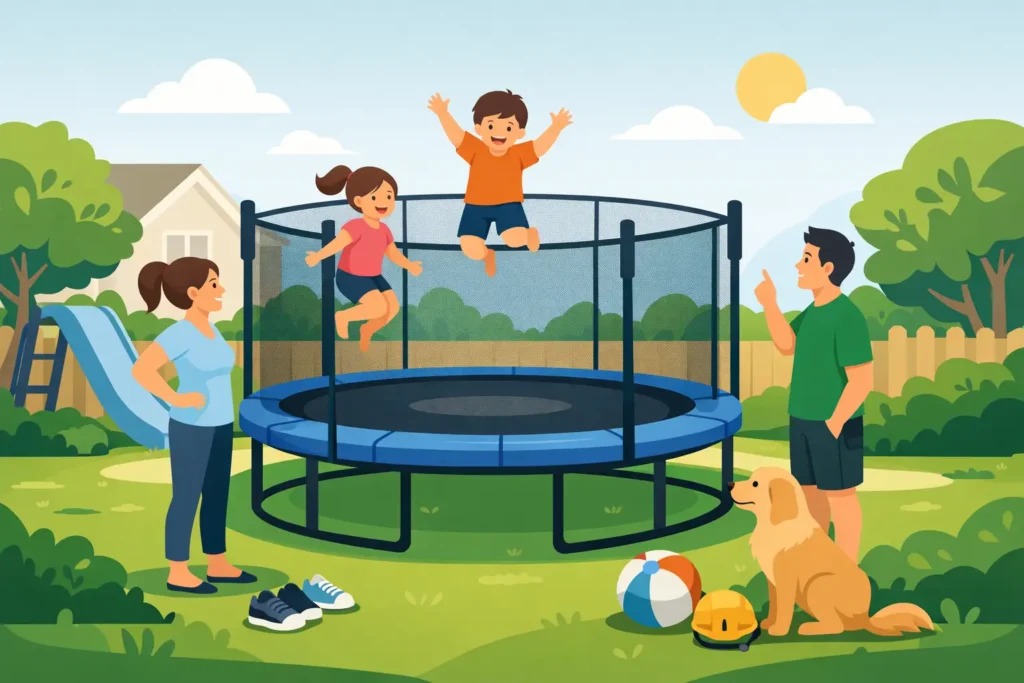
A trampoline can quickly become the place where the whole family gathers after school, on weekends, and when friends come over. That is exactly why trampoline safety deserves more than a quick glance at a safety net. A safer backyard setup begins with the right equipment, a properly prepared installation area, and household rules that stay consistent long after the first exciting jump.
For families investing in a premium in-ground trampoline, safety is not a single feature. It is the full system: a durable frame, dependable jumping surface, protective enclosure, clear landing zone, routine inspections, and active adult supervision. When those pieces work together, children can enjoy energetic outdoor play with more confidence, and parents can feel better about the investment in their backyard.
Trampoline Safety Starts Before Installation
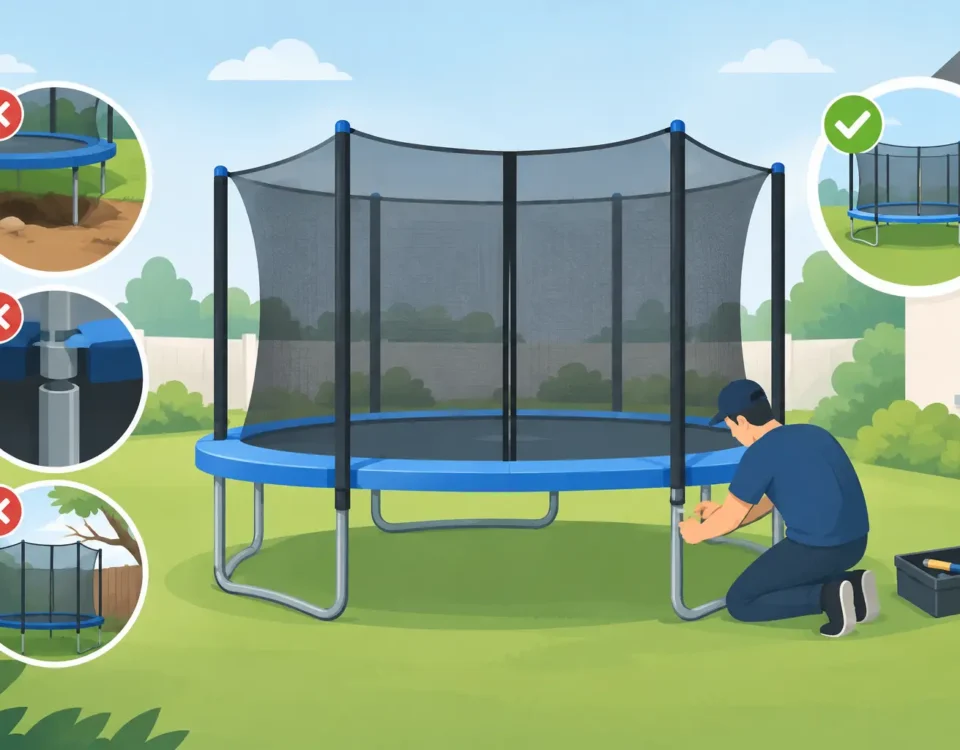
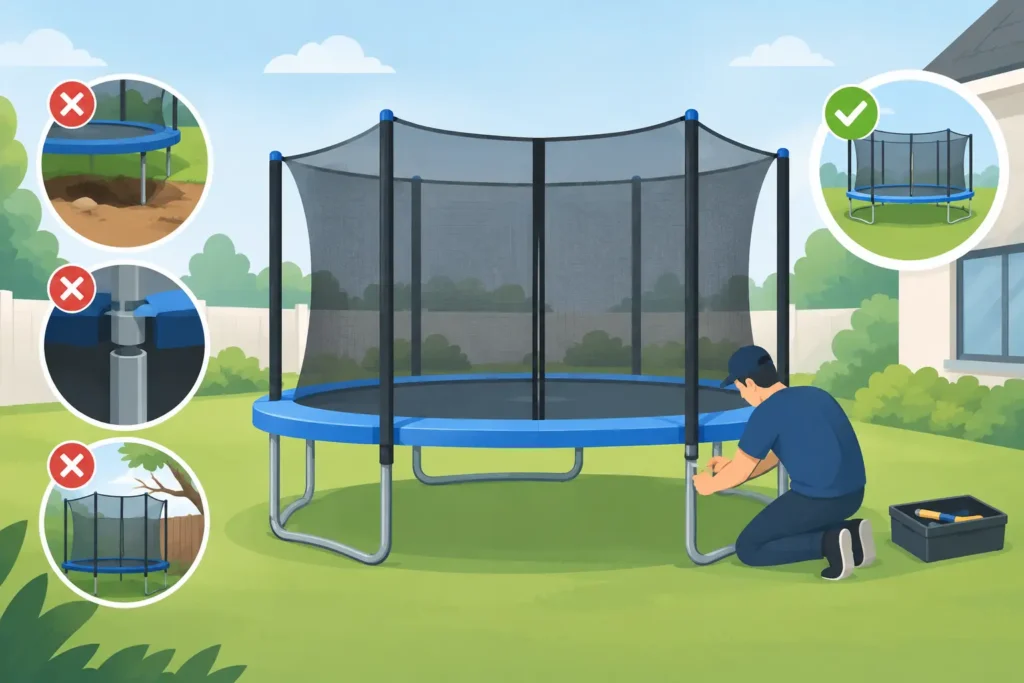
The safest time to solve a trampoline problem is before the trampoline arrives. Start by choosing a level area with enough open space around the jumping zone. Trees, fences, swing sets, patio furniture, fire pits, and hard landscaping all need to remain well outside the enclosure and access area. Kids do not always step down carefully after jumping, especially when play is exciting.
In-ground models create a clean, low-profile look that many homeowners prefer, but the installation still needs careful planning. The excavation must match the trampoline system’s requirements, and the pit needs proper drainage. Water collecting beneath the jumping bed can create a muddy, unstable space and may shorten the life of materials over time. Soil conditions, slopes, irrigation lines, utilities, and local requirements can affect the work, so it is worth planning the site before selecting a size.
Do not choose a trampoline based only on the largest open-looking spot in the yard. Think about how your family will use it. A 10-foot round model can suit younger children and smaller yards, while 12-foot and 14-foot options give growing families more room for active play. Rectangular in-ground trampolines can be an excellent fit where the yard layout is long and narrow or where older jumpers want a more controlled bounce. More space can improve comfort, but the best choice is the size that leaves room for safe access and proper clearance.
Choose a Complete Safety System
A premium trampoline should be built for years outdoors, not just a season or two. Galvanized, rust-resistant steel is especially valuable in backyards exposed to rain, humidity, snow, and changing temperatures. Strong frames and quality springs or spring systems help maintain a stable, predictable jumping experience as the trampoline gets regular use.
The enclosure matters just as much. A properly designed safety enclosure helps keep jumpers on the mat instead of falling onto the surrounding ground. Look for secure netting, well-padded poles, protected frame areas, and an entrance that closes reliably. The enclosure should be part of the trampoline’s intended system, not an afterthought added to a mismatched setup.
Padding also needs attention. Frame pads help reduce contact with hard components at the edge of the jumping area. They should fit securely, cover the relevant hardware, and remain in good condition. A pad that has shifted, torn, faded badly, or lost its fastening points is no longer doing its full job.
An in-ground installation can reduce the visual height of the trampoline and make entry easier, but it does not remove the need for an enclosure, good padding, or supervision. Low-profile design is a meaningful benefit. It is not a substitute for the rest of the safety system.
Set Family Rules Before the First Jump
Children are more likely to follow trampoline rules when the expectations are simple, repeated often, and applied every time. Explain the rules before the first jump, not after someone gets too close to the net or tries a trick beyond their ability.
For most home trampoline use, these four rules make the biggest difference:
- One jumper at a time, unless an adult is directly managing a structured activity.
- No flips, somersaults, or high-risk tricks without qualified instruction and appropriate supervision.
- No jumping when the mat, pads, or shoes are wet.
- No toys, balls, food, drinks, pets, or loose objects inside the enclosure.
The one-jumper rule can feel difficult when siblings and friends are eager to play together. Still, multiple jumpers create unpredictable rebound forces. A smaller child can be launched unexpectedly when a larger child lands nearby, and collisions become much more likely. Let children take turns, set a timer if needed, and make the rule part of the fun rather than a punishment.
Adults should also set boundaries around rough play. Wrestling, pushing, racing to the edge, and jumping into someone else’s landing area should stop immediately. The goal is not to make the trampoline feel overly restricted. It is to keep the activity focused on jumping, movement, and skill-building rather than chaos.
Supervision Changes With Age and Skill
A safety enclosure can help prevent falls, but it cannot supervise a child. Younger children need an adult close enough to see what is happening, enforce rules, and step in quickly. For older children and teens, supervision may look different, but it still includes knowing who is using the trampoline, setting guest expectations, and making sure no one attempts advanced tricks without training.
Skill level matters more than confidence. A child who has watched gymnastics videos may feel ready for a flip but may not understand the landing risks. Encourage controlled jumps, seat drops, knee drops, and other basic movements only when the jumper can perform them consistently and safely. If a child wants to develop advanced trampoline skills, a coached environment is the right place to learn them.
It also helps to establish an access rule. Keep the enclosure entrance closed when the trampoline is not in use, and make sure children understand that they need permission before jumping. This is particularly useful when neighbors, visiting children, or younger siblings are in the yard.
Make Inspections Part of Backyard Routine
A quick inspection takes only a few minutes and can prevent a small issue from becoming a larger one. Check the trampoline before use at the start of the season, after severe weather, and whenever you notice a change in bounce, alignment, or net tension.
Walk around the system and look for loose frame connections, missing hardware, damaged springs, worn straps, torn netting, broken stitching, and shifted pads. Check that the jumping mat is secure and free from holes or excessive wear. On an in-ground trampoline, also look around the perimeter and beneath the mat area for standing water, soil movement, debris, or signs that drainage needs attention.
Stop using the trampoline until a damaged part is repaired or replaced. It can be tempting to allow “just a few jumps” while waiting for a replacement, especially during a busy family weekend. That is not a worthwhile trade-off. Premium equipment is designed for long-term use, and maintaining it with compatible components protects both its performance and its value.
Weather Protection Is Safety Protection
Weather can change a safe setup fast. Rain makes the mat slippery, while ice and snow create obvious hazards. High winds can damage an enclosure, shift loose components, or carry nearby debris into the jumping area. Close and secure the trampoline according to the product guidance before storms, and remove fallen branches or other debris before anyone uses it again.
A weather cover can help protect the jumping surface from leaves, dirt, and seasonal buildup when the trampoline is not in use. It does not mean the trampoline is ready to jump on immediately after rain or snow. Remove the cover, inspect the surface, and let the mat dry fully before use.
Sun exposure also takes a long-term toll on outdoor materials. Regular cleaning and seasonal inspection help you spot fading, cracking, and weakening before they affect the system’s performance. Good care protects the polished look of an in-ground installation while supporting safer play year after year.
Build Safety Into the Backyard Experience
The best trampoline routines become normal family routines: shoes off, one jumper, adult nearby, entrance closed, quick inspection after storms. These habits do not take away from the excitement. They give children a dependable place to burn energy, practice coordination, and enjoy the backyard with friends and family.
A carefully selected in-ground trampoline can become one of the most used features of your home. Give it the space, safety system, maintenance, and attention it deserves, and it can support countless active afternoons and family memories.