

Backyard Trampoline Planning Guide for Families
August 19, 2026
Premium Trampoline Brands Worth Your Backyard
August 23, 2026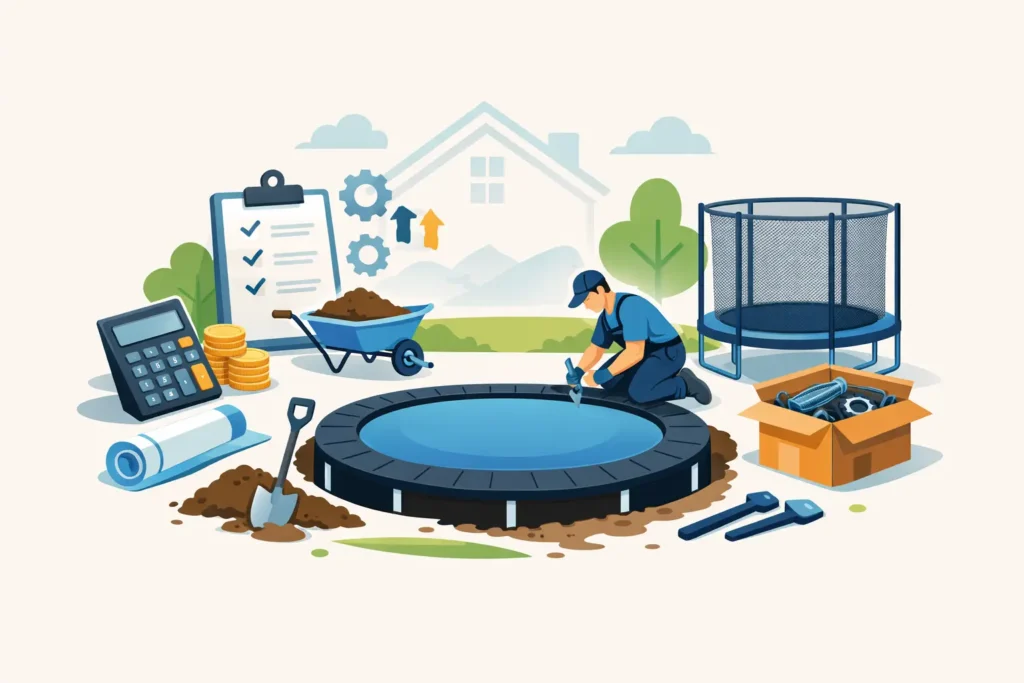
A premium in-ground trampoline can become the backyard feature your children use every day, but the trampoline itself is only one part of the budget. Trampoline installation costs also include the work that makes the system level, properly supported, well-drained, and ready for safer family fun season after season.
For most homeowners, the biggest surprise is not the price of the trampoline. It is how much the yard conditions affect excavation and finishing work. A simple, open, level lawn is very different from a sloped backyard with irrigation lines, rocky soil, or limited equipment access. Planning for those details early helps you choose the right trampoline size without turning a great family investment into a frustrating project.
The Two Parts of an In-Ground Trampoline Budget
An in-ground trampoline project generally has two separate costs: the equipment and the site installation. Premium trampoline equipment may include the frame, jumping mat, springs, protective padding, retaining-wall components, and a safety enclosure. Depending on the brand, size, shape, and included safety system, this portion commonly represents several thousand dollars of the total investment.
Installation is the site-specific portion. It can include marking the location, digging the trampoline pit, removing or redistributing soil, preparing the base, addressing drainage, assembling the trampoline, and restoring the surrounding lawn or landscape. Because every property is different, installation is usually quoted after a local installer understands the yard, access route, soil, and chosen model.
This is why two families can buy similar 12-foot round trampolines and receive very different installation quotes. The product may be the same. The excavation conditions are not.
Typical Trampoline Installation Cost Ranges
For a straightforward professional in-ground installation, homeowners often budget roughly $2,000 to $7,000 or more for excavation, preparation, assembly, and basic site restoration. Projects at the lower end tend to have easy access, soft soil, a flat yard, and minimal drainage needs. Projects near or above the upper end may involve difficult digging, sloped terrain, rock removal, drainage work, landscape reconstruction, or specialty equipment.
A complete premium in-ground trampoline project, including the trampoline and professional installation, can reasonably reach $5,000 to $15,000 or more. Larger rectangular systems, extensive safety enclosures, complex yards, and premium landscape finishing can increase that total.
Those are planning ranges, not a substitute for a site quote. The right number depends on your actual property and the system you choose. Still, having a realistic budget range lets you compare options confidently and avoid choosing a trampoline size that does not fit the project as a whole.
What raises or lowers the installation quote?
Four factors usually have the greatest effect on trampoline installation costs:
- Trampoline size and shape: A 10-foot round model needs less excavation than a 14-foot round model. Rectangular trampolines can offer excellent jumping space and a clean, tailored look, but their pit dimensions and retaining requirements differ from round models.
- Yard access: Contractors need a way to bring in equipment and remove soil. A wide side gate and open path can reduce labor. A fenced lot, narrow access, stairs, or a backyard reached only through the home can add time and cost.
- Soil and slope: Sandy or loamy soil is generally easier to excavate than dense clay, roots, buried rock, or heavily compacted ground. Sloped yards may require additional grading or retaining solutions to create a level installation.
- Water management and finishing: Drainage is essential for an in-ground system. Costs can rise when a project requires gravel, drain pipe, sump solutions, or significant sod, mulch, pavers, and planting work after installation.
Excavation Is About More Than Digging a Hole
An in-ground trampoline should sit flush or nearly flush with the surrounding ground, creating the low-profile look families love. Reaching that finished appearance requires an appropriately shaped pit beneath the jumping surface. It also requires enough clearance for the trampoline to perform as intended.
A qualified installer will account for the dimensions of the specific model rather than estimating from the visible jumping area alone. The frame, support structure, and air movement under the mat all matter. A pit that is too shallow, too narrow, or poorly formed can affect bounce, create maintenance headaches, and compromise the clean finish you expect from an in-ground installation.
Before digging begins, homeowners should also locate underground utilities, irrigation, landscape lighting, drainage lines, and any buried structures. This step protects your property and prevents expensive surprises. If your preferred location is close to a patio, pool, tree roots, septic system, or property line, ask the installer whether a different placement would save money and improve long-term access.
Drainage Is a Safety and Longevity Decision
Water is one of the most important considerations in an in-ground trampoline project. Rainwater naturally moves toward low areas, and the trampoline pit can become one of those areas without a drainage plan. Standing water below the mat is not just inconvenient. It can create muddy conditions, accelerate wear on components, and make future maintenance more difficult.
The best drainage solution depends on the soil and water table at your home. Some installations need a gravel base and drainage pipe that directs water away from the pit. Others may need a more involved solution where drainage is limited. In areas with frequent heavy rain, discussing water management before the excavation starts is worth every minute.
Premium materials also matter here. Galvanized, rust-resistant steel frames are built for outdoor durability, but no trampoline benefits from being left in standing water. Pairing a quality system with thoughtful drainage and a weather cover helps protect your investment through changing seasons.
Safety Systems Belong in the Project Budget
A trampoline enclosure is not an afterthought, especially for families with young children, active siblings, or frequent backyard guests. A properly designed safety enclosure helps keep jumpers in the intended play area and gives parents greater confidence during daily use.
When comparing project costs, look beyond the frame and mat. Ask whether the quote includes installation of the enclosure, protective padding, and any required retaining or edge components. A lower initial number may not include the safety features you want for your family.
The same goes for the area around the trampoline. Leave adequate clear space away from playsets, fences, trees, patio furniture, and hardscape edges. A beautiful in-ground trampoline should feel integrated into the backyard, not squeezed into the first empty patch of grass.
Choosing a Size That Fits Your Family and Budget
The right size is not always the largest model that fits in the yard. A 10-foot or 12-foot round in-ground trampoline can be an excellent choice for younger children, smaller yards, and families looking for a balanced project cost. A 14-foot round model provides more room for growing kids and regular use by multiple family members, but it also requires more excavation and a larger safety zone.
Rectangular options are especially appealing when you want a more defined landscape layout or prefer the consistent jumping area that many athletic users enjoy. A compact rectangular format can work beautifully in a narrower side yard, while larger rectangles create a serious recreation feature for active teens and adults.
Think about how your family will use the trampoline three to five years from now. Children grow quickly. Choosing a durable, appropriately sized system with a strong safety enclosure may cost more upfront, yet it can deliver more value than replacing a smaller setup after only a few seasons.
Can You Save Money With DIY Installation?
Some homeowners have the equipment, experience, and confidence to manage excavation themselves. DIY work can reduce labor costs, particularly on a flat property with easy digging and a clear drainage plan. However, it is not the right choice for every yard.
The risk is not simply digging too much or too little. A DIY project can run into utility lines, unsuitable soil, drainage problems, poor access for soil removal, or a pit shape that does not match the trampoline requirements. Correcting those issues after the frame is assembled can cost more than hiring help from the start.
A middle-ground approach often works well: hire an excavation professional for the pit and drainage, then complete assembly only if you are comfortable following the manufacturer’s instructions precisely. If you prefer a turnkey experience, professional installation provides a clearer path from delivery day to family jump time.
How to Get a Better Installation Quote
When requesting estimates, give installers the trampoline’s exact model, size, and intended location. Share photos of the access route, yard slope, fences, landscaping, and any nearby structures. Ask what the quote includes for soil removal, drainage materials, assembly, restoration, and disposal fees.
It is also smart to ask what is excluded. Sod replacement, mulch, irrigation repair, electrical work, and extensive landscaping are sometimes handled separately. A detailed scope of work makes quotes easier to compare and prevents assumptions from becoming surprise charges.
Lets Buy Trampolines can help homeowners narrow down the right premium in-ground model before excavation begins, so the size, safety system, and intended installation all work together. Start with a trampoline that fits your family’s needs, then build a realistic site plan around it.
A well-planned in-ground trampoline is more than a backyard purchase. It is a dedicated place for movement, laughter, confidence, and the kind of everyday family memories that are worth making room for.