

Do Trampolines Need Ventilation? In-Ground Facts
November 1, 2026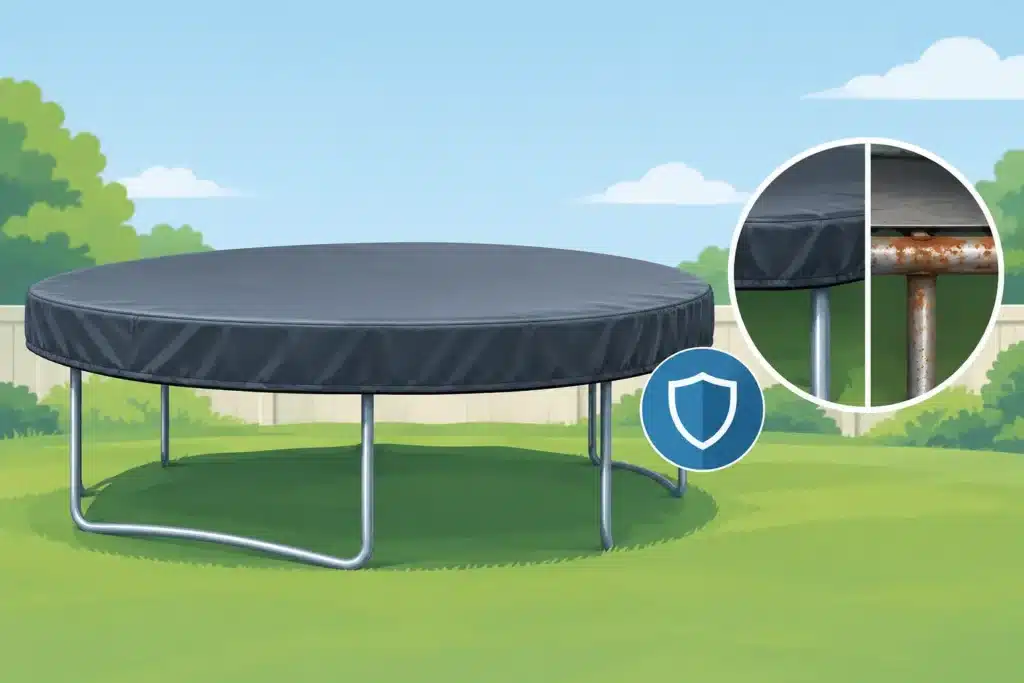
A weather cover can be one of the simplest ways to protect a premium backyard trampoline, but do trampoline covers prevent rust on their own? Not completely. A quality cover reduces the rain, snow, leaves, and debris that sit on your trampoline, yet lasting rust protection depends on the frame material, drainage, airflow, and a few smart maintenance habits.
For families investing in an in-ground trampoline, this distinction matters. Your trampoline is designed to be a long-term place for active play, exercise, and backyard memories. Protecting the metal frame helps preserve its appearance, performance, and safety season after season.
Do Trampoline Covers Prevent Rust?
Trampoline covers help prevent rust by limiting direct exposure to moisture. When rainwater, wet leaves, and snow repeatedly rest against metal parts, corrosion has more opportunity to form. A properly fitted cover keeps much of that moisture and debris away from the jumping surface, pads, springs, and exposed frame areas.
However, a cover is not a magic shield. Rust develops when steel stays wet long enough for oxygen and moisture to react with the metal. If a cover traps condensation underneath, holds standing water, or is placed over a wet trampoline for weeks, it can actually create the damp conditions rust needs.
Think of a cover as one layer of protection, not the entire maintenance plan. The best results come from combining a weather cover with a galvanized, rust-resistant steel frame, good site drainage, regular cleaning, and occasional inspections.
Why Galvanized Steel Makes the Biggest Difference
A trampoline cover can reduce weather exposure, but the frame itself does the heaviest work in rust defense. Premium trampolines use galvanized steel, which has a protective zinc coating that slows corrosion. This is especially valuable in areas with frequent rain, snow, humidity, coastal air, or major temperature swings.
Galvanized steel is rust-resistant, not rust-proof. Scratches, worn areas, damaged coatings, and constantly wet conditions can still lead to corrosion over time. That is why families should look beyond the cover when comparing trampoline quality. Strong materials, well-made connections, and a durable finish give your investment a far better starting point.
For an in-ground system, frame quality is even more significant. Parts of the trampoline sit close to soil and are exposed to the moisture conditions around the installation area. A commercial-grade galvanized frame paired with proper drainage is a much stronger long-term choice than relying on a cover to solve every weather concern.
Covers Protect More Than the Frame
While people often buy a cover to address rust, its everyday benefits reach well beyond the steel frame. Keeping leaves, acorns, pine needles, dirt, and animal debris off the trampoline can make a noticeable difference in how often your family needs to clean it before jumping.
A cover also helps protect the jump mat and safety pads from prolonged sun exposure. UV rays can fade and gradually weaken outdoor materials, particularly in bright, hot locations. During fall and winter, a cover can reduce the buildup of wet organic material that holds moisture against pads and frame components.
There is a practical trade-off: the cover must fit correctly and allow water to shed away. A loose cover that collects rainwater can sag, stretch, and place unnecessary weight on the trampoline. Choose a cover designed for your trampoline’s exact shape and dimensions, whether you have a round 10-foot, 12-foot, or 14-foot model or a rectangular in-ground trampoline.
Never Cover a Wet Trampoline for Long Periods
This is the maintenance habit that makes the biggest difference. After a storm, let the trampoline dry before securing a cover for an extended period. If the mat, pads, frame, or springs are already wet, covering them tightly can hold moisture beneath the cover.
You do not need to wait for perfection after every light shower. But before covering the trampoline for a vacation, a long stretch of winter weather, or seasonal storage, remove pooled water and wet debris first. Let the surface air out whenever conditions allow.
Check the cover after heavy rain as well. Water should run off rather than gathering in the center. Remove leaves and branches promptly so they do not block drainage paths or create damp pockets. A few minutes of care can prevent months of trapped moisture.
In-Ground Trampoline Drainage Is Essential
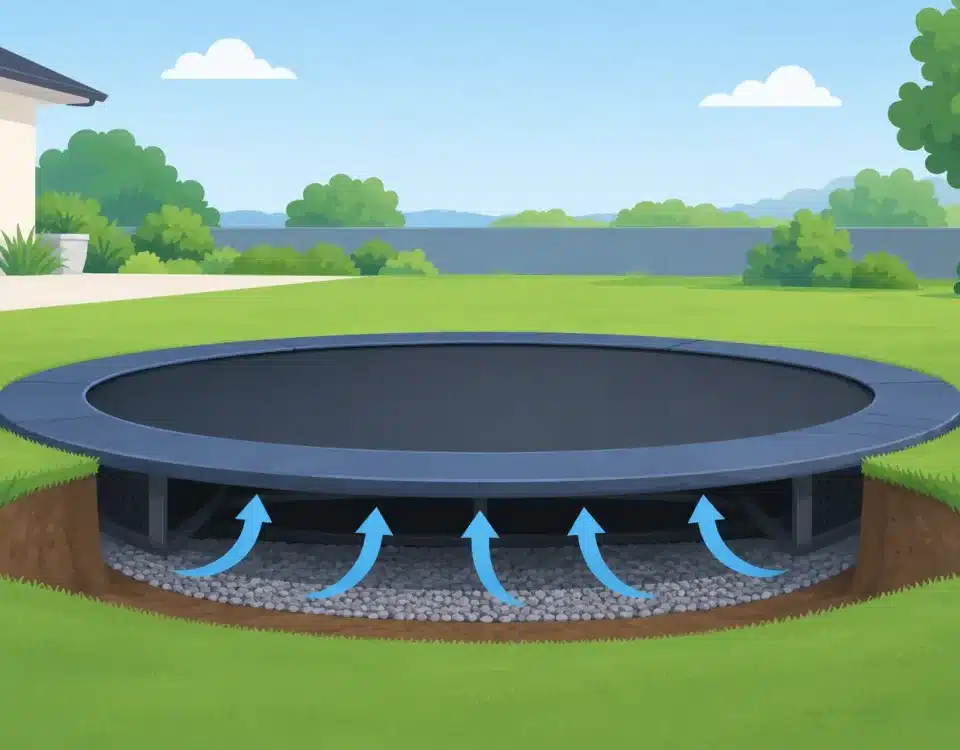
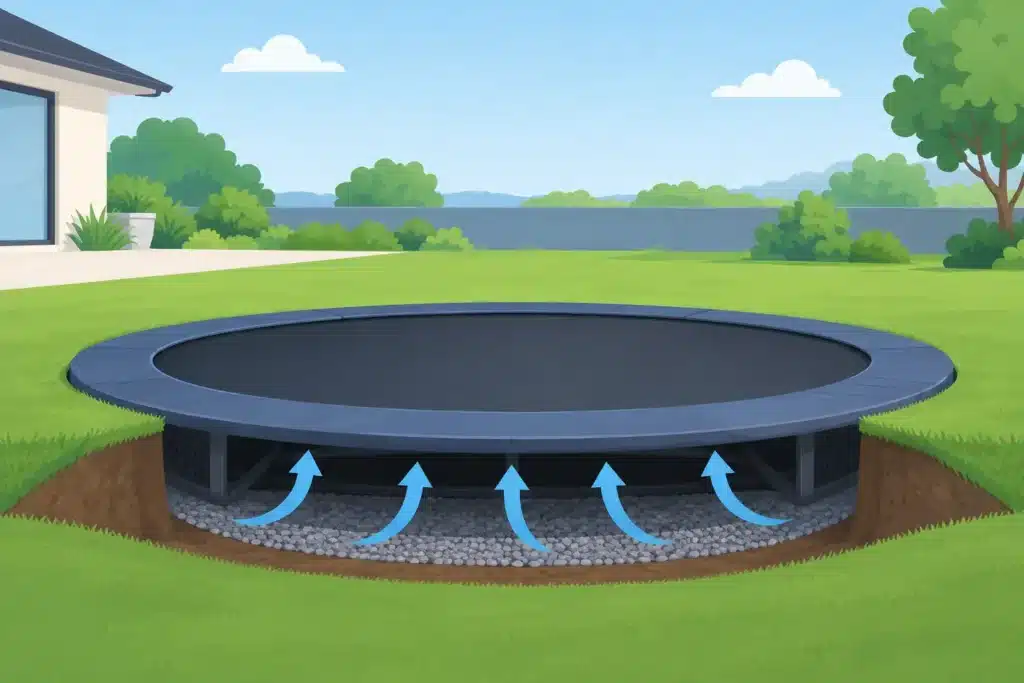
An above-ground trampoline frame is exposed to rain, but an in-ground trampoline also depends on what happens below the jumping surface. The pit beneath the trampoline must drain properly. Without drainage, water can collect below the mat, increase humidity around the frame, and create a persistently damp environment.
That is why installation preparation is part of protecting your trampoline. The excavation area should be planned for your local soil conditions, water table, slope, and typical rainfall. In some yards, drainage stone, a drain system, or other site-specific measures may be necessary to move water away from the trampoline pit.
A weather cover can keep falling rain and debris out of the opening, but it cannot correct a drainage problem below ground. If you notice standing water, a musty smell, unusually slow drying, or recurring moisture under the mat, address the drainage issue before it affects the frame or jumping components.
A Simple Rust-Prevention Routine for Families
Your trampoline does not need constant attention to stay in great shape. A quick inspection at the start of each season and after major storms is usually enough to catch small issues early. Look over the frame joints, spring areas, hardware, enclosure connections, and the underside of the mat.
If you find dirt or leaf buildup, brush it away with a soft broom or cloth. Rinse off mud when needed, then allow the trampoline to dry thoroughly. Avoid harsh abrasives that can damage protective coatings on steel components.
Small spots of surface corrosion deserve attention, especially around hardware or places where the coating may have been scraped. Clean the area gently, dry it completely, and follow the manufacturer’s care guidance for the part involved. If you see deep corrosion, cracking metal, weakened hardware, or structural damage, stop using the trampoline until the component has been evaluated or replaced.
For households in snowy regions, remove heavy snow accumulation when it is safe to do so. A cover can help keep debris off the trampoline during winter, but it is not meant to carry unlimited snow weight. In windy regions, make sure the cover is securely fastened according to its instructions so it does not rub against the frame or blow loose.
When a Cover May Not Be the Best Choice
A cover is helpful for many families, but there are times when leaving it off temporarily makes more sense. After rain, during a humid spell, or whenever the trampoline needs to dry, airflow is more useful than sealing moisture underneath.
Families who use the trampoline daily may also prefer to use a cover mainly during vacations, storms, leaf season, and extended periods without jumping. This keeps cleanup manageable without turning cover removal into an everyday chore. The right routine should support frequent, safe use of the trampoline rather than make outdoor play feel like extra work.
If your backyard has significant shade, mature trees, or poor drainage, a cover becomes more valuable for debris control, but it also requires more frequent checks. In a sunny, dry climate, UV protection and dust control may be the primary benefits instead of rust prevention.
Choose Protection That Matches Your Investment
A quality cover is a smart accessory for a premium in-ground trampoline, particularly when it is sized correctly and used with good moisture management. It reduces exposure to the elements, helps keep the jumping area clean, and supports the long-term condition of pads, mats, and metal components.
Still, the strongest defense against rust starts with a well-built galvanized frame and a correctly installed, well-drained trampoline pit. Add routine inspections and sensible cover use, and your family can spend less time worrying about weather and more time enjoying the backyard space you built for them.