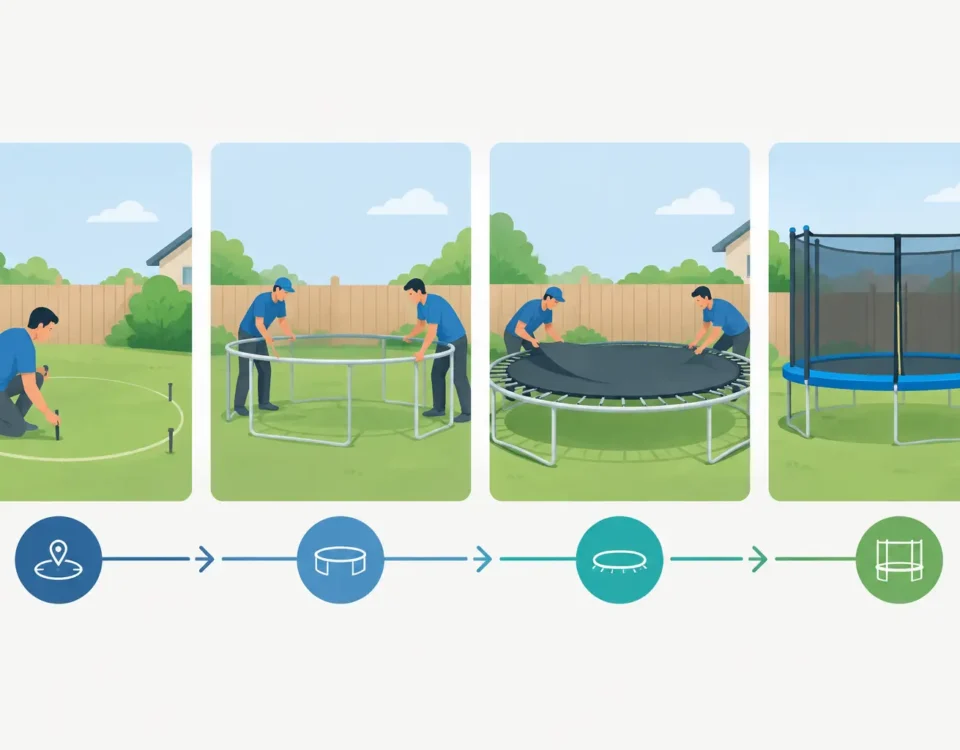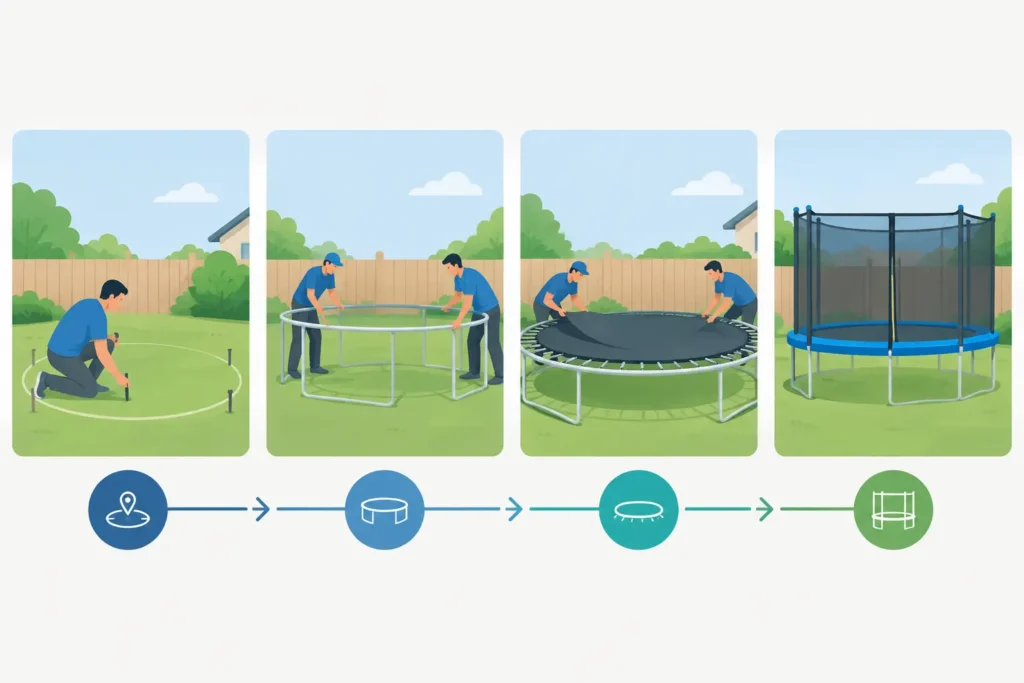

Your Trampoline Installation Timeline, Week by Week
October 12, 2026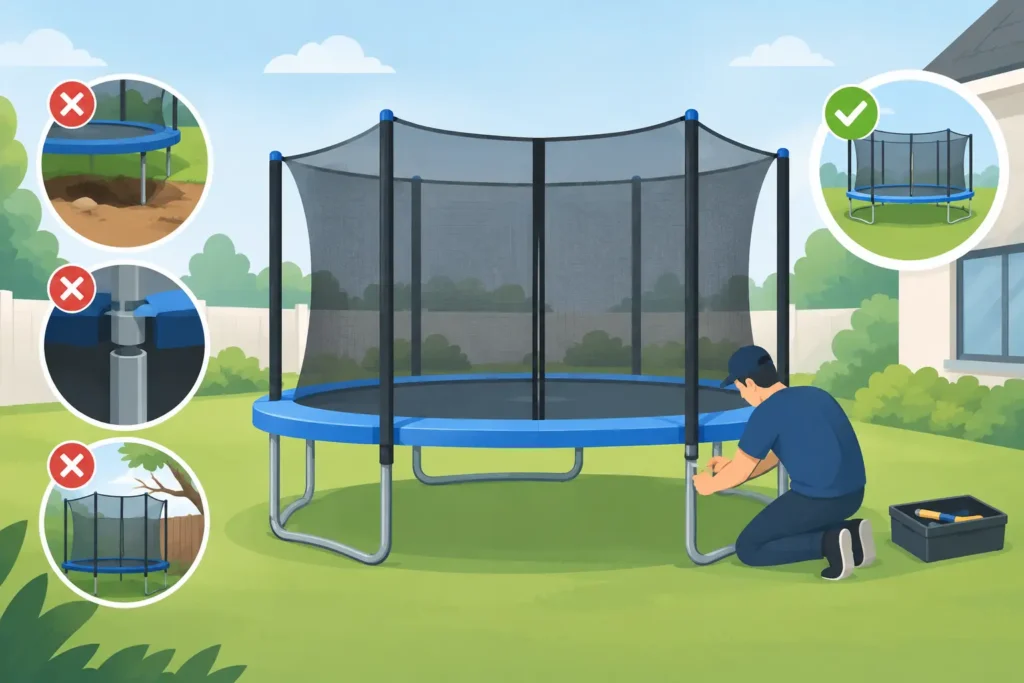
A beautiful in-ground trampoline can become the favorite place in your backyard – until a rushed installation creates standing water, an uneven jump, or a safety concern that could have been prevented. Most trampoline installation mistakes happen before anyone starts jumping. They begin with choosing the wrong location, underestimating excavation, or treating a premium trampoline system like a quick weekend assembly project.
An in-ground trampoline is a long-term family investment. Taking time to plan the site, follow the product instructions, and prepare the ground correctly protects that investment while giving kids a safer, more inviting place to play, move, and make memories.
Trampoline Installation Mistakes That Start With Planning
1. Choosing a spot based only on where it looks best
A low-profile trampoline can fit beautifully into a landscaped backyard, but appearance cannot be the only deciding factor. Before choosing the center of the lawn or the open area beside a patio, consider overhead clearance, nearby trees, fences, hardscape, utility lines, and the natural slope of the yard.
Look above the proposed location as carefully as you look around it. Branches, roof overhangs, basketball hoops, power lines, and deck structures all reduce safe jumping space. The area around the trampoline matters too. A child stepping off the edge should not land immediately beside a fence, retaining wall, stone border, or pool equipment.
Measure the full system footprint, including its safety enclosure and the recommended clear area around it. A 10-foot round trampoline may be a smart choice for a compact yard, while 12-foot and 14-foot models generally give active families more jumping room. Rectangular designs can be a great fit along a property line or in a narrow landscape zone, but they still need adequate perimeter clearance.
2. Skipping the utility check and local requirements
Digging without identifying buried utilities is one of the most expensive mistakes a homeowner can make. Before excavation begins, contact 811 so utility companies can mark public lines. Private lines for landscape lighting, irrigation, drainage, outdoor kitchens, and gas-powered features may require additional investigation.
It is also wise to check local setback rules, HOA guidelines, and permit requirements before ordering materials or scheduling an installer. Rules vary widely by municipality and neighborhood. Addressing them early is far easier than moving an excavation after the yard has been disturbed.
3. Selecting a trampoline before matching it to the family
The right installation starts with the right trampoline. A smaller model may preserve more lawn space, but it can feel crowded for multiple children or teens who will use it often. A larger round trampoline typically supports more family play, while a rectangular format can offer a more defined jumping area and may better suit the shape of certain yards.
Think beyond today. Are younger children the main users now, or will this become the backyard gathering spot as they grow? Will adults use it for fitness? Will friends be jumping during weekend get-togethers? Choosing a premium system with a rust-resistant galvanized frame, durable jumping surface, and a purpose-built safety enclosure helps the trampoline keep up with years of real family use.
Excavation Errors That Affect Safety and Performance
4. Digging the hole too shallow, too deep, or the wrong shape
An in-ground trampoline should sit at the intended finished height, with the structure properly supported according to the manufacturer’s requirements. A hole that is too shallow can leave the trampoline above grade, creating an unwanted step and spoiling the integrated look. A hole that is too deep may make installation difficult and affect how the frame and retaining system are supported.
The excavation must also match the trampoline’s specific shape and installation design. Do not assume every round, oval, or rectangular trampoline uses the same pit dimensions. Follow the supplied plan for your exact model, including wall placement, base preparation, and required spacing beneath the jumping mat.
Measure more than once before digging. Mark the layout on the lawn, then stand back and review the location from the house, patio, and play areas. This simple step can prevent an awkward placement that is difficult to correct later.
5. Ignoring drainage beneath the trampoline
Water is the enemy of a poorly prepared in-ground trampoline pit. Rainwater that collects below the mat can create mud, odors, mosquito habitat, soil movement, and unnecessary wear on materials. In cold climates, repeated freeze-thaw cycles can make the problem worse.
The best drainage approach depends on your soil, water table, local rainfall, and the slope of the yard. Sandy soil may drain well naturally, while dense clay often needs more deliberate drainage planning. Some installations require a gravel base, a drain line, or a sump solution to direct water away from the pit. A qualified excavator or drainage professional can help determine what your property needs.
Never cover a drainage concern with extra soil and hope it resolves itself. Test the site after rain if possible. A dry-looking lawn can still hold water below the surface.
6. Failing to stabilize the pit walls
The soil around an in-ground trampoline needs to remain stable season after season. Loose, sandy, or shifting soil can collapse inward, place pressure on the trampoline system, and create uneven edges around the frame. This is especially relevant in sloped yards, areas with heavy rain, and properties with clay soils that expand and contract.
Use the retaining solution specified for the trampoline system and installation conditions. A purpose-designed retaining wall or support structure does more than create a neat-looking edge. It helps protect the excavation, preserves the intended shape, and supports long-term performance. Avoid substituting random landscape timbers, thin plastic edging, or improvised materials that were not designed for the job.
Assembly and Finishing Mistakes Families Should Avoid
7. Rushing frame assembly and hardware checks
Premium trampoline components are engineered to work together, but they still need careful assembly. A frame that is not level can affect the look, feel, and long-term fit of the system. Hardware that is loosely installed or incorrectly positioned can create movement where there should be stability.
Assemble on a level surface when the instructions call for it, use the proper tools, and keep parts organized. Before the jumping mat and safety enclosure are fully installed, inspect the frame alignment and confirm that every connection is secure. It is much easier to correct a missed fastener before the project is complete.
Do not force components into place. If something does not line up, pause and check the instructions, orientation, and measurements. Forcing a part can damage the finish or hide a larger installation issue.
8. Treating the safety enclosure as optional
A safety enclosure is not an accessory to add later when time allows. For family use, it is a central part of a safer trampoline setup. The enclosure should be installed exactly as designed, with secure poles, properly tensioned netting, and a fully functioning entrance.
Inspect the enclosure before the first jump and periodically throughout the season. Check for loose connections, damaged netting, exposed hardware, and gaps between the jumping area and enclosure. Teach children to enter and exit through the designated opening, not by climbing over the net.
Adult supervision, one-at-a-time jumping, and clear family rules remain essential. Even the best materials and safety systems work best when paired with smart habits.
9. Forgetting weather protection and ongoing care
Installation day is only the start of ownership. Leaves, snow, heavy rain, and UV exposure can all affect the appearance and lifespan of outdoor equipment. A properly fitted weather cover helps keep debris out of the jumping area and supports easier seasonal care.
Create a simple inspection routine. At the start of each season and after severe weather, look over the mat, pads, springs or springless components, frame, enclosure, drainage area, and surrounding landscape. Tighten approved hardware as needed and remove debris promptly. If the trampoline is installed near trees, plan for more frequent cleaning.
A few minutes of maintenance can help preserve the clean, integrated backyard look that made an in-ground trampoline appealing in the first place.
Build the Backyard Feature Your Family Will Use for Years
The best in-ground trampoline installations feel effortless once they are finished. The trampoline sits naturally in the yard, the drainage works quietly in the background, and the safety enclosure gives parents more confidence while kids burn energy outside. Careful planning now gives your family a durable place to jump, laugh, exercise, and come together for many seasons ahead.