
Why a Galvanized Steel Trampoline Frame Matters
October 18, 2026
Capital Play Trampolines for Family Backyards
October 22, 2026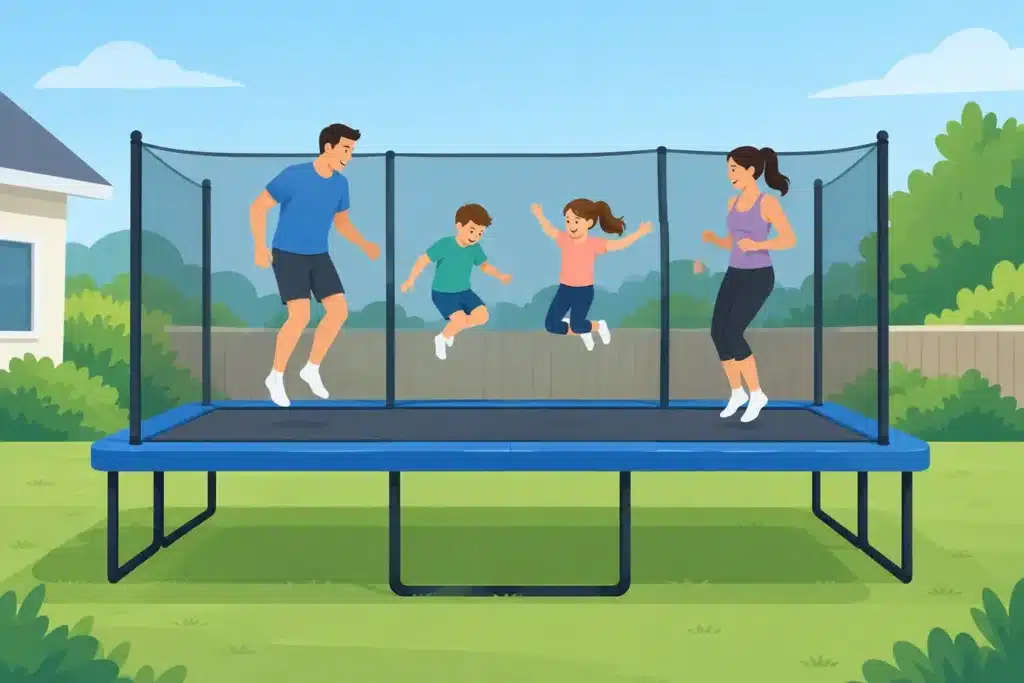
A rectangular trampoline can turn a narrow side yard or a carefully planned patio-adjacent play area into the place your kids want to be after school. But are rectangular trampolines better than round ones for every family? Not automatically. The better shape is the one that fits your yard, supports the way your family will jump, and gives you room to build a safety-focused in-ground installation.
For many homeowners, a rectangular in-ground trampoline is an excellent choice. It offers a more predictable jumping lane, uses space efficiently, and creates a clean, tailored look in a landscaped backyard. A round model can still be the best answer for a busy household with several younger jumpers, especially when the yard has plenty of open space. Here is how to make the right call before you plan your excavation.
Are Rectangular Trampolines Better for Bounce?
Rectangular trampolines are known for a more consistent, direct bounce. The springs work independently along the frame, so a jumper can build height more easily and receive a more even response across much of the mat. That is why rectangular designs are common in gymnastics training and appeal to athletic kids, teens, and adults who want a lively workout.
On a round trampoline, the spring system naturally guides jumpers toward the center. That centered bounce can feel gentler and more forgiving for casual play. It is also helpful when young children are still learning basic control, because the shape provides a natural cue to stay in the middle of the mat.
The difference matters most when your family has one confident jumper at a time. A rectangular model gives that jumper room to practice straight jumps, seat drops, and fitness routines with a satisfying response. It is not a reason to encourage flips without proper coaching or supervision. Height and skill do not replace safe jumping habits.
The Shape Does Not Replace Safety
A rectangle is not inherently safer or less safe than a circle. Safe use depends on the whole system: a properly engineered frame, quality padding, a well-fitted safety enclosure, professional-grade materials, correct installation, and clear household rules.
For an in-ground trampoline, the surrounding area deserves just as much attention as the mat. The excavation must be properly sized and drained, and the retaining system must be designed to keep soil stable around the trampoline. A low-profile in-ground design reduces the visual bulk of a traditional above-ground trampoline, but it still needs a purpose-built installation plan.
Choose galvanized, rust-resistant steel built to handle changing seasons, and do not treat the enclosure as an optional extra. A safety enclosure helps define the jumping area and reduces the risk of a child leaving the mat during energetic play. Adults should also set the standard: one jumper at a time is the safest approach, particularly for children of different sizes and abilities.
Where Rectangular Trampolines Shine
A rectangular trampoline often makes the most sense when the available backyard space is long or narrow. Rather than forcing a large circle into the center of the lawn, a 10-foot by 6-foot or 11-foot by 8-foot format can align neatly with a fence line, garden border, or hardscape zone while preserving usable grass for pets and family gatherings.
This shape also gives landscape-conscious homeowners more control over the final look. Straight sides can echo the lines of a deck, pool, patio, or modern planting beds. Once installed at ground level, the trampoline can feel like an intentional recreation feature instead of an oversized object placed in the yard.
Rectangular designs are especially appealing for these households:
- Families with older children or teens who want a more athletic, responsive bounce.
- Homeowners working with a narrow, deep, or clearly defined installation area.
- Active adults who want a dedicated space for low-impact cardio and conditioning.
- Buyers who prefer clean geometric lines in an in-ground backyard design.
That said, measure more than the trampoline itself. You need adequate clearance around the installation, room for the enclosure, safe access, and a location away from branches, play structures, fences, and hard edges. A smaller rectangular trampoline that fits correctly is a better long-term investment than a larger model squeezed into an unsuitable spot.
When a Round Trampoline Is the Better Choice
Round in-ground trampolines remain a favorite for good reason. Their centered bounce and broad, open layout work beautifully for families whose main goal is everyday backyard fun. A 10-foot, 12-foot, or 14-foot round model can be a natural fit in a spacious lawn and often gives children an intuitive, welcoming place to play.
If you have multiple young children who will use the trampoline at different times throughout the day, a round design may feel less intense and easier to manage. Parents often appreciate the visual symmetry too, particularly when the trampoline is installed as the focal point of a large open yard.
A round format may also be easier to position if your backyard does not have clear straight boundaries. Curved landscaping, mature trees, and informal garden layouts can make a circular trampoline look right at home. The key is not to choose round simply because it is familiar. Choose it because the space and your family’s needs point in that direction.
Think About How Your Family Will Use It in Three Years
The best trampoline purchase looks beyond this summer. Small children become confident jumpers quickly. A toddler who loves gentle bouncing today may be a teenager looking for more room and response before you know it.
Ask how frequently the trampoline will be used, who will use it, and whether the household expects the backyard to host friends and relatives. If the trampoline will be a daily after-school energy outlet for growing kids, investing in premium materials and a durable safety system can provide years of value. If your goal is occasional casual use by younger children, a round model may offer everything you need without prioritizing performance bounce.
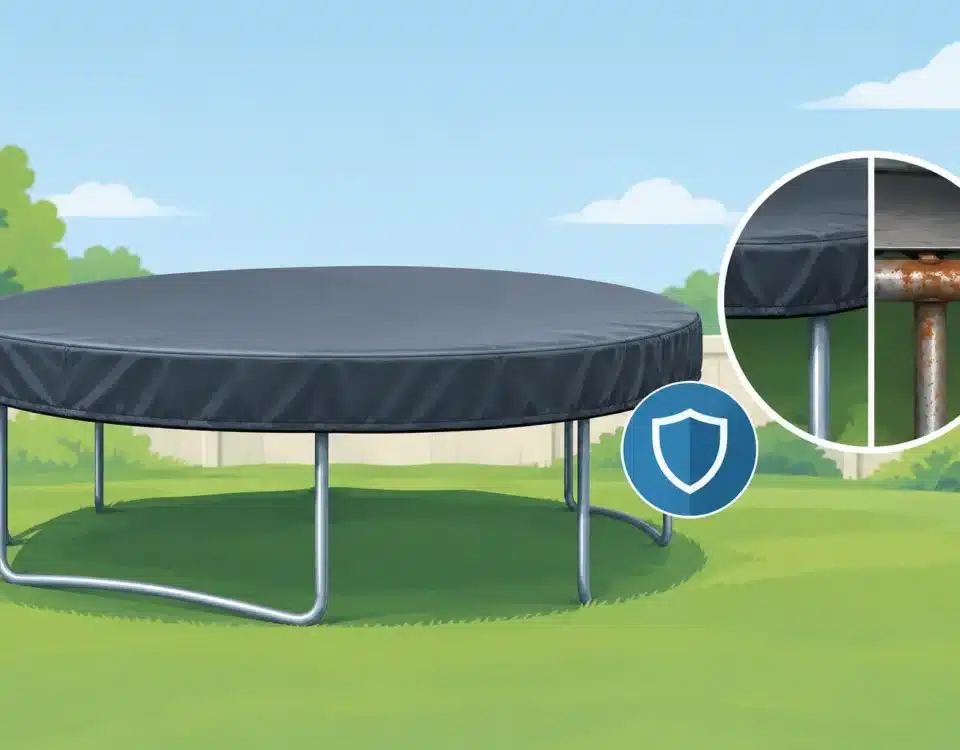
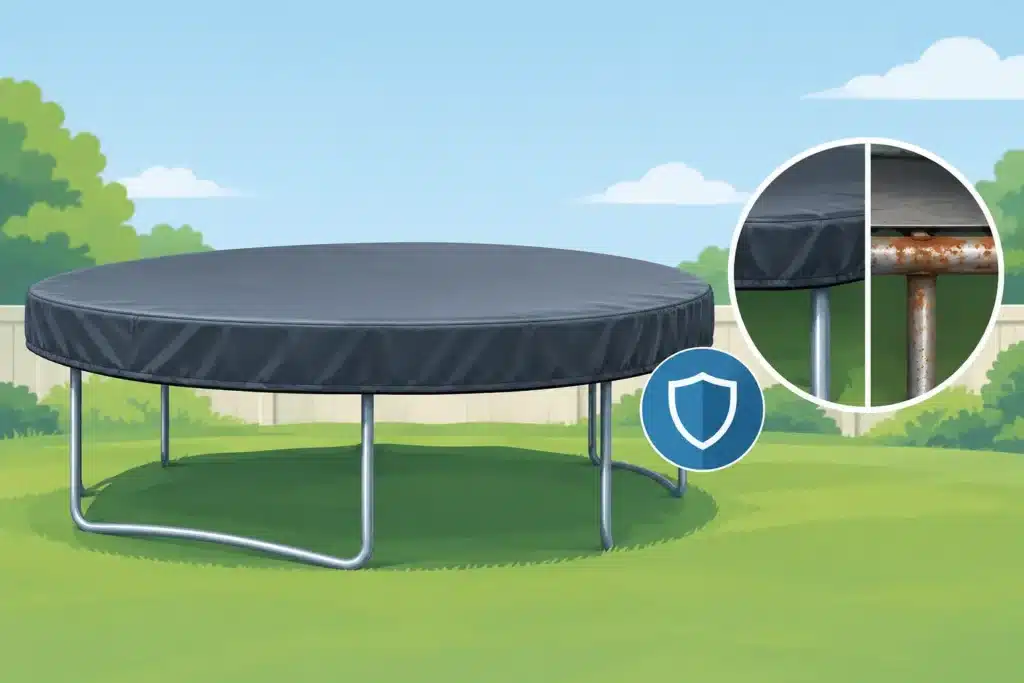
Weather is part of the long-term picture as well. In-ground systems stay outdoors year-round, so rust-resistant galvanized frames, durable jumping mats, and weather covers deserve a place in the budget. A cover helps keep leaves and debris off the trampoline and makes seasonal care more manageable. It is a practical accessory for protecting a major backyard investment.
Choose the Installation Site Before You Choose the Shape
Homeowners sometimes fall in love with a trampoline size before assessing the grade, soil, drainage, utility lines, and access for excavation. Reverse that order. First, identify a safe and workable location. Then select the shape and dimensions that fit it.
Avoid low areas where water naturally collects, and do not assume an in-ground hole will drain on its own. Proper drainage protects the installation and supports long-term performance. Before digging, confirm local requirements and have underground utilities marked. If you are unsure whether a rectangle or round model better suits your site, experienced pre-purchase guidance can prevent an expensive mismatch.
Lets Buy Trampolines helps families compare premium in-ground sizes, safety systems, and installation considerations so they can buy with confidence rather than guesswork.
A Better Question Than “Which Shape Wins?”
Instead of asking whether rectangular trampolines are universally better, ask what will make your family use the trampoline safely and happily for years. A rectangular model may be the clear winner for a narrow yard, a teen athlete, or a crisp modern landscape plan. A round trampoline may be perfect for younger children, a large lawn, and relaxed everyday play.
Give the decision the same care you would give any lasting backyard feature. Measure the site, plan for drainage and an enclosure, choose quality materials, and picture the people who will be laughing and moving outside on it. The right trampoline is the one that makes those family moments easy to say yes to.