
Capital Play Trampolines for Family Backyards
October 22, 2026
Backyard Trampoline Design Trends for Families
October 26, 2026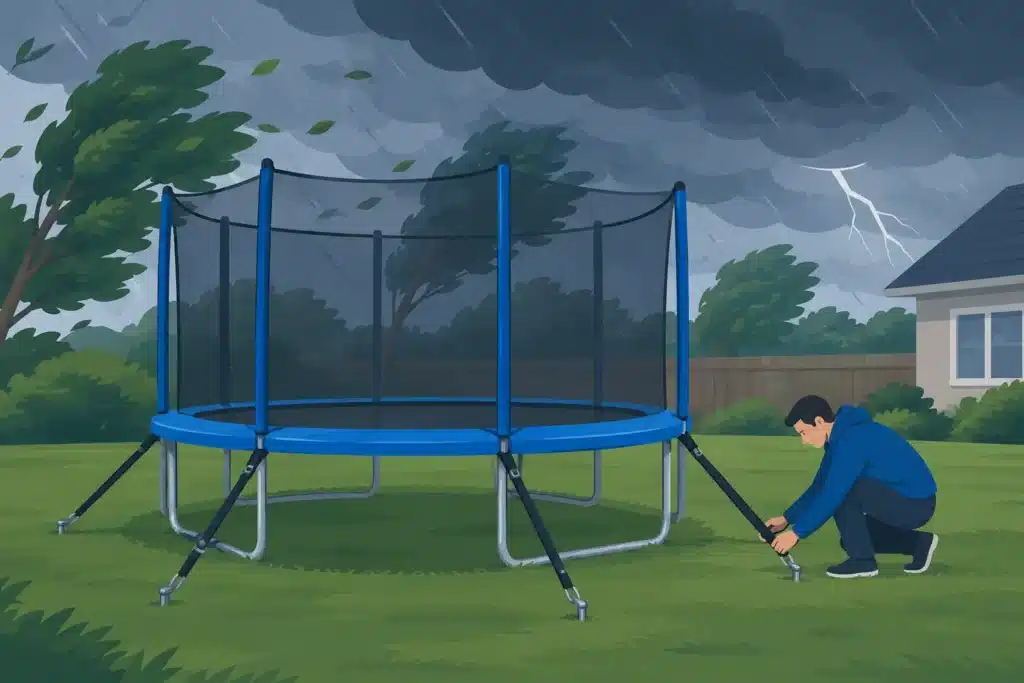
A trampoline can turn an ordinary backyard into the place your kids want to be after school. But when a storm rolls in, that same equipment needs a plan. To secure a trampoline during storms, start before the forecast turns urgent. The goal is not simply to keep the trampoline in place. It is to protect your family, your home, nearby property, and the long-term value of a premium backyard investment.
High winds can lift, slide, bend, or damage a trampoline in minutes. Heavy rain can create different concerns, especially for an in-ground trampoline where drainage and the jump area below the surface deserve attention. A few smart habits, the right accessories, and a clear family routine can make storm preparation much less stressful.
Know What Your Trampoline Needs in a Storm
Every trampoline setup responds to weather differently. A traditional above-ground trampoline is more exposed to wind because air can move beneath the frame. It may need properly installed ground anchors or a storm tie-down system designed for the size and shape of the trampoline.
An in-ground trampoline has a lower profile, which can reduce wind exposure and create a cleaner backyard look. However, lower profile does not mean zero preparation. Wind can still affect safety enclosures, pads, loose accessories, and debris around the jumping area. Rainwater can also collect in the excavation area if the drainage system is not working as intended.
Your location matters, too. A family in a region with frequent summer thunderstorms may need a quick weekly weather routine. Homeowners in hurricane-prone or tornado-prone areas should have a more detailed plan for major weather events. In all cases, follow the instructions provided by your trampoline manufacturer and use accessories made for your specific system.
Secure a Trampoline During Storms Before Wind Arrives
The safest time to prepare is when the weather is still calm. Do not head outside to adjust a trampoline once lightning is nearby or dangerous winds have already started.
For an above-ground trampoline, inspect the anchors first. A quality anchor system should be installed into appropriate ground conditions and fastened to the frame according to its instructions. Avoid assuming that a few lightweight stakes or improvised ropes will hold a large trampoline against powerful winds. They may not, and incorrectly placed straps can damage the frame, mat, or springs.
For an in-ground system, focus on what can move, catch wind, or block drainage. Check that frame pads are secure, enclosure components are correctly attached, and no toys, chairs, sports equipment, or yard decorations are sitting on or near the trampoline. Store loose items indoors or in a secure shed before the storm arrives.
If your trampoline has a removable basketball hoop, bounce board, shade accessory, or similar add-on, remove it when severe weather is expected. These accessories can become wind-catching surfaces, and storing them safely can prevent unnecessary replacement costs.
Be Careful With Covers in High Wind
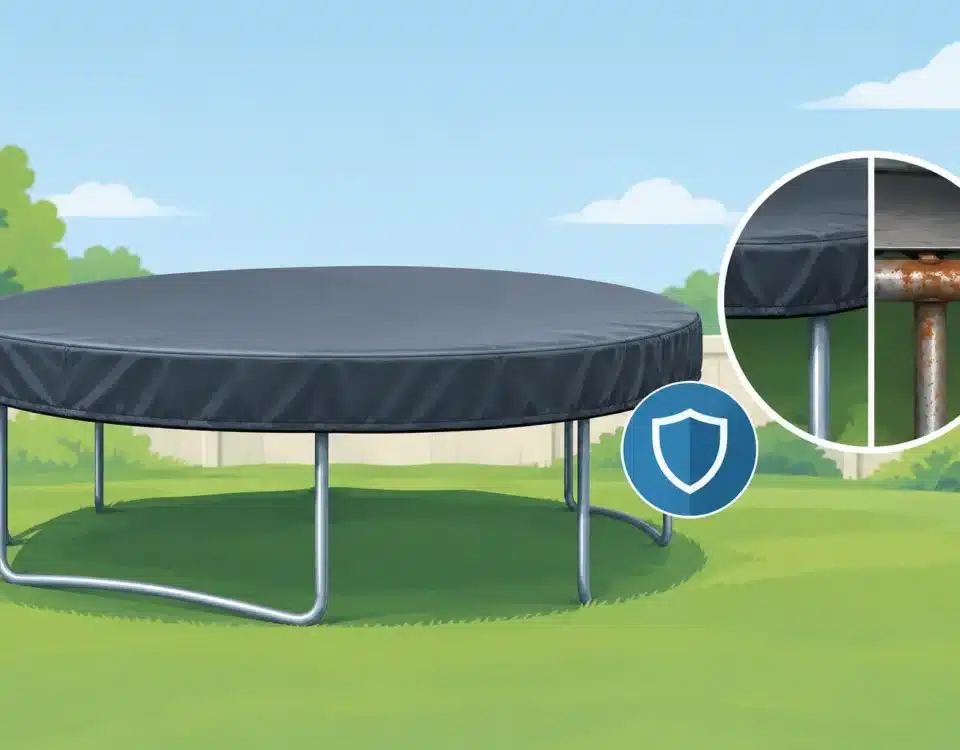
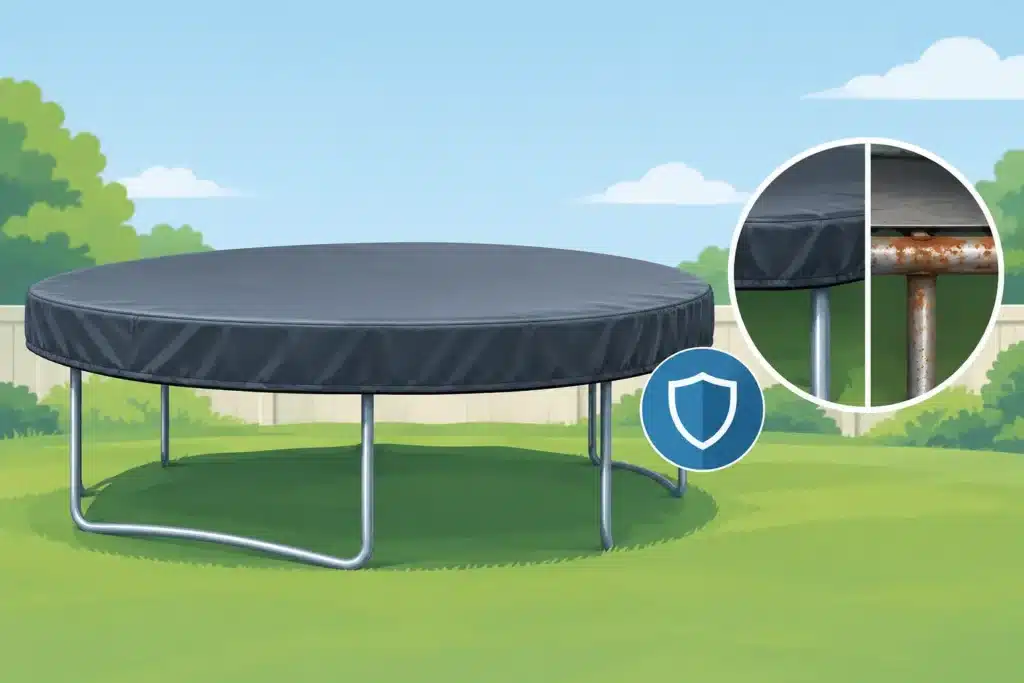
A weather cover is useful for keeping leaves, branches, and everyday debris out of the jumping area. It can be especially helpful when a trampoline will not be used for several days. Still, a cover is not automatically the right choice for every storm.
In strong wind, an improperly fitted cover can act like a sail. It may pull at attachment points, trap water, or tear. Use only a cover designed for your trampoline model, and secure it exactly as directed. If the manufacturer advises removing the cover in high winds, follow that guidance. A weather cover protects the trampoline from debris and moisture, but it is not a substitute for anchoring, proper drainage, or a severe-weather plan.
Make the Safety Enclosure Part of the Plan
A safety enclosure is a key part of safer everyday jumping, helping keep children within the trampoline area. Before a storm, examine the enclosure net, poles, foam sleeves, zipper, clips, and connections. Replace worn straps and damaged netting rather than hoping they will last through another season.
Whether to remove an enclosure before a major storm depends on the trampoline design, the forecast, and manufacturer instructions. Some systems are built to stay assembled, while others may have removable components. Never dismantle an enclosure during rising winds, and do not make changes that could compromise the structure when you reinstall it.
After the storm, check the enclosure before anyone jumps. A net can look fine from across the yard while a clip, pole joint, or strap has loosened. Take a few extra minutes to inspect it closely. That small step supports the safe, confident play your family expects from a premium trampoline system.
Do Not Forget Drainage for In-Ground Trampolines
With in-ground trampolines, storm readiness extends below the jumping surface. Proper drainage is essential because standing water around the trampoline pit can affect the installation area, invite mosquitoes, and leave mud or debris beneath the mat.
After heavy rain, look for slow drainage, pooling water, soil erosion around the perimeter, or water entering areas where it should not. Clear leaves and debris away from drainage paths before storms when possible. If water repeatedly collects beneath your in-ground trampoline, it is worth addressing the drainage issue instead of treating it as a minor inconvenience.
A well-planned installation includes space for water management, ventilation, and access for routine checks. This is one reason installation guidance matters so much with an in-ground trampoline. The right system should look beautiful in your landscape while still performing through changing seasons.
Create a Family Storm Routine
Children should understand one simple rule: no jumping when thunder is heard, lightning is present, or a severe weather alert is active. Even a brief rain shower can make the mat and pads slippery. Wind can make enclosed trampolines unpredictable, and lightning is never a risk worth taking.
A simple storm routine works best when everyone knows it. When storms are forecast, bring everyone inside, close and secure the enclosure entrance, remove loose accessories, and make sure pets are not in the yard. If you own an above-ground model, confirm that the anchor system is in place. For an in-ground model, check the enclosure, pads, surrounding yard, and drainage area.
For a hurricane, tornado watch, or forecast calling for damaging winds, prepare early. Do not rely on a last-minute alert to begin. No anchor system, galvanized frame, or safety enclosure can guarantee protection against extreme weather. Your family’s safety always comes first, and you should never stay outdoors to protect equipment during an active severe-weather event.
Inspect Before the Next Jump
Once the weather clears, resist the urge to send the kids right back outside. Walk around the trampoline first and remove branches, leaves, and standing water. Check the mat for tears, inspect springs or springless connections, confirm that pads have not shifted, and make sure the frame is level and secure.
Look carefully at galvanized steel frame sections for bends, cracks, or damaged joints. Galvanized, rust-resistant materials are made for long-term outdoor use, but even premium equipment should be inspected after a major storm. If you notice structural damage, keep the trampoline off limits until it has been properly repaired or replacement parts are installed.
For in-ground trampolines, also look beneath and around the mat as your installation allows. Water, mud, displaced gravel, or blocked drainage may need attention before normal use resumes. A clean, dry, stable jumping area is worth the wait.
Invest in Protection That Fits Your Setup
The best storm preparation is specific to your trampoline, backyard, and local weather. A 10-foot round model does not have the same needs as a larger 14-foot family trampoline or a rectangular in-ground system. The right anchors, weather cover, enclosure, and installation details should fit the exact product rather than being a one-size-fits-all purchase.
At Lets Buy Trampolines, families can choose premium in-ground trampoline systems, safety-focused enclosures, and weather-ready accessories built for lasting backyard fun. When you plan for storms as carefully as you plan for play, you protect more than equipment. You protect the backyard space where your family can keep moving, laughing, and making memories for years to come.