

A Practical Trampoline Maintenance Schedule
October 30, 2026
Do Trampoline Covers Prevent Rust? What to Know
November 3, 2026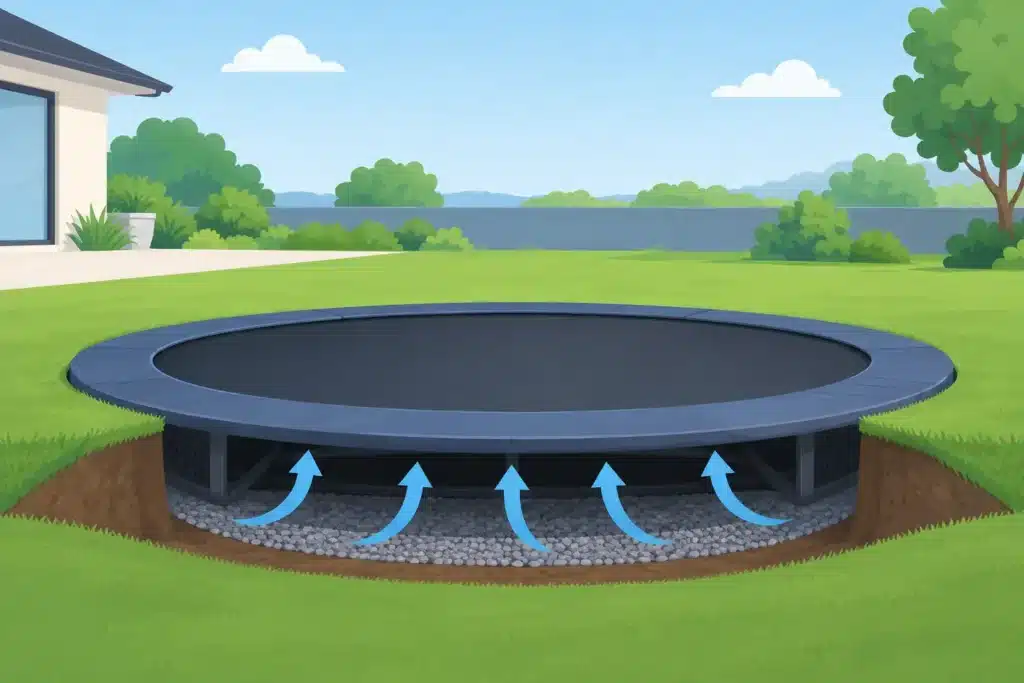
A backyard trampoline should feel like an effortless place for kids to burn energy, practice new skills, and make the kind of memories that pull everyone outside. But when homeowners ask, do trampolines need ventilation, the answer changes based on where the trampoline sits. An above-ground trampoline usually has open air beneath it. An in-ground trampoline needs a properly designed ventilation system as part of its installation.
This is not an optional cosmetic detail. Ventilation helps your in-ground trampoline perform as designed, protects the pit below it, and supports a safer, more enjoyable bounce for years of family use.
Why in-ground trampolines need ventilation
Every jump pushes a large amount of air downward. On an above-ground trampoline, that air simply moves out through the open space beneath the mat. With an in-ground trampoline, the trampoline sits over an excavated pit. If the air has nowhere to go, it becomes trapped below the jumping surface.
That trapped air can create resistance under the mat. The result may be a less responsive bounce, a feeling of pressure beneath the jumper, and extra stress on the trampoline system over time. Purpose-built vents allow displaced air to move in and out of the pit as the mat rises and falls.
Good ventilation also helps reduce the damp, enclosed conditions that can develop below ground. Although ventilation is not a substitute for drainage, air movement can help the pit dry more effectively after humid weather, rain, or snowmelt. That matters because moisture left around the frame, springs, and pit structure is never good news for a long-term backyard investment.
Premium in-ground trampoline systems are designed with this need in mind. Depending on the model and installation approach, ventilation may involve vented pads, side vents, air channels, or a dedicated system built into the retaining wall area. The correct setup should always follow the trampoline manufacturer’s installation instructions.
Ventilation and drainage are not the same thing
It is easy to group ventilation and drainage together because both deal with what happens below an in-ground trampoline. They solve different problems, though.
Ventilation gives air a controlled way to escape when someone jumps. Drainage gives water a reliable way to leave the pit. A pit can have excellent airflow and still hold water after a storm if it has not been graded, drained, or prepared for the conditions in your yard.
Before installation, consider your soil type, water table, slope, and how water already moves through the backyard. Clay-heavy soil, low-lying yards, and areas with frequent heavy rain often need extra drainage planning. A qualified installer may recommend a drainage layer, a drain route, a sump solution, or another method suited to the property.
Never assume the ground will absorb water quickly enough just because the pit has gravel at the bottom. Gravel can be part of a drainage plan, but it does not make water disappear. If groundwater has nowhere to travel, it can remain below the trampoline and create ongoing moisture concerns.
For the best results, plan ventilation and drainage together before excavation begins. It is far easier and more cost-effective to build both into the pit from the start than to correct a wet, poorly ventilated space after the trampoline is installed.
What happens when an in-ground trampoline has poor airflow?
A trampoline can still appear fine from the top while conditions below it are working against its performance. Poor ventilation may show up as a noticeably stiff or sluggish bounce, especially compared with the expected feel of the model. You may also notice that the pit stays humid or damp longer than it should.
Over time, excess moisture and poor air circulation can contribute to musty odors, mildew on surrounding materials, and more wear on components exposed to damp conditions. Even galvanized, rust-resistant steel benefits from a dry, well-prepared environment. Galvanization provides valuable protection, but it should not be treated as permission to ignore standing water or a chronically wet installation pit.
A poorly managed pit can also invite debris, leaves, and pests. While a weather cover helps keep the jumping surface clean during periods of non-use, it does not solve an airflow or drainage issue below the trampoline. In fact, a cover is another reason to check the pit regularly, since it may limit how quickly moisture evaporates from the system after wet weather.
How much ventilation does your trampoline need?
There is no one-size-fits-all number of vents for every backyard. The right amount depends on the trampoline’s size and shape, the pit design, the retaining-wall system, local climate, soil conditions, and the specific manufacturer requirements.
A compact rectangular trampoline and a large 14-foot round trampoline do not displace the same amount of air. Likewise, a dry, sandy yard in one part of the country presents different installation conditions than a humid backyard with dense soil and frequent summer storms.
The safest approach is to select an in-ground trampoline system engineered for below-grade installation, then follow the supplied plans exactly. Do not try to create ventilation by cutting holes into the jumping mat, safety padding, or frame components. Those parts are designed to protect jumpers and support the system’s performance. Altering them can affect safety and may compromise warranty coverage.
If you are working with an excavator, landscaper, or contractor, provide the manufacturer’s installation documentation before the hole is dug. This keeps everyone aligned on pit dimensions, wall placement, drainage needs, ventilation locations, and clearance around the trampoline.
A few signs your pit needs attention
If an existing in-ground trampoline feels unusually resistant when jumped on, collects water below the mat, develops persistent odors, or stays wet long after rain, inspect the installation. Remove leaves and debris from visible vents, check that drainage routes are not blocked, and look for standing water in the pit.
Do not send children into the pit or attempt a major repair without proper precautions. If water is recurring or the retaining area appears to be shifting, contact an experienced trampoline installer or landscape professional. Addressing the cause early can protect both the trampoline and the surrounding yard.
Above-ground trampolines usually get natural ventilation
For a traditional above-ground trampoline, dedicated ventilation is generally unnecessary because air can move freely under the jumping surface. That does not mean maintenance is hands-off. Keep the area beneath the trampoline clear of stored items, toys, lawn equipment, and thick piles of leaves. Blocking the space below the mat can interfere with normal movement and create unnecessary hazards.
It is also wise to check the ground after extended rain. An above-ground trampoline should stand on a level, stable surface, not in a puddle or area where runoff regularly gathers around the legs. A quality weather cover can protect the mat and pads from debris and harsh weather, while a safety enclosure helps create a more controlled jumping environment for active families.
Build ventilation into a safer in-ground installation
An in-ground trampoline delivers the clean, low-profile backyard look many homeowners want, but the polished finish depends on what happens below the surface. Choose a system made for in-ground use, plan the pit carefully, and treat ventilation as essential infrastructure rather than an afterthought.
At Lets Buy Trampolines, the goal is to help families choose premium equipment that fits their yard, their children’s ages, and how they plan to play. Whether you are considering a round model for everyday family fun or a rectangular trampoline for more focused bouncing, start with the installation requirements before selecting the final location.
A well-ventilated, well-drained pit lets your trampoline deliver the lively bounce, durable performance, and safer outdoor fun your family is investing in. Plan it right from the ground up, then get ready to enjoy the backyard more often.