

Round vs Rectangular In-Ground Trampolines
July 23, 2026
In Ground Trampoline Drainage Solutions That Work
July 25, 2026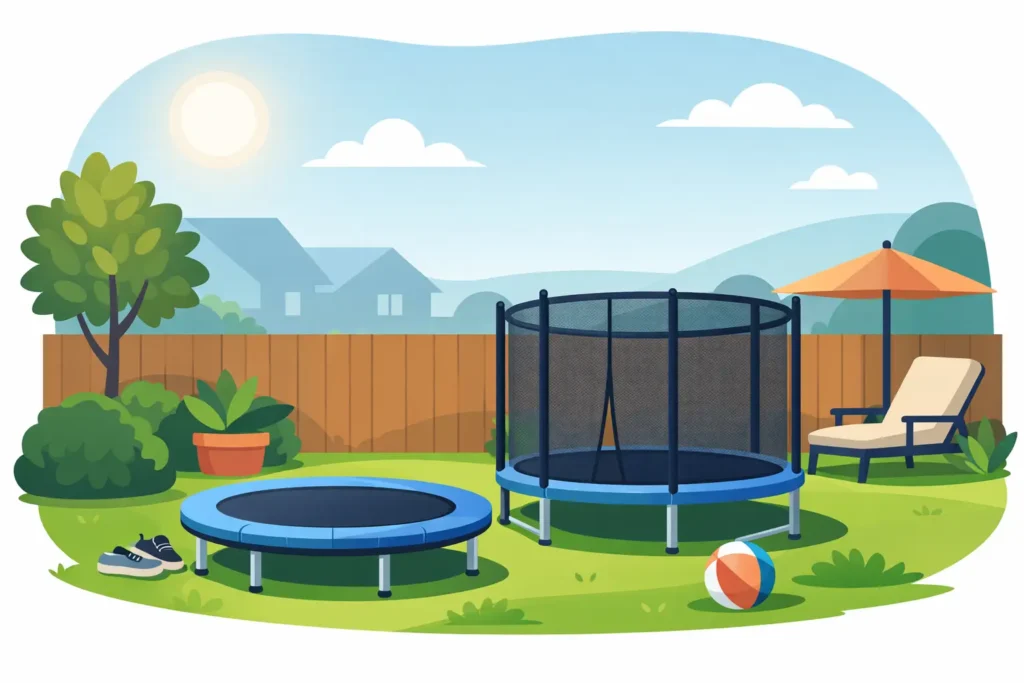
A small backyard can still become the place where everyone wants to be. The answer to what size trampoline for small yard space is rarely “the biggest one that fits.” It is the size that leaves enough room for safe access, landscaping, and everyday family life while giving your kids a jumping area they will genuinely enjoy.
For many families, a premium in-ground trampoline in the 10-foot range or a compact rectangle is the sweet spot. These options offer real room to play without letting the trampoline take over the entire yard. The right choice depends on your usable space, the number and ages of jumpers, and whether the trampoline is mainly for casual family fun, active exercise, or growing athletes.
Start With the Space Around the Trampoline
The trampoline’s stated diameter or length and width are only part of the footprint. An in-ground trampoline sits low and looks beautifully integrated into a landscape, but it still needs a clear zone around it. You need room for the safety enclosure, entry point, maintenance access, and a comfortable buffer from fences, walls, trees, playsets, patios, and hardscape edges.
Before choosing a model, measure the open, level portion of your yard. Do not measure all the way to a fence line and assume that entire area is usable. Low branches, sprinkler heads, sloped ground, retaining walls, and garden beds can all affect placement. The best location also gives parents a clear view from the house or patio.
For a small yard, a compact trampoline placed thoughtfully often looks more intentional than a larger model squeezed into a corner. In-ground installation helps preserve sightlines and reduces the visual bulk of a traditional above-ground frame, making it an especially smart choice when landscape design matters.
What Size Trampoline for a Small Yard? Compare Your Options
A 10-foot round trampoline is usually the most versatile compact choice for a small backyard. Its circular shape uses space efficiently, works well for one jumper at a time, and gives young children and families a generous area for everyday bouncing. If your yard has an open square or round section, this is often the first size to consider.
A 10-foot by 6-foot rectangular trampoline is an excellent answer when the yard is narrow. Rectangular models can fit neatly alongside a patio, along the side of a lawn, or within a long landscape zone where a round frame would waste valuable space. The jumping area is more compact, but the shape can make all the difference in a tight layout.
An 11-foot by 8-foot rectangle provides a meaningful step up in jumping room without reaching the footprint of a large 14-foot round trampoline. It can be a strong fit for families with school-age children or teens who want more room for active play, provided the yard has enough width for a safe perimeter.
A 12-foot round trampoline is worth considering if your yard is small but not cramped. It gives a family more room to grow and can feel less limiting as children get older. However, the added two feet in diameter affects the entire installation area, not just the mat. If choosing 12 feet means eliminating the safety buffer or crowding a patio, step back to 10 feet.
A 14-foot trampoline is generally better suited to medium and large yards. It is a wonderful family recreation feature when space allows, but it can dominate a small lawn and make proper clearance harder to maintain. A smaller premium trampoline with a complete safety system is the better long-term investment than an oversized model that compromises the yard’s usability.
Match the Shape to Your Yard Layout
Round trampolines are a natural fit for open backyard areas. They create a central play destination, are easy for younger jumpers to use, and pair well with curved planting beds or a broad lawn. In a compact yard, a 10-foot round model can provide a balanced look without overwhelming the landscape.
Rectangular trampolines are the problem-solvers for narrow, angular, or side-yard spaces. Their straight edges make planning easier around a deck, fence, or property line. They are also popular with active jumpers because the layout offers a more defined jumping path. That does not mean every child needs a rectangle, though. For relaxed family bouncing, shape should follow the yard first.
Think beyond where the trampoline can physically go. Consider how the family moves through the backyard. Can someone carry food to the grill, mow the lawn, walk the dog, or reach the shed without navigating around the enclosure? The right installation leaves the yard functional, not just filled.
Choose for Today’s Jumpers and Tomorrow’s Family Fun
For one or two younger children, a compact 10-foot round or 10-foot by 6-foot rectangle can provide years of outdoor activity. Children do not need the largest model to burn energy, practice coordination, and enjoy screen-free play. A quality safety enclosure and supervised one-at-a-time jumping matter far more than maximizing mat size.
For a family with older children, teenagers, or frequent neighborhood guests, an 11-foot by 8-foot rectangle or 12-foot round may be the more comfortable fit. Still, a trampoline should not be selected based on the expectation that multiple people will jump together. Safe trampoline use means one jumper at a time, even on a larger model.
If athletic training is a major goal, speak with a trampoline specialist about the intended use. Gymnastics-style skills and high-performance jumping have different requirements than backyard recreation. Families often find that a compact, high-quality system serves their real day-to-day needs better than buying extra size for occasional use.
Do Not Shrink the Safety Plan to Save Space
When yard space is limited, safety components are not optional extras. A well-designed enclosure helps keep jumpers on the mat, while quality padding protects the frame and spring area. For in-ground systems, proper excavation, drainage, airflow, and installation are equally important to lasting performance.
Premium materials also matter in a small yard because the trampoline will be highly visible and heavily used. Galvanized, rust-resistant steel frames and durable commercial-grade components are built to handle changing weather and repeated family use. A weather cover can help protect the investment when the trampoline is not in use, particularly during harsh seasonal conditions.
Never place a trampoline where branches hang overhead or where a jumper could approach a fence, wall, pool edge, or hard surface too closely. Avoid low spots that collect water. Your installer should have a clear plan for the pit, drainage, and the surrounding finish so the trampoline remains safe, stable, and attractive through the seasons.
Plan the Installation Before You Order
An in-ground trampoline is a lasting backyard feature, so planning ahead pays off. Mark the proposed area with stakes, rope, or even a garden hose shaped into the model’s outline. Then walk around it. Open the patio door, pull out chairs, move the mower through, and picture children entering and exiting the enclosure.
This simple exercise often makes the decision clear. A 12-foot round may look ideal on paper, but a 10-foot round might preserve the path to the garden and leave room for a seating area. In another yard, a narrow 10-foot by 6-foot rectangle may create a better result than any round design.
Also account for underground utilities, irrigation, drainage routes, and local installation considerations before excavation begins. These details are easier and less expensive to address during planning than after a trampoline has been delivered.
A Smart Small-Yard Recommendation
If you want a dependable starting point, choose a 10-foot round in-ground trampoline for an open but limited backyard. It offers the best blend of play value, compact scale, and family-friendly use. Choose a 10-foot by 6-foot or 11-foot by 8-foot rectangle when the available area is long, narrow, or bordered by a patio or fence.
Lets Buy Trampolines can help homeowners compare premium in-ground sizes, safety systems, and installation needs before they commit. A quick conversation about your yard measurements and family goals can prevent a costly sizing mistake and make the decision feel much easier.
Your backyard does not need to be large to create a favorite place for active play. Give the trampoline enough breathing room, choose quality built for years of use, and you can create a safe, polished space where family memories keep bouncing back.