

Adult In-Ground Trampoline Exercise: A Smart Workout
July 28, 2026
Akrobat vs Capital Play Trampolines: Best Fit?
July 30, 2026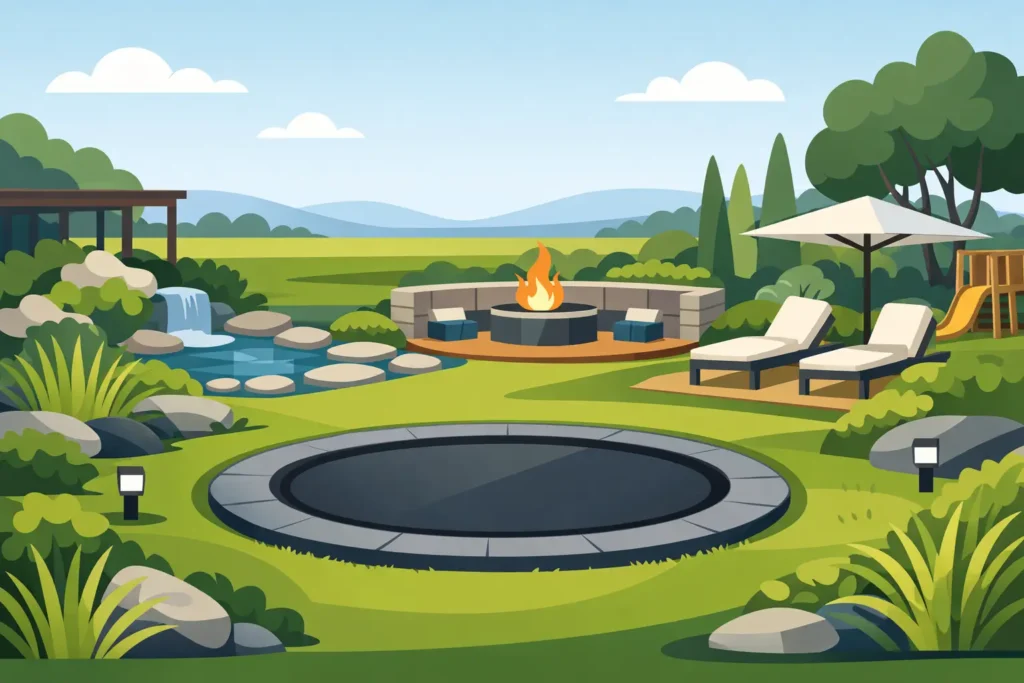
A great in-ground trampoline should feel like it belongs in your backyard, not like it was dropped into the middle of it. The best in ground trampoline landscape ideas make the trampoline easier to use, safer for active kids, and more attractive from the patio, kitchen window, and every other angle where your family enjoys the yard.
An in-ground design already gives you a low-profile advantage. With thoughtful grading, planting, pathways, and space around the safety enclosure, it can become a true family recreation zone instead of a feature you have to landscape around. Start with the practical details first, then use the landscape to create a backyard your children will love growing into.
Start With the Trampoline Zone, Not the Plants
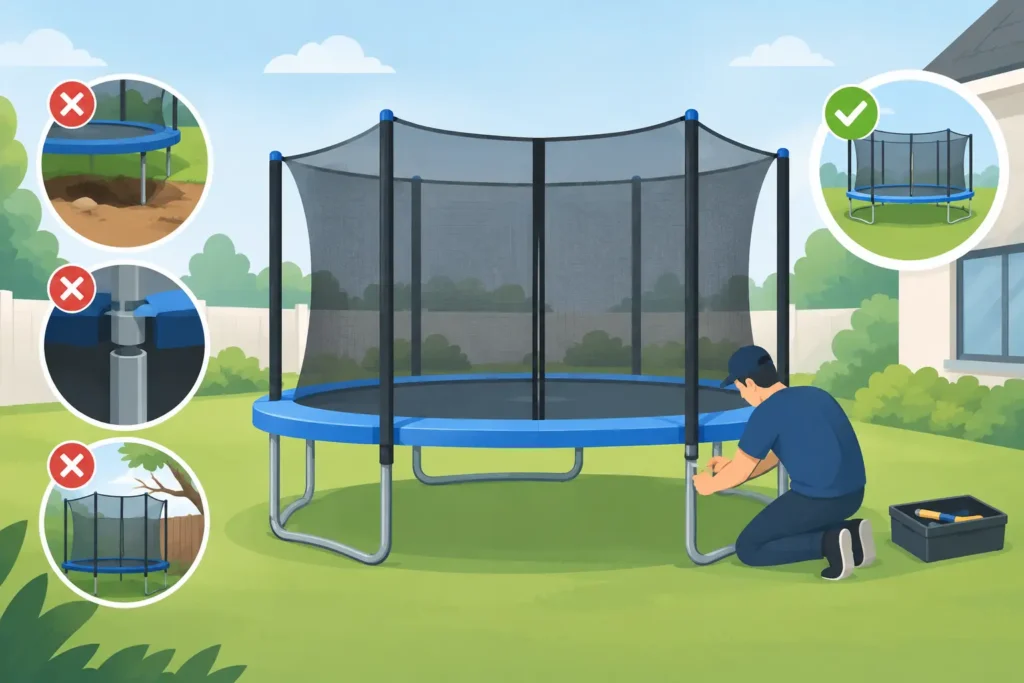
Before selecting stone colors or shrubs, decide where the trampoline can safely live. Choose a location with enough open space for the trampoline, enclosure, access point, and a clear landing area around it. Keep it away from fences, tree trunks, playsets, low branches, retaining walls, and hard patio edges.
Drainage matters just as much as clearance. An in-ground trampoline pit needs a planned drainage solution so rainwater does not collect beneath the jumping surface. Your installer can help assess soil conditions, slope, and whether a drain, gravel base, or pump system is appropriate. Never assume a low spot in the yard is the best place simply because excavation may seem easier there.
Leave room for people to move comfortably around the trampoline. Parents need easy access for supervision, and children need a safe route from the house to the entrance without crossing a slippery mulch bed or stepping over landscape edging.
12 In Ground Trampoline Landscape Ideas for Families
1. Build a clean lawn surround
A simple, level lawn is often the most timeless choice. It creates a soft visual transition between the trampoline and the rest of the yard, leaves plenty of room for running and playing, and works beautifully with round or rectangular trampoline shapes. Choose turf that suits your climate and traffic level, since the area near the entrance may receive frequent foot traffic.
2. Add a wide paver path from the house
A paver or natural-stone walkway gives kids a defined route to the trampoline and keeps muddy feet from tracking across the yard. It also makes the feature look intentional. A path is especially helpful when the trampoline sits farther from the patio or when grandparents and guests will regularly be walking through the backyard.
Use a textured, slip-resistant material and avoid creating a hard edge too close to the enclosure. The path should guide traffic to the entry, not crowd the jumping zone.
3. Create a mulch-free play perimeter
Loose mulch can migrate into the trampoline entrance, stick to socks, and make cleanup harder. For the immediate perimeter, grass, compacted decomposed granite, or properly installed artificial turf may be a better fit. Artificial turf can be particularly useful in high-traffic areas or yards where grass struggles to grow.
If you prefer mulch in surrounding beds, keep it beyond a firm border and outside the space children use to enter and exit.
4. Frame the area with low planting beds
Low, soft plantings can make an in-ground trampoline feel integrated without blocking sightlines. Choose durable, non-thorny shrubs, ornamental grasses, and perennials that stay below the height of the trampoline edge or enclosure base. This lets you keep an eye on younger jumpers while adding color and texture around the space.
Avoid thorny roses, prickly agave, or plants that attract large numbers of bees near the access point. Your goal is a welcoming play area, not a garden obstacle course.
5. Use a curved garden border
Curved bed lines soften the geometry of a trampoline, especially a rectangular model. Instead of building a tight ring around it, pull the planting bed outward in a gentle arc. This makes the trampoline look connected to the overall landscape while preserving the clear area needed for safe access and maintenance.
A curved border also gives you space to layer plant heights, with low groundcover closest to the lawn and taller shrubs farther back.
6. Add a family seating spot nearby
A pair of Adirondack chairs, a weather-resistant bench, or a small patio pad can turn trampoline time into outdoor family time. Parents can supervise more comfortably, siblings can wait their turn, and friends have a place to gather between jumps.
Keep seating outside the recommended clearance zone and position it where you can see the entrance and jumping surface. If afternoon sun is intense, consider a shade structure nearby, but never install overhead structures directly above the trampoline.
7. Define the space with landscape lighting
Soft pathway lights make it easier to see the route back to the house after sunset and add a finished look to the yard. Low-voltage fixtures along paths, steps, and nearby planting beds are usually enough. Aim light downward to reduce glare and avoid placing fixtures where they could become a tripping hazard.
Lighting is not a reason to allow unsupervised nighttime jumping. It is a practical landscape feature that helps your family move safely through the yard.
8. Pair it with a patio activity zone
An in-ground trampoline works well as part of a larger outdoor living plan. Place it within sight of a patio, grilling area, or outdoor dining space, while maintaining the required safety distance. This arrangement allows adults to enjoy the backyard while children stay active nearby.
It depends on your yard size. In a compact backyard, the trampoline may be the main activity feature. On a larger property, it can anchor a dedicated play zone that is visually connected to the patio but clearly separate from dining and entertaining areas.
9. Use a retaining solution on sloped yards
A sloped property can still be an excellent setting for an in-ground trampoline, but it requires professional planning. A retaining wall or terraced landscape may create a level installation zone while managing soil movement and runoff. This can be a striking design choice, but it is not a shortcut project.
Any wall near the excavation should be designed with the trampoline pit, drainage, and access needs in mind. Get the site plan right before ordering materials or cutting into a hillside.
10. Add privacy without closing in the yard
Privacy hedges, ornamental trees, or a slatted screen can make a trampoline area feel more peaceful, particularly in suburban neighborhoods. Keep screening far enough back that branches will not reach the enclosure as plants mature. Select varieties that are easy to maintain and do not drop excessive fruit, needles, or large leaves onto the jumping mat.
Privacy is valuable, but visibility inside your own yard is still essential. Avoid creating a hidden corner where adults cannot easily supervise play.
11. Make room for storage and weather protection
A landscape plan should account for the accessories that protect your investment. Leave a convenient place to store a weather cover, ladder if applicable, or seasonal yard items without leaning them against the enclosure. A nearby storage bench or garden cabinet can work well if it does not interfere with clearance or drainage.
Premium galvanized, rust-resistant components are built for long-term outdoor use, but regular care still matters. Keeping the area free of leaves, standing water, and scattered toys helps preserve both the trampoline and the polished look of your backyard.
12. Let the trampoline lead the backyard layout
For many families, the trampoline is not an afterthought. It is where children burn energy after school, teens invite friends over, and active adults fit in a quick workout. When that is true for your household, plan the yard around how often it will be used.
A 10-foot model may suit a smaller family yard, while a 12-foot or 14-foot round trampoline gives growing children more room to jump. Rectangular options can be a smart fit for narrow side yards or families who want a more defined training and activity space. The right size should fit your available landscape, intended use, and the amount of clear area you can safely maintain.
Keep Safety at the Center of the Design
Beautiful landscaping should never compromise safe trampoline use. Maintain a clear perimeter, keep hardscape edges and furniture at a distance, and use a quality safety enclosure designed for your trampoline system. Check plants regularly as they grow, trim branches before they reach the enclosure, and make sure irrigation does not direct water into the pit.
For a long-term installation, premium materials and professional-grade planning pay off. Lets Buy Trampolines helps families choose durable in-ground models and safety-focused systems that support years of outdoor play, not just one season of excitement.
The strongest landscape design is the one your family will actually use: a clear path from the house, a safe place to supervise, a dry and well-planned trampoline pit, and enough open space for every jump, laugh, and backyard memory still ahead.