
9 Trampoline Installation Mistakes to Avoid
October 14, 2026
Why a Galvanized Steel Trampoline Frame Matters
October 18, 2026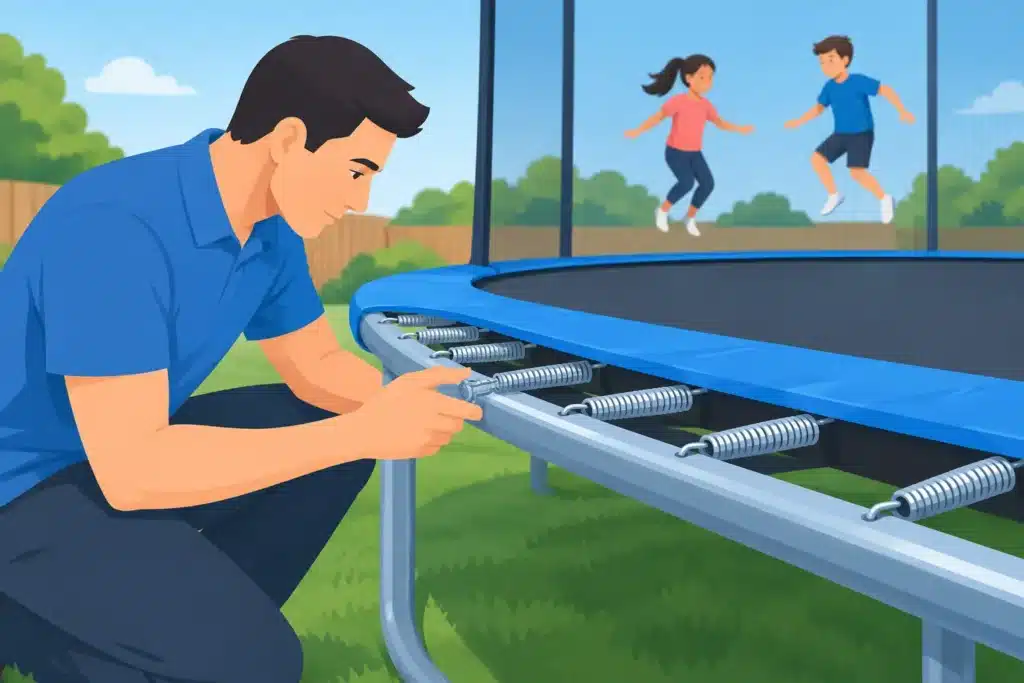
A trampoline spring inspection is one of those simple backyard habits that can make a real difference before the first big bounce of the day. Springs carry the force of every jump, and a damaged, stretched, or corroded spring can affect the way the mat responds. For families who invested in an in-ground trampoline for years of active outdoor fun, a quick, consistent inspection helps keep play safer and protects that investment.
Premium trampoline systems are built for frequent family use, but no outdoor equipment is completely maintenance-free. Weather, heavy jumping, lawn debris, and seasonal changes all deserve attention. The good news is that you do not need to be a trampoline technician to spot common spring concerns early.
When to Inspect Trampoline Springs
Plan a visual spring check at least once a month during your main jumping season. If your trampoline gets daily use from energetic kids, teens practicing tricks, or adults using it for fitness, every two weeks is a smarter routine. It takes only a few minutes and gives you a chance to catch small concerns before they become a reason to pause backyard play.
Also inspect the springs after a major storm, unusually high winds, a long stretch of wet weather, or a winter period when the trampoline has not been used. In-ground trampolines have a clean, low-profile look that blends beautifully into the landscape, but their recessed position means leaves, mulch, and moisture can collect around the frame area. Keep that space clean so you can see the components clearly.
A spring inspection should happen before anyone jumps, not while children are already waiting at the edge of the mat. Make it part of a family routine: check the trampoline, secure the enclosure, clear the surface, then play.
What a Trampoline Spring Inspection Should Include
Start with a clean, dry trampoline. Remove toys, branches, leaves, and any standing water from the mat and frame area. Ask everyone to stay off the trampoline during the inspection. Springs are under tension, so they should never be handled casually or removed without the proper replacement process.
Look for rust, gaps, and distorted coils
Walk slowly around the trampoline and inspect every spring. Galvanized, rust-resistant steel is designed to stand up better to outdoor conditions, yet it still needs observation over time. Look for orange or brown corrosion, flaking metal, cracked coils, bent hooks, or springs that no longer match the shape of the others.
A light surface mark may not always mean immediate replacement, but deep rust, pitting, or visible deterioration is a clear warning sign. Do not assume a spring is fine simply because it is still attached. A corroded spring can lose strength long before it breaks.
Next, look for gaps. Each spring should sit securely between the frame and the mat’s attachment point. If a hook appears partly disconnected, twisted, or pulled out of position, stop using the trampoline until it is properly addressed. Never try to force a hook back into place while the spring is loaded.
Compare spring length and tension
Springs should look consistent around the full perimeter. One spring that appears noticeably longer, looser, or more stretched than the others may no longer provide the support your mat needs. A weak spring can create an uneven bounce, especially when several children use the trampoline regularly.
You are looking for comparison, not a precise engineering measurement. Stand back and scan the spring line from different angles. If one area of the mat sits lower, feels unusually soft, or seems to pull more tightly toward one side, inspect the springs in that section carefully.
Do not stretch springs by hand to test them. That can cause injury and may make the problem worse. Visual condition, secure attachment, and a balanced mat are more useful indicators for a homeowner inspection.
Check the mat, frame, and safety system too
Springs do not work alone. A trampoline spring inspection should include the parts connected to them. Check the mat’s V-rings or attachment points for distortion, tears, or loose stitching. Examine the frame for cracks, dents, movement, and corrosion, particularly where frame sections join.
If your trampoline has spring pads, make sure they fully cover the springs and frame edge. Pads should not be torn, shifted, or waterlogged. On a system with a safety enclosure, confirm that the netting is intact, poles are secure, and the entry closes correctly. The enclosure is not a substitute for safe jumping rules, but it is a valuable layer of protection when it is installed and maintained correctly.
Signs It Is Time to Replace a Spring
Replace a spring when it is broken, badly rusted, visibly stretched, bent, cracked, or missing. Replacement is also the right choice when a hook is damaged or when the spring no longer matches the length and shape of the original component. Continuing to jump with one questionable spring can place additional stress on nearby springs, the mat, and the frame.
Use replacement springs made for your specific trampoline model and size. This matters because spring length, hook configuration, and tension are matched to the frame and mat design. A spring that looks close enough may not deliver the right fit or bounce performance. For a premium in-ground trampoline, model-specific replacement parts help preserve the safe, responsive feel your family expects.
If multiple springs show corrosion or fatigue, do not replace only the most obvious one and assume the rest are ready for another season. When several springs are aging at once, replacing a full set may be the better long-term decision. It depends on the trampoline’s age, climate exposure, usage level, and the condition of the mat and frame.
Special Care for In-Ground Trampolines
An in-ground trampoline is a standout backyard feature because it creates a more integrated landscape design and a lower step-up height for jumpers. Its installation also makes drainage and airflow especially relevant to spring care. Water that lingers below or around the trampoline can increase moisture exposure, even on galvanized components.
Keep the trampoline’s drainage area clear and inspect the excavation space according to the installation guidance for your system. If you notice pooled water, persistent dampness, or excessive debris beneath the mat, address the cause before it affects the frame and springs. A weather cover can also help reduce leaf buildup and protect the jumping surface during periods of nonuse, though it should be used as directed and removed before jumping.
For families in areas with snow, ice, coastal air, or frequent rain, inspections may need to happen more often. Outdoor conditions vary widely across the United States, and a maintenance schedule that works in a dry climate may not be enough in a humid or snowy one.
Make Safety Rules Part of the Check
Equipment condition and household rules belong together. Even a well-maintained trampoline should have one jumper at a time, adult supervision for younger children, and no roughhousing, flips beyond a jumper’s skill level, or jumping when the mat is wet. Shoes, toys, and loose objects should stay off the trampoline.
Teach children that they should tell an adult if the bounce feels different, they hear a new squeak or snap, or they see a spring pad move out of place. That simple habit turns kids into helpful observers without making them responsible for repairs.
A premium trampoline is built to bring people outside, get bodies moving, and create the kind of backyard memories families talk about for years. Give its springs the same attention you give the rest of your outdoor space, and every jump can start with more confidence.