

Trampoline Net Versus No Net for Family Safety
August 1, 2026
Rectangular Trampoline Sizing for Family Yards
August 5, 2026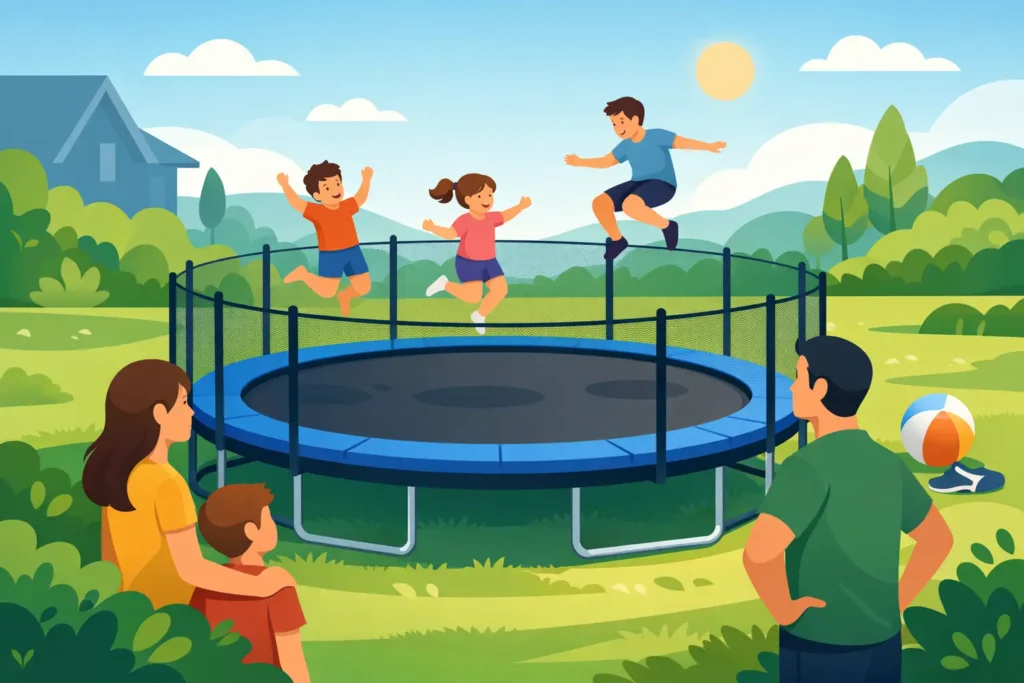
A 12-foot round trampoline is often the size where a backyard stops feeling like it has a play feature and starts feeling like it has a true family destination. In this 12 foot round trampoline review, we look at what makes this popular size a smart fit for active households, where it asks more of your yard and budget, and why an in-ground system can be worth the planning.
For many families, 12 feet is the sweet spot. It gives children meaningful room to jump, build confidence, and burn off energy without demanding the footprint of a larger 14-foot model. When built with premium materials and installed correctly, it can become a long-term part of your backyard rather than a temporary purchase that needs replacing after a few seasons.
Why a 12-Foot Round Trampoline Works So Well
Round trampolines naturally direct jumpers toward the center of the mat. That makes them an especially practical choice for younger children, first-time jumpers, and families focused on everyday recreational use. The round shape is also visually softer in a landscape and easier to position in a lawn, patio-adjacent play zone, or dedicated backyard activity area.
At 12 feet across, the trampoline provides a generous jumping surface for one person at a time. A child can practice basic jumps, seat drops, and coordination drills without feeling cramped. Teenagers and adults can enjoy it for fitness and casual play, too, although serious gymnastic training usually calls for a larger rectangular trampoline and a more specialized setup.
This size also gives families room to grow. A 10-foot model can be an excellent choice for compact yards or younger children, but a 12-foot trampoline tends to remain appealing longer as kids get taller, stronger, and more confident. It is large enough to feel exciting for years, yet still manageable for many suburban backyards.
12 Foot Round Trampoline Review: The Details That Matter
Not every 12-foot trampoline offers the same experience. The stated diameter tells you something about space, but the frame, springs, mat, enclosure, and installation system determine whether the trampoline feels secure, performs consistently, and holds up through changing weather.
Frame strength and weather resistance
A premium in-ground trampoline should start with a sturdy, galvanized steel frame. Galvanization helps protect steel from rust, a major advantage in regions with rain, snow, humidity, or seasonal temperature swings. A durable frame matters because it supports the jumping system and helps the trampoline maintain its shape over years of active use.
Look beyond a vague promise of “heavy-duty” construction. Strong materials, dependable connections, and a design intended for long-term outdoor exposure are what separate a serious backyard investment from a lightweight trampoline that may shift, corrode, or lose tension prematurely.
An in-ground installation also changes how the trampoline sits in the yard. Instead of towering over the lawn, the jumping surface rests close to ground level. The lower profile can look more intentional in a landscaped backyard, reduce visual clutter, and make access easier for younger users. It does not remove the need for safety rules or adult supervision, but it can create a more approachable setup for family play.
Bounce quality and jumping comfort
The best bounce is not simply the highest bounce. For family use, controlled and responsive performance is more valuable than an overly aggressive feel. Quality springs or spring-based systems should provide a consistent return across the mat, helping jumpers feel stable as they land and take off.
A well-made jumping mat also matters. It should be durable enough for regular outdoor use while maintaining dependable tension. When a mat or spring system begins to sag, jumping becomes less comfortable and less predictable. That is one reason premium components and clear warranty coverage deserve attention before you buy.
For a 12-foot round model, expect a spacious recreational bounce rather than the long, directional runway feeling of a rectangle. That is a benefit for families whose primary goal is active outdoor fun, not advanced flips or formal gymnastics practice.
Safety enclosure and edge protection
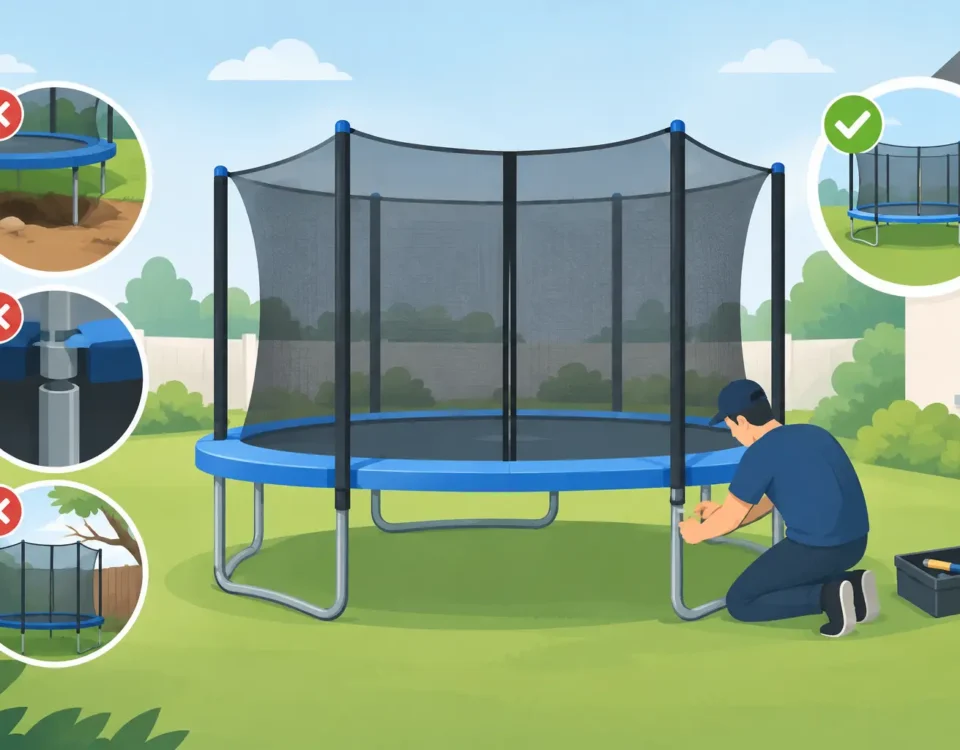
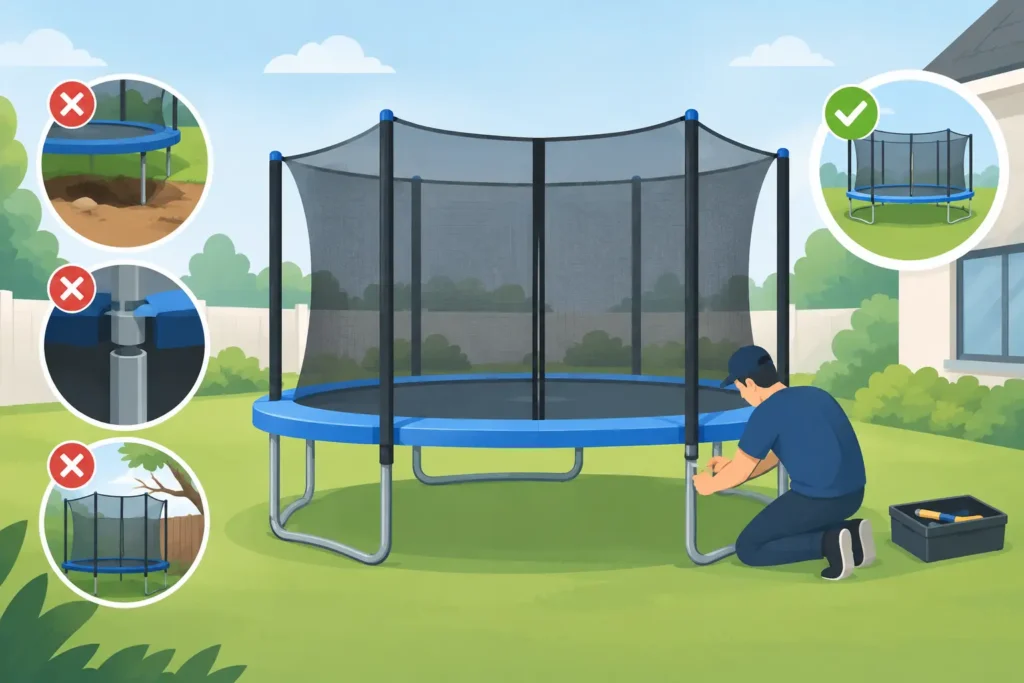
A safety enclosure is not an accessory to treat as optional. It is a core part of a family trampoline system. A quality enclosure helps keep jumpers within the intended jumping area and should be designed to work securely with the frame and padding.
Padding over the springs and frame is equally important. It creates a protected transition between the jumping mat and the outer edge, where feet can land during energetic play. Inspect how the padding attaches, how it is supported, and whether the materials are built for UV exposure and weather. Thin, loose, or poorly fitted padding can become a frustration quickly.
Even with premium safety equipment, establish clear household rules: one jumper at a time, no flips unless the jumper has appropriate training, no jumping during wet or windy conditions, and adult supervision for younger children. Good equipment supports safer play. It does not replace thoughtful use.
Will It Fit Your Yard?
The trampoline itself is 12 feet wide, but your planning area needs to be larger. Families should allow open space around the installation and avoid placing the trampoline near fences, trees, play structures, retaining walls, patios, or overhead branches. The enclosure adds height, while the in-ground installation requires room for excavation, drainage planning, and access during the build.
Before selecting a location, think about how your family uses the backyard. A trampoline positioned where adults can see it from the kitchen, patio, or main outdoor seating area may make supervision easier. At the same time, do not force it into a tight corner just to preserve the center lawn. A dedicated, properly spaced activity zone is usually the better long-term choice.
Drainage deserves special attention with any in-ground trampoline. Water needs a planned path away from the jumping area and excavation pit. A professional installer or knowledgeable excavation partner can help evaluate soil conditions, slope, and local drainage needs before the project begins. This preparation protects performance and helps preserve the investment.
Who Should Choose a 12-Foot Model?
A 12-foot round trampoline is a strong choice for families with one to three children who will use it regularly, especially when the children span different ages. It gives a younger child enough room to learn while still offering plenty of fun for older siblings and visiting friends when families follow one-jumper-at-a-time safety guidance.
It also fits adults who want a practical home fitness option. Rebounding can be an enjoyable way to add movement to the week, and the round surface works well for low-impact bouncing, balance exercises, and short cardio sessions. As always, adults should follow the trampoline’s weight guidance and use common sense when exercising.
A smaller model may be better if your available yard area is limited or the trampoline is primarily for one young child. A larger 14-foot option may be worth considering if you have a broad open yard, older teenagers, or a household where the trampoline will be a central gathering point. Bigger is not automatically better. The right fit is the one that leaves enough room for safe installation, comfortable supervision, and the rest of the outdoor life you want to enjoy.
Is an In-Ground 12-Foot Trampoline Worth the Investment?
For homeowners planning to stay in their home and create a backyard their family will use often, an in-ground trampoline can offer real value. The initial cost is higher than a basic above-ground unit because you are purchasing premium equipment and preparing the site. Excavation, drainage, and installation all require planning.
What you gain is a more integrated backyard feature, easier step-on access, and a system designed for long-term use. A low-profile trampoline can complement a polished landscape far better than a tall frame dominating the view. It can also make outdoor activity feel readily available: children walk outside, step onto the mat, and start moving.
Premium brands such as AkrobatUSA and Capital Play are built for families who want that lasting experience. Their focus on durable materials, galvanized steel, safety systems, and purpose-built in-ground designs aligns with the needs of homeowners who are making a serious purchase rather than chasing the lowest upfront price.
Our Recommendation for Family Backyards
A 12-foot round in-ground trampoline earns high marks for versatility. It offers a substantial jumping area, a family-friendly shape, and a size that works for many well-planned residential yards. Pair it with a quality safety enclosure, reliable weather protection when needed, and proper site preparation, and it can support years of active afternoons, birthday gatherings, and screen-free play.
The trade-off is simple: this is not a small purchase or a casual installation. It requires yard space, excavation planning, and a commitment to safety rules. For families ready to make that investment, the payoff is more than a trampoline. It is a durable place for your children to move, laugh, challenge themselves, and create the kind of backyard memories that stay with them long after the day’s jumping is done.