

12 Foot Round Trampoline Review for Families
August 3, 2026
10 Foot In-Ground Trampoline: Is It Right?
August 7, 2026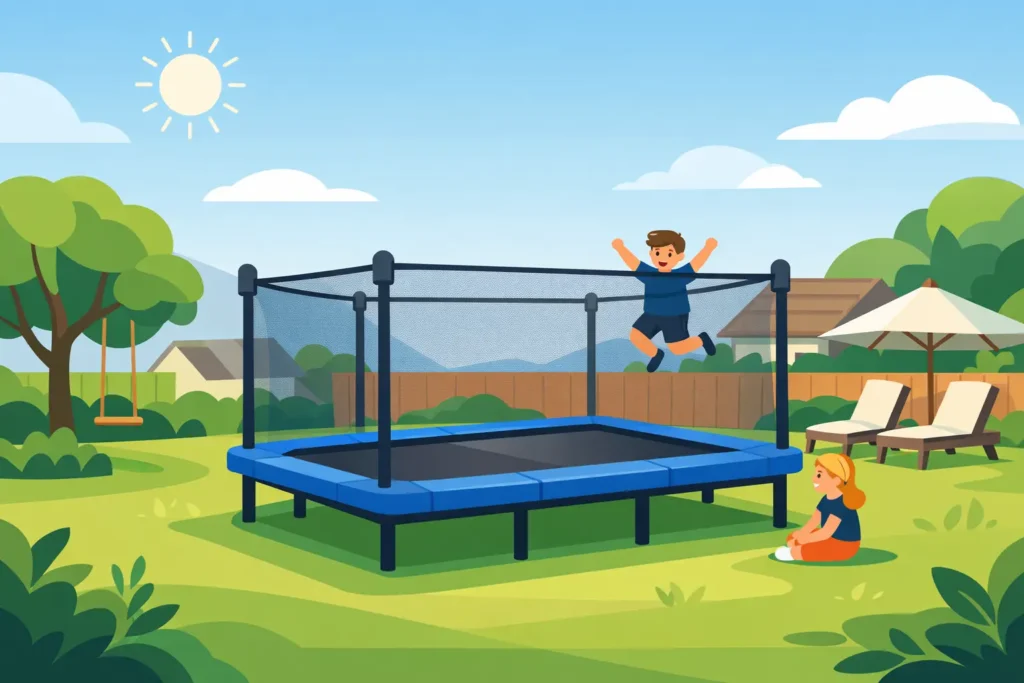
A rectangular in-ground trampoline can turn an unused stretch of lawn into the place your kids head first after school. But rectangular trampoline sizing is not simply a matter of choosing the biggest model that will fit in the yard. The right size needs to suit the space around it, the number and ages of jumpers, the type of play your family enjoys, and the excavation your installation will require.
For many families, a rectangle is the smart answer when a round trampoline feels too wide for the available landscape. Its straight edges sit naturally alongside fences, patios, garden beds, and property lines, while its longer jumping lane gives active kids and teens room to build confidence. Choose carefully now, and you can create a safer, better-looking backyard feature that stays useful as your family grows.
Start With the Space You Can Safely Dedicate
Measure the section of yard where the trampoline will live, not just the open grass you can see from the patio. An in-ground system needs room for its frame, safety enclosure, access point, and a clear buffer around the outside. That buffer matters. Children do not always climb on and off in a straight line, and adults need practical access for checks, cleaning, and seasonal cover placement.
Keep the installation area away from overhead branches, low utility lines, retaining walls, play structures, hardscape edges, and anything a jumper could reach from the enclosure. A low-profile in-ground design blends beautifully into a landscaped yard, but it still deserves its own dedicated zone. If the space is tight on one side, a rectangular model may allow you to use the length of the yard without crowding the rest of your outdoor living area.
Before selecting a size, mark the approximate footprint on the lawn with stakes, rope, or a garden hose. Then walk around it. Open the back door, picture a child carrying a ball to the trampoline, and consider how guests, pets, and lawn equipment will move through the space. This simple step often makes the best size much clearer than measurements on paper alone.
Rectangular Trampoline Sizing: 10 x 6 vs. 11 x 8
For premium in-ground rectangular systems, 10-foot by 6-foot and 11-foot by 8-foot formats are two strong options for family backyards. Neither is automatically better. The better choice is the one that matches your household and leaves comfortable room for a safety-focused installation.
A 10 x 6 rectangular trampoline
A 10 x 6 model works especially well for narrower yards, side-yard recreation areas, and homes where the trampoline needs to share space with a patio, pool, garden, or outdoor dining area. It provides a purposeful jumping area without taking over the entire landscape.
This size is often a great match for younger children, smaller families, and households that want daily outdoor play rather than a large multi-user activity zone. It can also be a sensible choice when one child will usually jump at a time, which is the safest jumping approach. With a quality enclosure and durable, galvanized frame, a compact rectangle can deliver years of energetic play while preserving the open feel of your yard.
The trade-off is simple: a 10 x 6 gives you less room for bigger movement patterns. Older kids may still love it, but teens who practice more active bouncing, controlled tricks, or gymnastics-inspired movement may outgrow its footprint sooner than they would a larger model.
An 11 x 8 rectangular trampoline
An 11 x 8 model gives families more usable jumping room while remaining more landscape-friendly than many larger round designs. That added width and length can make a noticeable difference for growing children, taller teens, and active adults who want a dedicated place for exercise.
This is often the stronger choice for families planning to stay in their home for years. Younger children have room to grow into it, while older kids have a more comfortable area for energetic play. It also feels less restrictive when your family uses the trampoline frequently, although adult supervision and one-at-a-time jumping rules should still guide every session.
Naturally, the larger footprint requires a larger excavation area and more open space around the enclosure. If choosing the 11 x 8 means squeezing it too close to a fence, slope, or patio, step back and reconsider. A properly positioned 10 x 6 is a better long-term investment than a larger system forced into an unsuitable location.
Match the Size to Who Will Use It
Your children’s current ages matter, but their next few years matter more. A preschooler may be thrilled with almost any trampoline, while a middle-schooler often wants room to bounce higher, move farther, and invite friends into the backyard. A trampoline should support family life for the long haul, not feel undersized after one summer.
For a household with one or two younger children, a 10 x 6 rectangular design can be an excellent fit, particularly when yard dimensions are limited. For families with older children, multiple kids, or adults who plan to use the trampoline for fitness, the 11 x 8 format typically offers more flexibility.
More room does not mean more simultaneous jumpers. The safest practice is still one jumper at a time, even on a larger model. The benefit of extra space is that the individual jumper has more room to land predictably, reset between bounces, and enjoy the trampoline as their skills and confidence develop.
Plan for Installation, Not Just the Finished Look
In-ground trampoline sizing includes what happens below ground as well as what you see above it. The excavation must be designed for the selected model, with adequate depth, drainage planning, and stable surrounding soil. Poor drainage can create maintenance problems, while an incorrectly sized pit can affect the system’s performance and appearance.
Every yard is different. Flat, well-draining soil is simpler than a sloped yard with clay-heavy ground or a high water table. Irrigation lines, tree roots, buried utilities, and local permitting requirements can also influence where the trampoline goes and what installation work is needed. Measure early, identify obstacles before ordering, and use the manufacturer’s installation specifications for the exact model you select.
This is also the time to think about access. Excavation equipment and materials need a path to the installation area. A backyard that looks spacious from the kitchen window may be difficult to reach through a narrow side gate. Planning for access upfront helps avoid costly surprises and keeps the project moving toward the fun part – watching the first safe bounce in your finished backyard.
Do Not Treat Safety Features as Optional Space
A safety enclosure changes how the trampoline functions in your yard. It helps create a defined jumping zone, helps prevent accidental exits, and gives parents greater peace of mind during active play. Include the enclosure in your location plan from the beginning rather than treating it as an add-on after the pit has been excavated.
Choose a system built with materials made for long-term outdoor exposure. Rust-resistant galvanized steel, durable jumping surfaces, dependable springs or spring systems, and a well-designed enclosure all contribute to the value of a premium trampoline. A weather cover can protect the jumping area during changing seasons, reduce debris buildup, and help preserve the clean appearance that makes an in-ground installation so appealing.
Safe use still depends on household rules. Set clear expectations about one jumper at a time, adult supervision for younger children, no flips without proper training, and no bouncing during storms or high winds. A quality trampoline provides the foundation, while consistent family habits help protect the people who use it.
Choose for the Backyard You Want to Keep
A rectangular in-ground trampoline should feel like part of your property, not a temporary object dropped into it. Consider sight lines from the house, how it will look beside your landscaping, and whether the location leaves room for future projects. You may want a fire pit, expanded patio, garden, or swing set later. Give the trampoline a permanent home that does not limit every other idea you have for the yard.
If your available space is long and narrow, a 10 x 6 rectangle can deliver big family fun with a smaller footprint. If you have a more generous dedicated play area and want room for kids to grow, an 11 x 8 can be the better fit. Lets Buy Trampolines can help you compare premium in-ground options before you commit to the excavation.
The best choice is the size that gives your family room to move, leaves space to play safely, and still makes you smile when you look out at the backyard years from now.