

How to Improve Trampoline Bounce at Home
October 28, 2026
Do Trampolines Need Ventilation? In-Ground Facts
November 1, 2026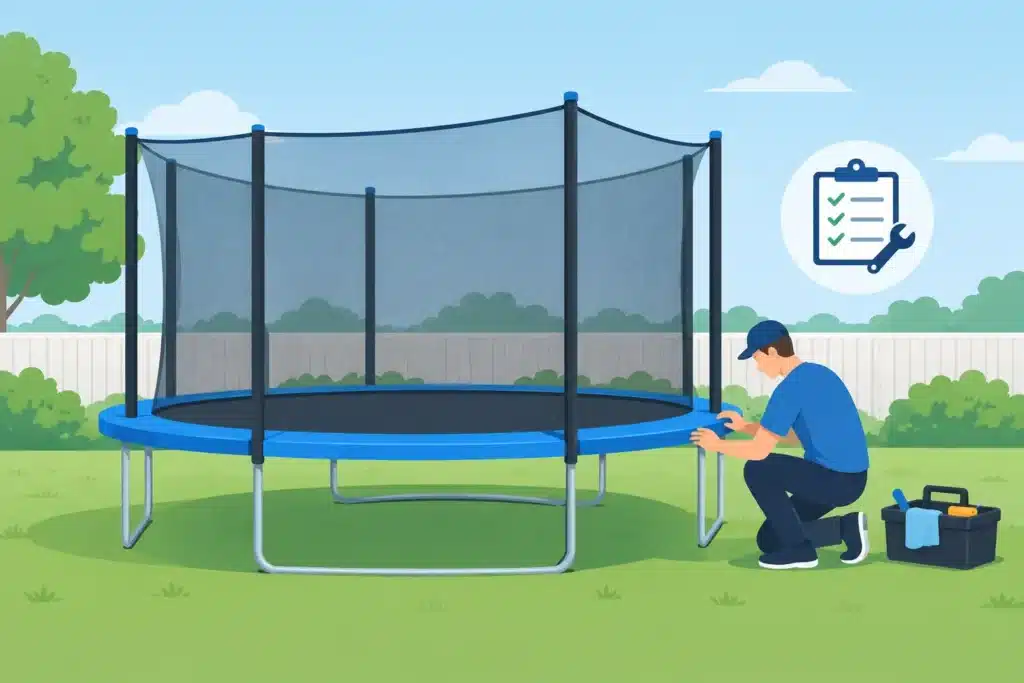
A premium in-ground trampoline is built for years of family fun, but it still lives outside through sun, rain, changing temperatures, leaves, and active daily use. A simple trampoline maintenance schedule protects the parts your family relies on most: the jumping surface, springs, frame, enclosure, and drainage area below the trampoline. It also helps you catch small issues before they turn into an unexpected repair or a reason to pause backyard play.
For most families, maintenance does not mean spending every weekend with tools in hand. It means knowing what to check before a busy jumping season, what to notice during regular use, and how to prepare the system for winter weather. The schedule should be adjusted for your climate, tree cover, and how often your trampoline is used.
Your Trampoline Maintenance Schedule at a Glance
A quick visual check before children jump is a smart household habit. A deeper inspection can happen monthly, while seasonal care gives your in-ground system the attention it needs before and after demanding weather.
| Timing | What to Check | | — | — | | Before regular use | Clear debris, check the mat and enclosure for visible damage, and confirm the area is dry and secure. | | Monthly during the jumping season | Inspect springs, frame connections, mat stitching, padding, netting, and the pit for buildup or drainage concerns. | | Spring and fall | Clean the full system, check for rust or wear, tighten accessible hardware, and assess the surrounding landscape. | | Before severe weather or winter | Remove loose items, use a fitted weather cover when appropriate, and address drainage or standing-water issues. |
This routine is designed to support safer play, not replace common-sense use. If a part looks damaged, stretched, loose, or corroded, keep jumpers off the trampoline until it has been inspected and repaired.
Before Each Jump: Keep the Surface Clear and Secure
The quickest checks often make the biggest difference. Before anyone starts bouncing, look across the mat for sticks, toys, leaves, standing water, or anything else that can affect footing. In-ground trampolines sit low in the landscape, which creates a clean backyard look but can also make them natural collection points for windblown debris.
Check that the safety enclosure is properly connected and that the entry is fully closed. Look at the netting for holes, frayed areas, or loose attachment points. Even a premium safety system needs attention after rough play, strong winds, or repeated use by energetic teenagers.
Take a moment to notice the mat itself. It should feel evenly tensioned, with no tears, thinning spots, separated stitching, or unusual sagging. A wet jumping surface can be slippery, so allow rainwater to drain and the mat to dry before use. Never treat a wet mat as a harmless inconvenience, especially for younger children still building coordination.
Monthly Checks for Springs, Frame, and Enclosure
Once a month during the active season, take a slower walk around the trampoline. Start at the perimeter and inspect the springs or spring system for stretching, broken coils, missing components, or exposed sharp edges. Springs provide the responsive bounce families love, but they work under constant tension. A damaged spring should be replaced with the correct manufacturer-approved part rather than a generic substitute that may not fit the system properly.
Next, inspect the galvanized steel frame. Quality galvanized frames are designed to resist rust, but no outdoor material is completely maintenance-free. Watch for scratches, chips, discoloration, or early corrosion around connections and areas that stay damp. Clean away dirt with mild soap and water, then dry the area thoroughly. Avoid harsh chemicals or abrasive tools that can damage protective finishes.
Pay close attention to the safety padding and edge protection. The padding should stay positioned over springs and frame components, with secure straps or attachments. Sun exposure can eventually cause fading and material fatigue, particularly in hot climates. If padding feels brittle, has cracks, or no longer covers the needed areas, it is time to replace it.
Finish with the enclosure poles, net supports, and netting. Check that poles are stable, protective foam is intact where included, and the net maintains its shape. Do not wait for a small tear to become a large opening during an active afternoon of jumping.
In-Ground Trampoline Care Starts Below the Mat
The key difference with an in-ground trampoline is below your feet. The pit must remain clear enough for proper airflow and drainage. Without it, moisture can linger beneath the mat, affect the frame environment, and create unpleasant odors or buildup.
During your monthly inspection, remove leaves and debris that have fallen through or collected around the edges. Look into the pit for standing water after rain. A little temporary moisture may be normal depending on your local conditions, but water that remains for days points to a drainage issue worth addressing promptly.
Your installation design matters here. Proper excavation, drainage planning, and ventilation are part of long-term trampoline performance. Heavy clay soil, a high water table, or a yard that channels rain toward the trampoline may require more frequent checks than a dry, well-draining backyard. If you see soil erosion around the perimeter, restore the grade so water moves away from the trampoline rather than into the pit.
Keep landscaping under control as well. Trim back shrubs, ground cover, and low branches that can drop debris into the enclosure or hold moisture around the frame. A low-profile in-ground trampoline should blend beautifully into the yard, but it still needs breathing room for safe access and easy maintenance.
Seasonal Care for Sun, Storms, and Winter
Spring is the right time for your most thorough inspection. Wash the mat, padding, frame, and enclosure with mild soap and water, rinse carefully, and allow everything to dry. Check every visible connection, review the pit after spring rains, and remove debris that accumulated over winter. This is also a good time to order replacement parts before summer use peaks.
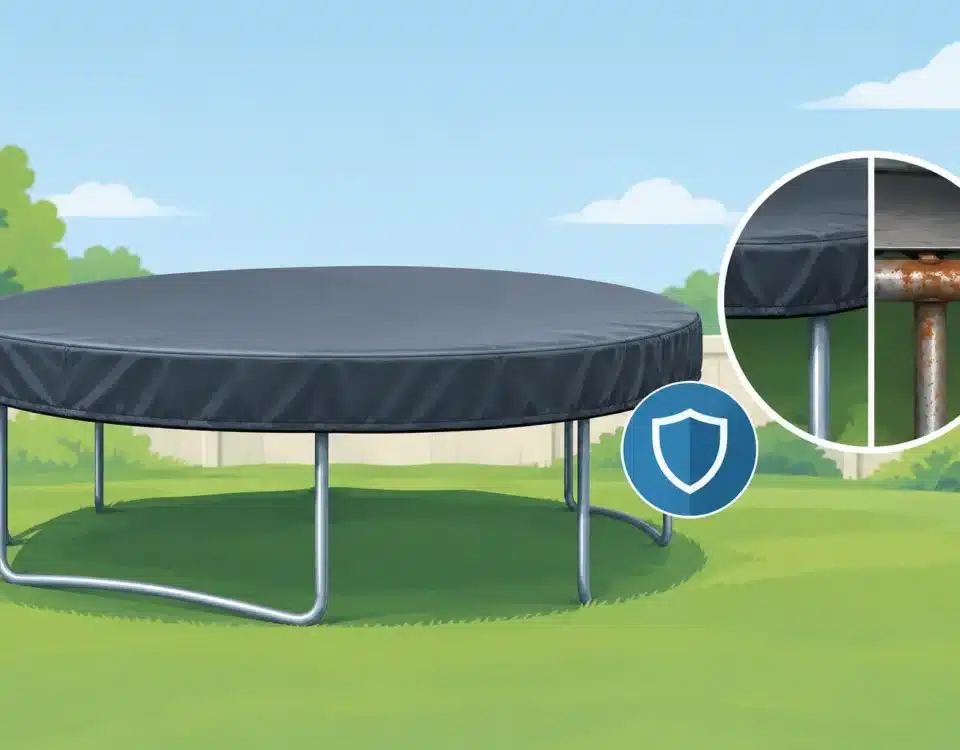
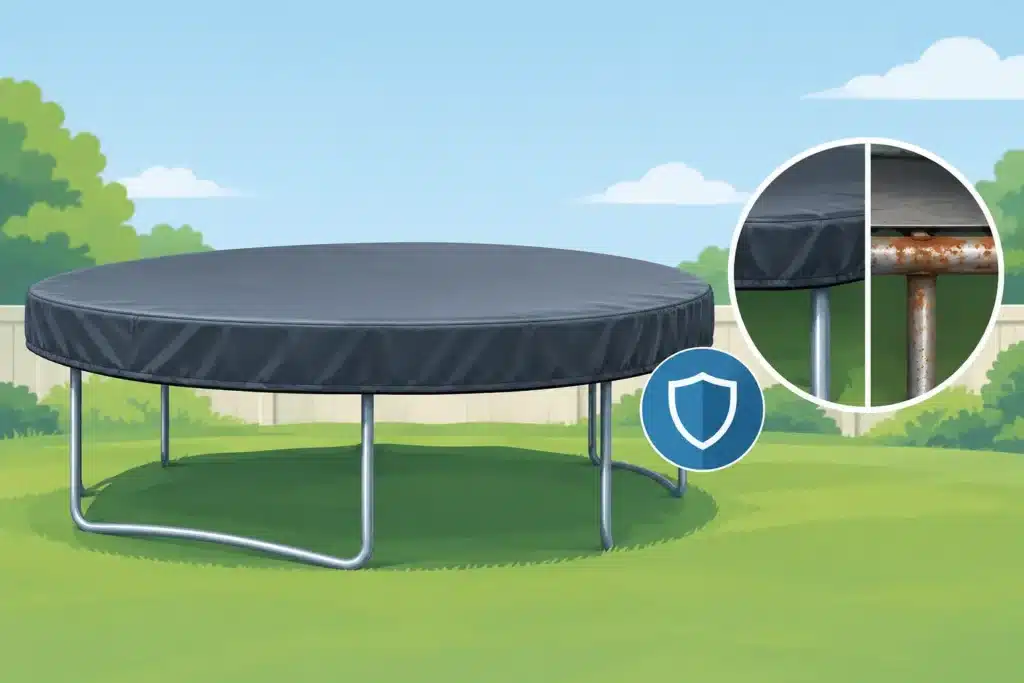
In fall, clear leaves more frequently if your yard has mature trees. Wet leaf piles can trap moisture against the mat and frame, while acorns, twigs, and seed pods can create hard objects underfoot. A weather cover can help keep debris out when the trampoline will not be used for a stretch of time, but use a cover designed for your specific trampoline configuration and follow its care instructions.
Before major storms, secure or remove accessories that could shift in high winds. Check enclosure connections afterward, even if the trampoline looks fine from a distance. Wind can loosen fasteners, move padding, and carry debris into the jumping area.
Winter care depends on your region. In areas with mild weather, regular cleaning and drainage checks may be enough. In snowy climates, do not allow excessive snow or ice to build up on the mat and enclosure. Heavy loads can strain components, and trying to jump on a frozen or icy surface is never safe. Use a soft broom to remove light, loose snow when conditions allow. Avoid sharp shovels or tools that can cut the mat or net.
When to Repair, Replace, or Call for Guidance
Some maintenance tasks are simple: cleaning, debris removal, and visual inspections. Others require a more cautious approach. Replace a torn mat, broken spring, damaged enclosure net, worn edge padding, or corroded structural component before allowing anyone to jump again. Do not try to patch a safety-critical part with tape, rope, or an improvised fix.
If you are unsure whether a component is cosmetic or structural, ask for product-specific guidance. This is especially valuable for high-quality in-ground systems, where correct parts preserve the fit, bounce, and safety design you invested in. Lets Buy Trampolines can help families think through compatible replacement needs for their system.
A well-maintained trampoline does more than look good in the backyard. It gives children a dependable place to move, play, and build confidence, while giving parents more peace of mind each time the enclosure zips closed. Put the next inspection on the calendar now, then let the backyard fun keep going.