

Trampoline Safety for Your Family Backyard
August 15, 2026
Backyard Trampoline Planning Guide for Families
August 19, 2026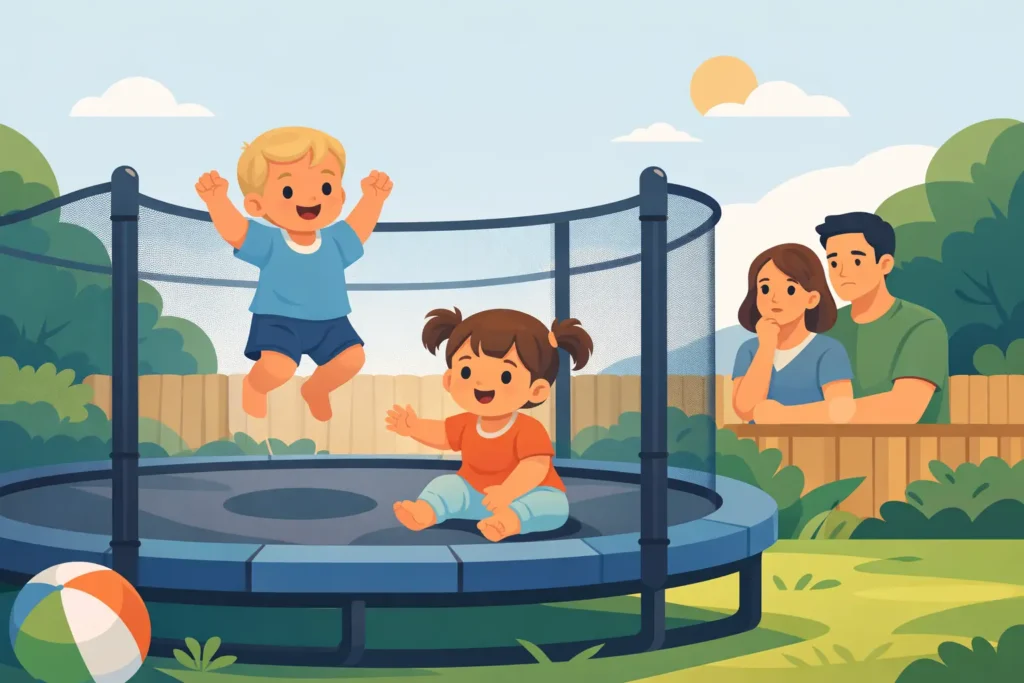
A toddler’s idea of a perfect afternoon is simple: climb, bounce, laugh, repeat. But are trampolines safe for toddlers? The honest answer is that they carry real risks at this age, even in a well-kept backyard with caring adults nearby. For most toddlers, waiting is the safest choice. A premium trampoline can be an exceptional long-term investment for family activity, but it should be used on a timeline that puts your child’s development first.
Toddlers are still building balance, coordination, bone strength, and the ability to follow safety directions consistently. They may be fearless one moment and tired or unsteady the next. That combination is why a trampoline that will eventually become the center of active family fun is not automatically appropriate for its youngest future jumper.
Are Trampolines Safe for Toddlers? The Straight Answer
Medical and safety organizations commonly advise against trampoline use for children under age 6. That guidance is not meant to take the fun out of childhood. It reflects the types of injuries younger children are more likely to experience: falls, fractures, sprains, head injuries, and awkward landings caused by a bounce they cannot yet control.
The biggest concern is not necessarily a dramatic fall from a trampoline. Many injuries happen on the jumping surface itself. A toddler can lose balance after a small bounce, land on an arm, collide with another child, or be launched unexpectedly by someone heavier nearby. Their bodies are less prepared to absorb those forces than an older child’s body.
An enclosure, padded perimeter, and low-profile in-ground design are meaningful safety features, but they do not make independent toddler jumping risk-free. Safety equipment reduces certain hazards. It cannot replace maturity, close supervision, or the ability to stop when an adult says, “All done.”
For parents deciding whether to install a trampoline now or wait, there is an encouraging middle ground: choose a quality system built for the years ahead, then set clear age-based rules for use. Your toddler can enjoy the backyard, watch older siblings, and grow into the trampoline when they are better equipped to use it responsibly.
Why Toddlers Face Higher Trampoline Risks
Toddlers do not move like older children. Their center of balance is still developing, and they often react late to a change in motion. On a trampoline, a slight shift in the mat can feel unpredictable. Even a gentle bounce may end with a child sitting down hard, twisting a wrist, or toppling sideways.
Multiple jumpers raise the risk substantially. A larger child’s landing creates a rebound that can throw a toddler off balance before anyone has time to react. This is one of the clearest rules for every age, but it is especially critical for young children: one jumper at a time.
Toddlers are also more likely to ignore boundaries. They may attempt to climb the enclosure, reach for a toy outside the net, or try to jump while holding an object. A parent can be standing a few feet away and still be unable to prevent a sudden misstep. Constant, close supervision means an attentive adult is actively watching, not preparing dinner from the patio or scrolling nearby.
When Is a Child Ready to Use a Trampoline?
Age matters, but readiness is more than a birthday. Children are generally better prepared after age 6, when their coordination, strength, and understanding of rules have improved. Even then, every child develops differently, and a cautious approach is wise.
Before allowing regular trampoline use, look for a child who can follow simple instructions reliably, stop immediately when asked, keep both feet on the mat, and understand why waiting for a turn matters. They should be comfortable with basic movement such as jumping, landing with bent knees, and regaining balance without panicking.
Start slowly. The first goal is not height or tricks. It is controlled movement. Let a child practice small, centered bounces while an adult watches closely. No somersaults, flips, wrestling, chasing, or games that encourage jumping near the edge. Those activities increase the chance of head, neck, and limb injuries, even for experienced jumpers.
Safety Features That Support Safer Family Play
A quality trampoline cannot eliminate risk, but its design can make a major difference in how your backyard play space performs over time. For families investing in a dedicated setup, an in-ground trampoline offers practical advantages over a raised model. The jumping surface sits near lawn level, so the fall distance is lower and the finished look integrates cleanly into the yard.
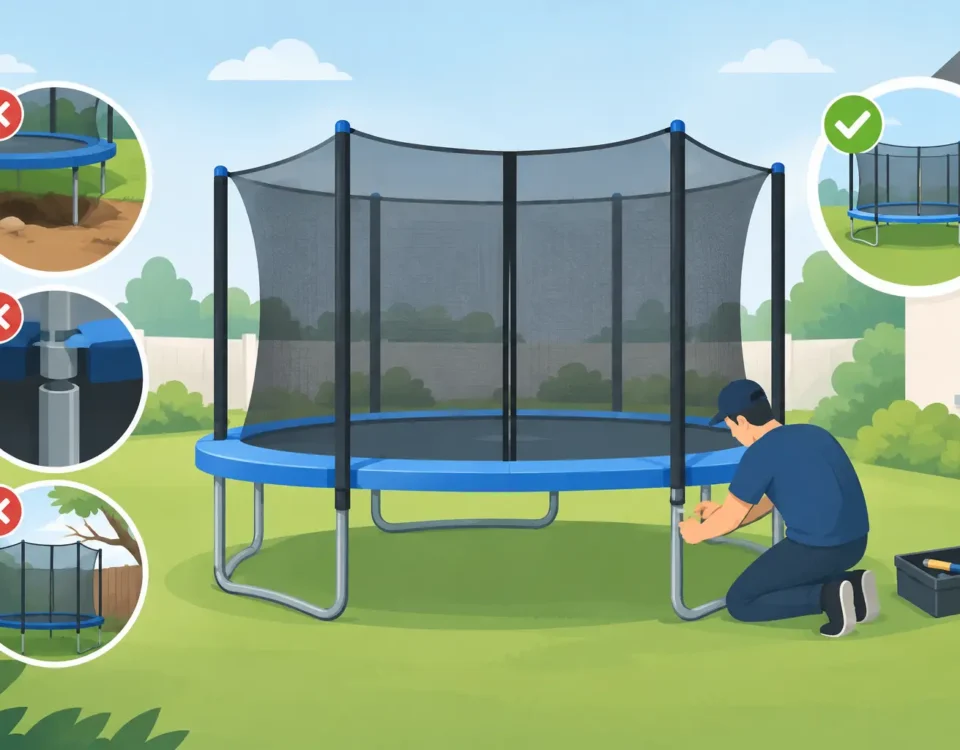
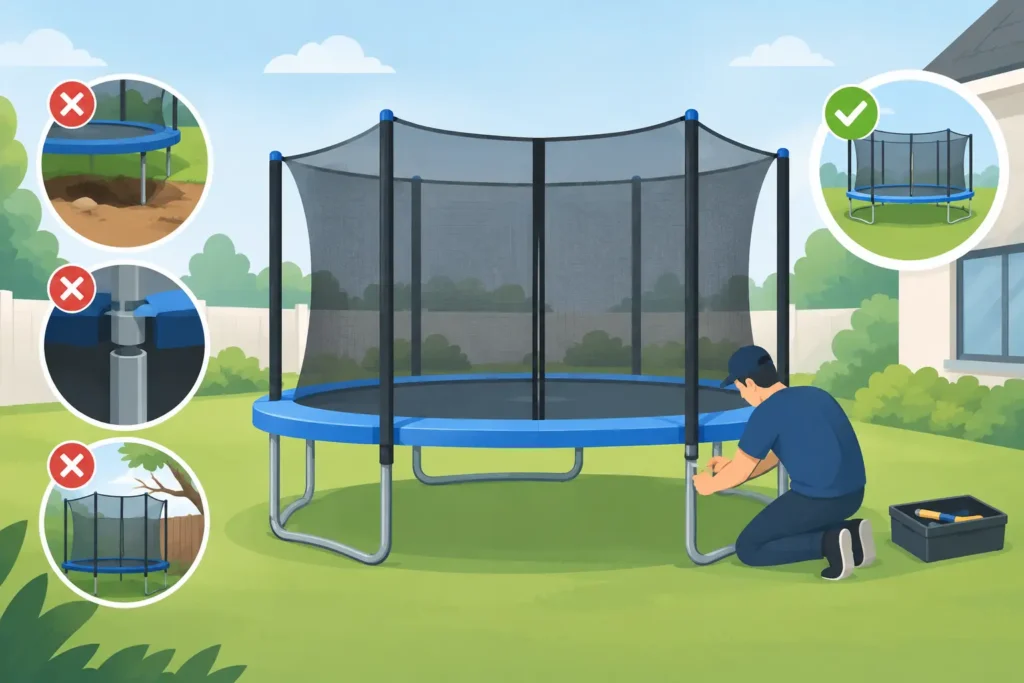
A proper in-ground installation still requires careful planning. The trampoline needs a correctly sized pit, dependable drainage, and ventilation beneath the mat. Skipping these details can lead to standing water, premature material wear, or poor bounce performance. This is not the place for guesswork, especially when children will use the space for years.
Look for a system with a strong, rust-resistant galvanized steel frame, durable jumping materials, and a full safety enclosure designed to keep jumpers within the intended play area. A weather cover is also a smart addition. It helps protect the mat and surrounding system from leaves, debris, and harsh weather when the trampoline is not in use.
For active households, size matters as well. A 10-foot round trampoline may suit a smaller yard and younger family, while 12-foot and 14-foot round options provide more room as children grow. Rectangular designs can be a strong fit for narrow yards or families who want a more defined jumping lane. More space does not mean more jumpers at once. It means a single jumper has more room to stay centered and controlled.
Create Rules Before the First Bounce
The safest trampoline families are not the ones that assume the enclosure handles everything. They are the ones with simple rules that stay consistent, even when cousins visit or the backyard is full of excited kids.
Use these non-negotiables for every jumping session:
- One jumper at a time, with no exceptions for siblings or friends.
- An attentive adult supervises children, especially younger or less experienced jumpers.
- No flips, somersaults, rough play, toys, balls, shoes, or food on the trampoline.
- Jumpers stay in the center of the mat and stop immediately when asked.
- The trampoline stays closed when not in use, and children do not climb on it without permission.
Rules work best when they are short and repeated often. Avoid turning safety into a long lecture. A quick reminder before play, followed by a consistent consequence when a rule is broken, is easier for children to understand.
Weather should be part of the routine, too. Do not allow use when the mat is wet, icy, or covered with debris. Wind can affect enclosure components and make nearby branches hazardous. Check the frame, springs or spring system, mat, pads, netting, and entry closure regularly. If anything is worn, loose, torn, or bent, pause use until it is repaired.
Planning for the Family You Will Be in a Few Years
For a family with a toddler today and older children tomorrow, it can make sense to plan the backyard around long-term use rather than short-term pressure to let the youngest child bounce. An in-ground trampoline can become a place for after-school energy, weekend play, movement breaks, and memorable time outside together. The key is allowing access as each child is ready.
That approach also makes the investment more practical. Premium materials, a well-designed enclosure, and thoughtful installation are meant to serve a family through changing seasons and changing ages. At Lets Buy Trampolines, the goal is not simply to sell a backyard feature. It is to help families choose a durable system that fits their yard, their household, and their safety expectations.
If your toddler is asking to jump right now, it is okay to say not yet. Give them other ways to move, climb, run, and play outdoors while they build the coordination needed for future trampoline fun. When the time is right, clear rules, active supervision, and a quality in-ground system can help make the backyard a place where big energy turns into lasting family memories.