

What Makes Trampolines Expensive? A Clear Look
October 6, 2026
Trampoline Ownership Cost Guide for Families
October 10, 2026
A 14-year-old, a younger sibling, and two friends may all want to jump at once. That is exactly when an in ground trampoline weight limit becomes more than a number on a product page. It affects how you choose your trampoline, how your family uses it, and how well the system performs year after year.
For a premium backyard trampoline, the safest answer is not simply to buy the model with the biggest stated capacity. It is to select a properly sized, well-built system, install it correctly, and establish clear one-jumper-at-a-time rules from the first day of use.
What an In Ground Trampoline Weight Limit Really Means
A trampoline weight limit is the maximum user weight specified by the manufacturer for that individual model. Always treat the product manual and safety label as the final authority. Limits can vary by shape, size, spring or rod design, mat construction, and safety system.
It is also helpful to separate a user weight limit from the amount of weight a trampoline can physically hold while sitting still. A jumping body creates much more force than a standing body. Landing after a high bounce puts repeated stress on the mat, springs or rods, frame, and attachment points. That is why a premium trampoline may feel exceptionally solid yet still have a clearly stated maximum user weight.
The limit is not a suggestion or a target to test. Staying within it helps the trampoline deliver the responsive, controlled bounce it was designed to provide. It also protects the materials that make a quality in-ground system a long-term backyard investment: galvanized steel, durable jumping surfaces, secure frame connections, and a properly fitted safety enclosure.
Why One Jumper Matters More Than Total Weight
Parents often ask whether two lighter children can jump together if their combined weight is below the listed limit. The safer answer is no. A single-jumper rule is about collision risk and unpredictable bounce, not only the in ground trampoline weight limit.
When two people jump together, one can be launched higher or land off-balance as the mat rebounds. Younger children are especially vulnerable because they have less control over their landing position. A larger child can also create a powerful rebound that surprises a smaller jumper, even when both users are within the recommended weight range.
One jumper at a time gives each child room to land near the center, maintain balance, and build confidence at an appropriate pace. It is a simple household rule that protects the people using the trampoline and reduces unnecessary wear on the equipment.
Choose Size for Your Family, Not Just the Weight Rating
Weight capacity is only one part of choosing the right in-ground trampoline. A family with active teens may need more jumping room than a family with two young children, even if everyone fits within the same manufacturer rating.
A 10-foot round trampoline can be a great fit for younger children and smaller backyards. Its compact footprint makes it easier to work into a landscaped space, but it offers less room for movement. A 12-foot or 14-foot round model gives growing kids more usable jumping area and is often the more comfortable choice for families expecting frequent use over many years.
Rectangular options, such as 10-foot by 6-foot or 11-foot by 8-foot formats, can be a smart solution when your yard is narrow or your landscape plan calls for clean, defined lines. Their bounce characteristics and usable shape differ from a round trampoline, so consider how your family will use the space rather than choosing solely by overall dimensions.
As you compare sizes, consider these four practical questions:
- Who will use the trampoline most often now, and who will use it in three to five years?
- Will it be primarily for young children, active teens, adult fitness, or a combination of uses?
- Is there enough clear space around the enclosure for safe access and routine maintenance?
- Can your excavation plan provide the correct pit dimensions, drainage, and airflow for the model you choose?
Choosing a larger model can offer more room for controlled movement, but it does not change the one-jumper rule or override the listed user weight limit. The goal is not to create a crowded play zone. It is to create a dedicated place where each family member can jump safely and comfortably.
When Adults Want to Use the Trampoline
An in-ground trampoline can be a fantastic way for adults to add low-impact cardio, balance work, and outdoor movement to the week. Before an adult uses it, confirm the model’s stated user limit and inspect the trampoline as you would before any active play session.
Adults should also adjust expectations. A recreational backyard trampoline is not a gymnasium training tool, and high-risk tricks are not necessary for a great workout. Controlled bouncing, gentle jogging motions, and simple strength or balance movements can make the backyard more active without pushing the trampoline beyond its intended use.
Think About Long-Term Wear
A stated weight limit assumes normal use on a correctly installed and maintained trampoline. Time, weather, repeated heavy impacts, and ignored damage can all affect performance. Premium materials matter because galvanized, rust-resistant frames and commercial-grade components are built for outdoor durability, but every trampoline still benefits from routine care.
Check the jumping mat, springs or rods, frame padding, enclosure net, and frame connections regularly. Look for tears, stretched areas, missing components, corrosion, loose hardware, or signs that the enclosure is no longer secure. Remove the trampoline from use until any damage is corrected.
A weather cover can help protect the jumping surface from debris and reduce cleanup between uses. It does not replace inspection, and it should be used according to the manufacturer’s instructions. In regions with heavy snow, severe storms, or long periods of nonuse, seasonal preparation is especially worthwhile.
Installation Affects Safe Performance
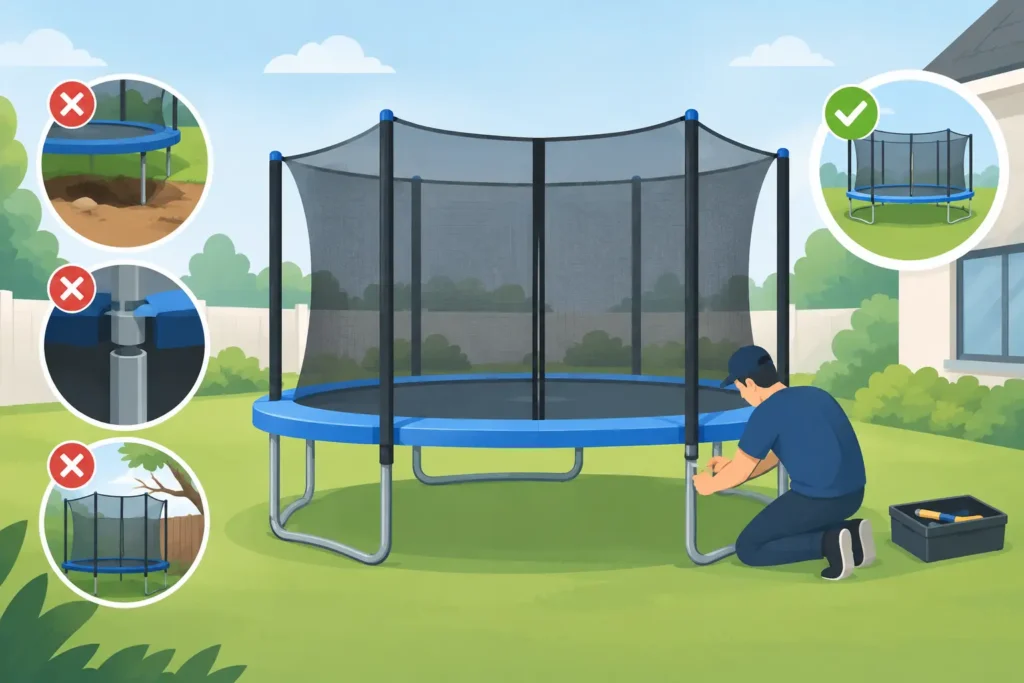
An in-ground trampoline earns its clean, low-profile look through careful installation, not by simply placing a standard trampoline in a hole. The excavation must match the model’s requirements, and the system needs appropriate drainage and ventilation beneath the jumping surface.
Poor drainage can leave water standing in the pit. Inadequate airflow can affect bounce performance and increase moisture exposure below the trampoline. Soil conditions, slope, irrigation lines, utility locations, and landscaping all deserve attention before digging begins.
This is where buying an in-ground-specific system and following its installation guidance pays off. Lets Buy Trampolines helps homeowners compare premium options that are designed for integrated backyard installation, from family-friendly round models to space-efficient rectangular systems. If your project includes retaining walls, challenging soil, or a complex landscape layout, involve a qualified local installer before work starts.
Common Questions About Trampoline Weight Limits
Can a trampoline hold more than its listed weight limit?
It may not fail immediately when overloaded, but that is not a safe way to judge capacity. Dynamic jumping forces can exceed what the trampoline was engineered to handle, and overloading can increase injury risk or damage components. Follow the manufacturer’s published limit every time.
Does a safety enclosure increase the weight limit?
No. An enclosure is designed to help keep a jumper within the intended jumping area. It does not increase the mat, frame, spring, or rod capacity. It should be used alongside supervision, one-jumper rules, and proper user-weight guidelines.
Is a bigger trampoline automatically safer for heavier users?
Not automatically. A larger trampoline may provide more room to move, which can be beneficial for older children and adults, but the specific model’s user limit still applies. Compare the manufacturer’s specifications, intended use, construction quality, and your family’s needs.
Should children be supervised even with a safety net?
Yes. A safety net is one layer of protection, not a substitute for active supervision. Adults should enforce one jumper at a time, discourage flips and rough play, and make sure children remove shoes, toys, and other hard objects before jumping.
A great trampoline becomes part of family life because it is used often and used wisely. Choose the right size, respect the in ground trampoline weight limit, and set the safety rules early. Then your backyard is ready for the kind of energetic afternoons and lasting family memories that make the investment feel worthwhile.