

In Ground Trampoline Weight Limit Explained
October 8, 2026
Your Trampoline Installation Timeline, Week by Week
October 12, 2026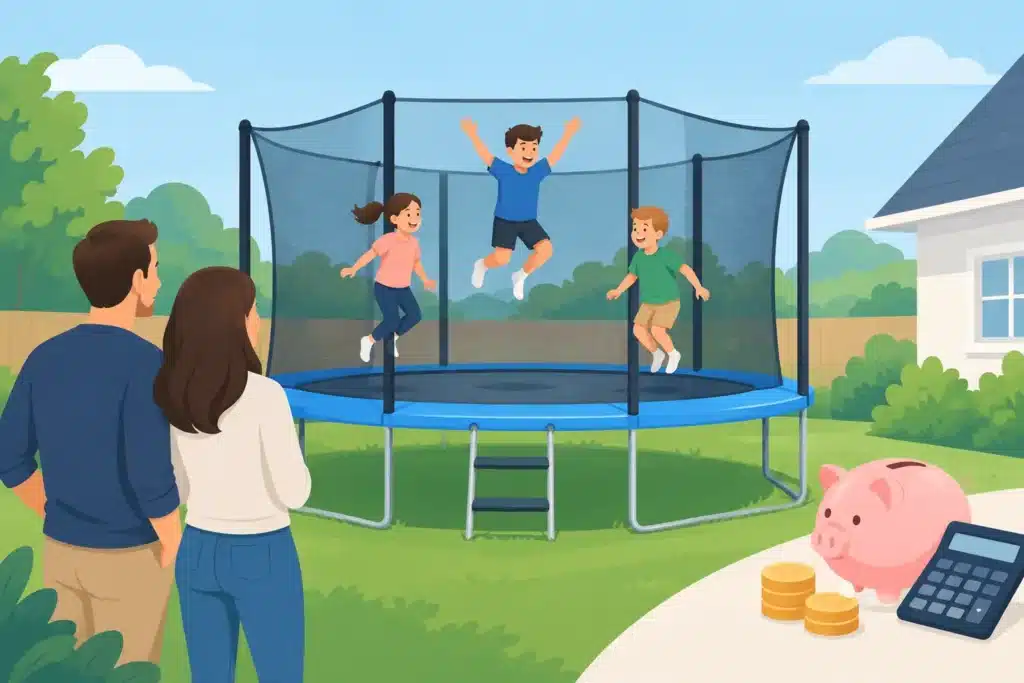
A premium in-ground trampoline is more than a backyard purchase. It becomes the spot where kids burn off energy after school, teens bring friends outside, and families create the kind of everyday memories that last. This trampoline ownership cost guide helps you plan for the full investment, from the trampoline itself to professional excavation, safety equipment, and the care that protects it for years.
The total depends on your yard, your preferred size, and whether you are building a simple play area or a more finished outdoor space. The good news is that planning the complete budget before you buy helps you choose a system that fits your family without unwelcome surprises later.
Start With the Trampoline System
The trampoline is the foundation of your budget, and quality makes a real difference. Premium in-ground systems are designed for long-term backyard use, with features such as galvanized, rust-resistant steel frames, durable jumping mats, and purpose-built in-ground construction. They cost more upfront than entry-level above-ground models, but they are made for families who expect frequent use and want a lower-profile backyard look.
Size is one of the biggest price variables. A compact rectangular trampoline, such as a 10-foot by 6-foot option, can be an excellent fit for a smaller yard or younger children. Round 10-foot and 12-foot models offer a versatile balance for many families. If you have multiple jumpers, teenagers, or room to create a true backyard activity zone, a 14-foot round or larger rectangular format gives everyone more usable space.
A larger model is not automatically the best value. It needs enough surrounding clearance, a properly sized excavation, and room for a safety enclosure. Choosing the right size the first time is usually more cost-effective than trying to upgrade after the yard is already prepared.
The Biggest Variable: In-Ground Installation
For most homeowners, installation is where the trampoline ownership cost guide becomes personal. The equipment price is relatively straightforward. Your excavation cost depends on what is below your lawn and how easily a contractor can reach the installation area.
A basic in-ground installation usually includes digging the trampoline cavity, removing or relocating soil, leveling the base, and assembling the system. Some yards require additional work for drainage, retaining support, rock removal, roots, slopes, utility considerations, or limited equipment access. A flat, open backyard with easy access for machinery will generally cost less to prepare than a fenced-in yard with a steep grade or difficult soil conditions.
Before any digging begins, confirm local utility-marking requirements and ask your installer how they will manage water. Drainage is not a small detail. Water collecting beneath a trampoline can create mud, affect the jumping experience, and add avoidable maintenance concerns. A qualified installer can assess your soil and recommend the right approach for your property.
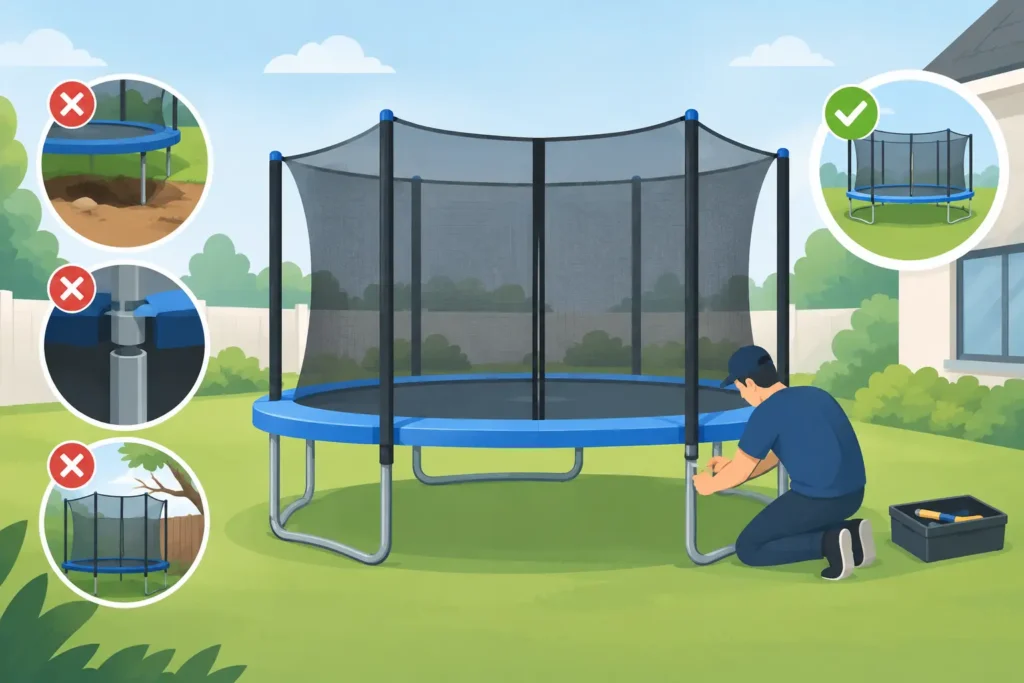
You may choose a DIY installation if you have excavation experience, the right equipment, and confidence reading the manufacturer instructions. For many families, however, professional excavation is money well spent. It reduces the chance of an uneven pit, poor drainage, damaged landscaping, or a project that stretches across several weekends.
Budget for Safety From Day One
A trampoline should never be treated as a mat and frame alone. Safety features are part of the ownership cost, not optional extras to add later if the budget allows.
A quality safety enclosure helps create a defined jumping area and keeps users from stepping or bouncing off the edge. This is especially valuable for households with younger children, frequent playdates, or active teen jumpers. Look for an enclosure designed to work with the specific trampoline model, with secure attachment points and durable materials made for outdoor exposure.
Your family should also set clear rules: one jumper at a time, adult supervision for younger children, no flips without appropriate training, and no jumping when the mat is wet or damaged. Even the best materials work best when paired with smart, consistent habits.
Other safety-related costs may include a weather cover, replacement padding when needed, and professional service if the frame, enclosure, or jumping surface needs attention. These are practical investments in safer play and in keeping your equipment looking and performing as it should.
Ongoing Costs Are Usually Manageable
A well-built in-ground trampoline is designed to be a long-term feature of your backyard, but no outdoor product is maintenance-free. Budget a small amount each year for routine inspection and occasional replacement parts.
Your regular care plan should include checking the mat, springs, pads, frame, enclosure netting, and attachment points. Look for worn stitching, sagging netting, rust spots, loose hardware, or damage caused by weather, pets, lawn equipment, or enthusiastic use. Addressing a small issue early is usually much less expensive than waiting until a component fails.
A weather cover can help keep leaves, debris, and standing water off the jumping surface when the trampoline is not in use. It is particularly helpful in heavily wooded areas and during seasons when your family is outdoors less often. The right cover also reduces cleanup time, which makes it easier to say yes when the kids ask to jump.
Replacement costs vary by component and model. Mats, safety pads, springs, enclosure nets, and hardware do not always need replacement at the same time. Premium systems make more sense over the long run when replacement parts are available and the original frame remains strong and stable.
Costs Families Often Forget to Include
The best ownership budget accounts for the project around the trampoline, not just the trampoline itself. Depending on your plans, consider these separate categories:
- Excavation, soil hauling, and site preparation
- Drainage materials or landscape adjustments
- Professional assembly and installation labor
- A safety enclosure, weather cover, and other protective accessories
- Landscaping to finish the area around the trampoline
Landscaping is the most optional category, but it can make a major difference in how integrated the finished project feels. Some families keep the surrounding area simple with grass or mulch. Others add a path, retaining edge, seating, lighting, or a full outdoor play zone. Neither approach is wrong. The right choice depends on whether the trampoline is a standalone activity feature or part of a larger backyard renovation.
How to Choose a Budget That Fits Your Family
Start by deciding how your family will use the trampoline three to five years from now, not only this summer. A young child may be happy with a smaller jumping area today, while a household with growing kids, siblings, and neighborhood friends may quickly appreciate more room. Think about the number and ages of your children, the usable area of your yard, and how much open space you want to preserve for other activities.
Then separate your budget into two parts: product and project. The product budget covers the trampoline, enclosure, and accessories. The project budget covers digging, drainage, delivery considerations, installation, and any landscaping. Keeping those figures separate gives you a clearer picture and makes contractor conversations much easier.
It also helps to prioritize the features that protect your investment. A durable galvanized frame, dependable safety enclosure, proper site preparation, and good drainage generally matter more than decorative upgrades. You can always add landscaping touches later. Fixing a poorly planned excavation is a different kind of expense.
Is a Premium In-Ground Trampoline Worth It?
For families who want regular outdoor activity and a backyard feature that looks intentional, the value is often in the years of use. An in-ground design sits low in the landscape, avoids the visual bulk of a tall above-ground frame, and can feel like a natural part of the yard. With quality materials and thoughtful installation, it can support daily play, exercise, and family time across many seasons.
The investment is less compelling if your family expects to move soon, has very limited outdoor space, or cannot safely accommodate the needed clearance and excavation. In those situations, waiting, choosing a smaller option, or improving the yard plan first may be the smarter decision.
When you are ready to plan, measure your usable space, consider how your children will grow into the trampoline, and get a realistic installation estimate for your property. Lets Buy Trampolines can help you compare premium sizes and safety-focused options so you can buy with confidence and build a backyard your family will be excited to use.