

Premium Trampoline Brands Worth Your Backyard
August 23, 2026
Is AkrobatUSA Trampoline Quality Worth It?
August 27, 2026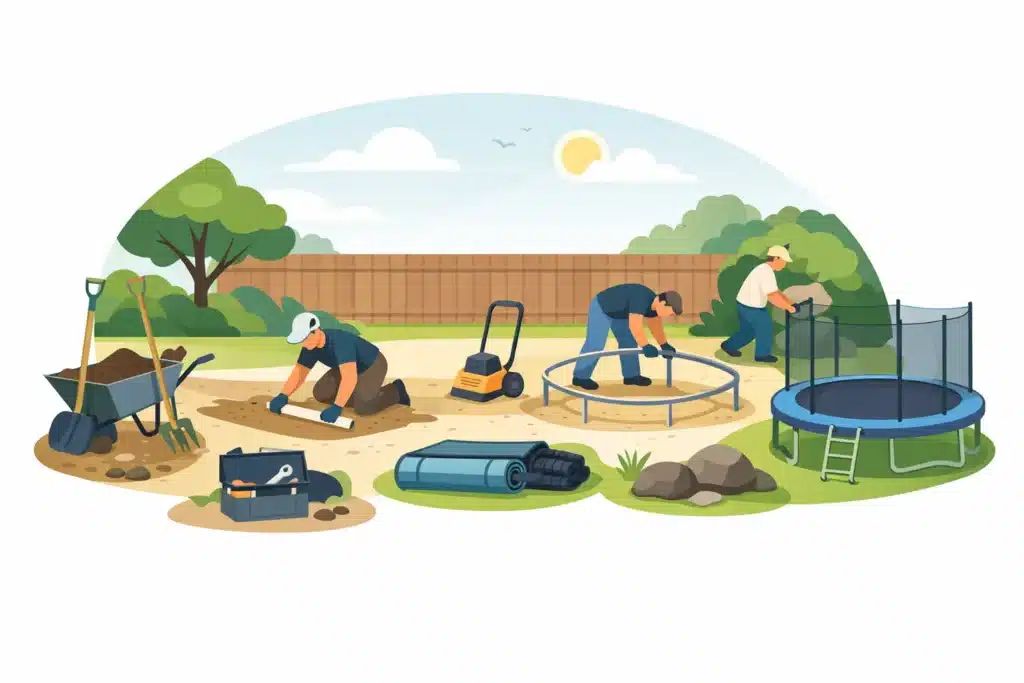
A great in-ground trampoline begins long before the first jump. When you prepare a backyard for a trampoline with care, you create more than a place for kids to burn energy after school. You create a safer, cleaner-looking outdoor feature built for years of family fun, exercise, birthday parties, and everyday play.
The best location is not always the biggest open patch of grass. Before choosing a trampoline size or scheduling excavation, look at your yard from every angle: how water moves after rain, where tree roots run, how close the patio sits, and how much clear space children will have around the jumping area. A few smart decisions now protect your investment and make installation much easier.
1. Choose a Level, Open Area
Start by identifying the flattest section of your backyard. A level site simplifies excavation and helps the trampoline sit correctly within the ground. A slight slope can sometimes be managed during site preparation, but a steep grade may require additional retaining work, drainage planning, or a different location.
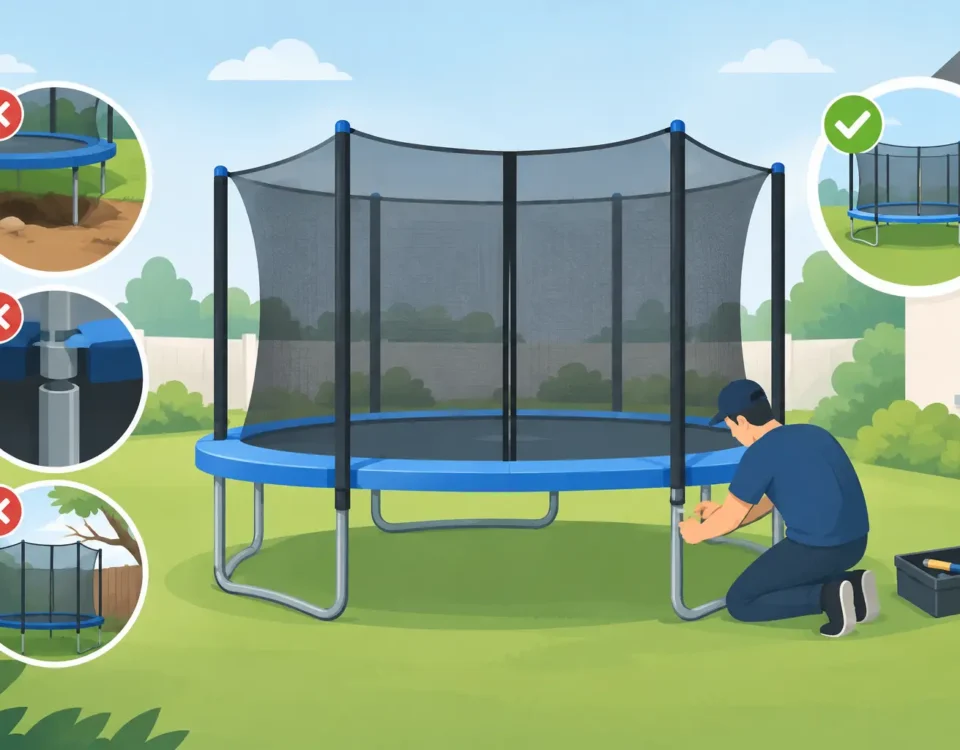
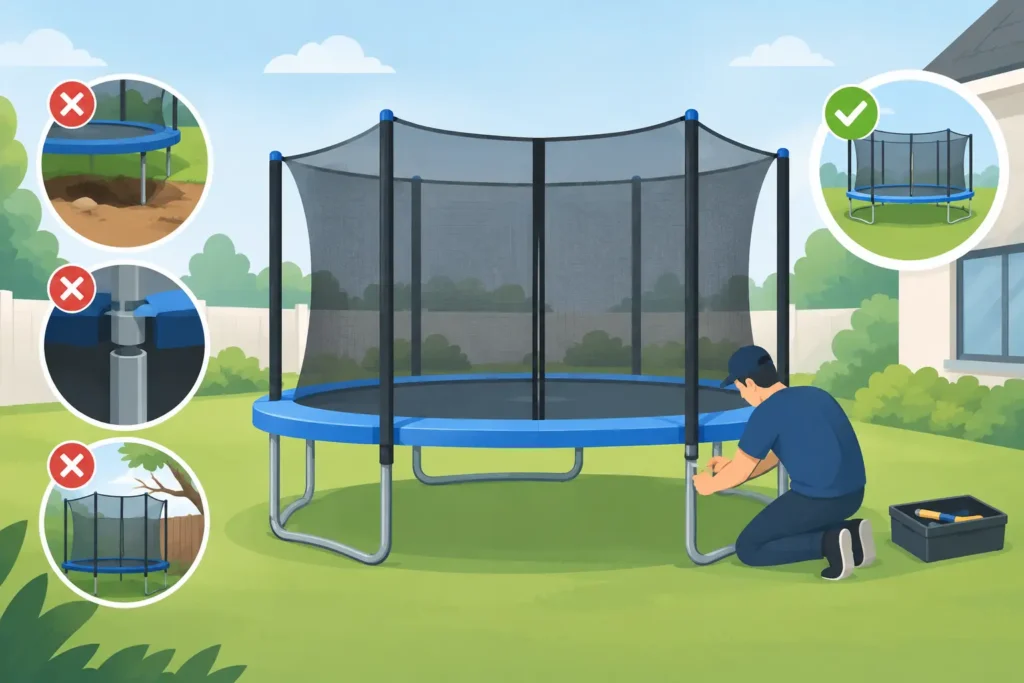
Keep the trampoline away from fences, walls, sheds, playsets, swimming pools, and hardscape edges. Even with a quality safety enclosure, jumpers need a generous buffer around the trampoline. Clear overhead space matters just as much. Avoid low branches, basketball hoops, clotheslines, roof overhangs, and utility lines.
For most families, a visible location close to the home is ideal. Parents can keep an eye on play from the kitchen, patio, or family room, and children are more likely to use a trampoline that feels like a natural part of the backyard. A tucked-away corner may seem convenient, but it can make supervision harder and create issues with drainage or tree cover.
2. Measure for the Trampoline and Its Safety Zone
Do not measure only the jumping surface. An in-ground trampoline needs room for its full frame, enclosure system, installation access, and a clear safety zone around it. Mark the proposed footprint with spray paint, stakes, or a garden hose so you can see how the final size will feel in the yard.
A 10-foot round trampoline can be an excellent choice for smaller yards and younger families. A 12-foot or 14-foot round model gives active kids and teenagers more room for regular use. Rectangular designs can be especially practical where a long, narrow yard layout makes a round trampoline difficult to place. The right shape depends on usable space, not simply the biggest model you can fit.
Walk around the marked area with the whole family in mind. Will there still be a clear route to the gate, grill, garden, or patio? Can lawn equipment move around the space? Does the placement preserve room for other outdoor activities? This is the moment to avoid the common mistake of making the trampoline the only usable feature in the backyard.
3. Check What Is Below the Surface
Before digging, contact 811 to have underground utilities marked. This free service is essential before any excavation project. Never assume that a line is absent because you cannot see it. Electrical, gas, water, sewer, irrigation, cable, and drainage lines may cross areas that appear completely clear.
Also consider buried sprinkler heads and irrigation pipes. Moving a sprinkler line before excavation is usually far simpler than discovering it after the hole has been dug. If your yard has a septic system, drainage field, well equipment, or buried propane line, choose a location that keeps the trampoline well away from those components.
Tree roots deserve attention, too. Large mature trees provide welcome summer shade, but their roots can make digging difficult and may continue to shift soil over time. Falling leaves, acorns, sap, and small branches also mean more regular cleaning. A little distance from large trees often gives you a better long-term installation and a more enjoyable jumping surface.
4. Plan Drainage Before Excavation Begins
Drainage is one of the most important parts of preparing a backyard for an in-ground trampoline. The trampoline pit must not become a collection point for rainwater. Standing water can affect the soil around the system, create muddy conditions, and add unnecessary wear to the materials below the jumping surface.
Observe your yard after a heavy rain. Notice where water pools, which direction it flows, and whether downspouts empty near the proposed trampoline area. If the site sits in a low spot or receives runoff from a roof, solve that issue before installation. Depending on the property, the plan may call for grading, a drain, gravel, a sump solution, or rerouting a downspout.
Soil type matters. Sandy soil drains differently than dense clay, and a yard with a high water table may need a more detailed drainage approach. This is not a place to guess. An experienced installer or excavator can assess the site and recommend a solution suited to your property. Proper drainage supports a cleaner installation and helps protect the long-term value of a premium trampoline.
5. Understand the Excavation Requirements
An in-ground trampoline is designed to sit low in the landscape, but it still needs a properly shaped and adequately ventilated pit beneath it. The excavation dimensions depend on the exact trampoline model, including its size, frame design, and manufacturer installation specifications.
Do not dig the hole based on a rough estimate or the diameter of the mat alone. A pit that is too shallow can interfere with safe bounce performance. One that is too narrow may not allow proper installation of the retaining structure or frame. Follow the specifications provided for your selected system, and involve a qualified excavation professional if the project is beyond your comfort level.
The removed soil has to go somewhere. Plan for it before work begins. Some homeowners use clean fill to level another part of the yard, while others arrange for removal. If you have limited access through a side gate, discuss equipment access and soil removal with your installer early. A compact backyard can still accommodate an in-ground trampoline, but logistics should be part of the plan.
6. Prepare for a Clean, Finished Landscape
An in-ground trampoline should look intentional, not like an unfinished construction project. Think about the border around the unit before installation begins. Grass can grow right up to many installations, while other homeowners prefer mulch, decorative stone, pavers, or a defined edging detail. The best choice depends on your landscape style, maintenance preferences, and how children enter and exit the trampoline area.
Avoid placing loose gravel or hard decorative materials immediately next to the jumping area where they can be tracked onto the mat or become uncomfortable underfoot. A clean grass border is often a family-friendly choice, provided it can be mowed and trimmed easily.
Consider sun exposure as well. Full sun encourages backyard play during cooler months, while partial shade can make summer afternoons more comfortable. There is a trade-off: heavy shade from trees may increase debris and moisture. If the trampoline will be in direct sun, a weather cover can help keep the surface cleaner when it is not in use and support year-round care.
7. Build Safety Into the Plan From Day One
Safety is not an accessory to add later. Make it part of the installation plan from the beginning. A premium safety enclosure helps create a defined jumping area and gives parents greater confidence during active play. Choose a system designed for your trampoline rather than trying to adapt a generic enclosure.
Set clear household rules before the trampoline is installed. One jumper at a time is the safest approach, especially for younger children or when jumpers vary significantly in size. No flips should be attempted without proper training and supervision. Shoes, toys, balls, and pets should stay off the mat, and adults should inspect the trampoline regularly for debris, loose components, and signs of wear.
Quality materials matter here. Rust-resistant galvanized steel frames, durable jumping surfaces, dependable padding, and a well-designed enclosure are not just selling points. They are practical features that help a trampoline stand up to changing weather, energetic use, and the years of backyard memories your family is planning to make.
Before You Buy, Confirm the Details
Before placing your order, confirm your usable yard dimensions, the selected trampoline shape, the path for excavation equipment, utility clearance, and drainage plan. If you are choosing between sizes, prioritize safe spacing and frequent use over simply filling every available foot of lawn. A properly sized trampoline that fits your yard beautifully will get more use than an oversized one squeezed into a tight space.
Lets Buy Trampolines can help families compare premium in-ground options and select a size that matches their backyard and household needs. Once the site is planned correctly, your trampoline becomes the kind of backyard feature that draws everyone outside – not just for one summer, but for years of confident, active family fun.
Take the time to prepare the ground well, then let the jumping begin.