

Is AkrobatUSA Trampoline Quality Worth It?
August 27, 2026
Trampoline Net Anchoring for Safer Backyard Play
August 31, 2026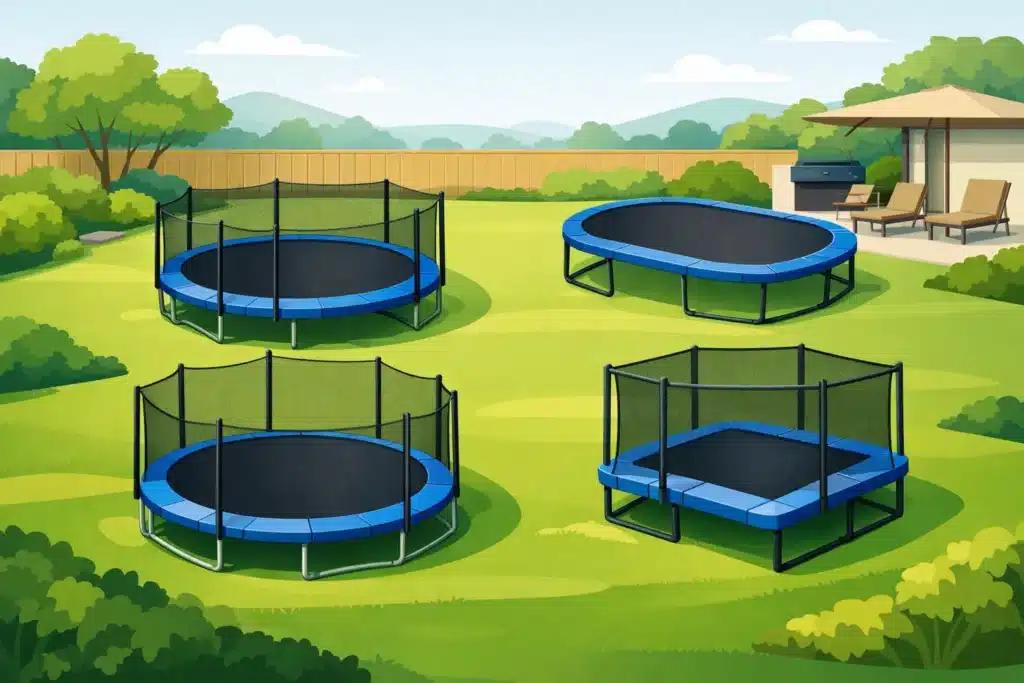
A trampoline can become the most-used feature in your backyard, but only if its shape fits the way your family actually plays. This trampoline shape comparison looks beyond appearance to help you choose between round and rectangular in-ground models based on safety, jumping style, yard space, and long-term family use.
For many homeowners, the decision comes down to a simple question: Do you want a flexible all-family play space or a more defined performance-style jumping area? Both shapes can deliver years of active outdoor fun when paired with a quality safety enclosure, a properly planned in-ground installation, and durable materials built for changing weather.
Trampoline Shape Comparison: Round vs. Rectangular
Round trampolines are the classic family choice for good reason. Their spring layout naturally guides jumpers toward the center of the mat, which can help keep casual play more contained. A round in-ground trampoline also creates a soft, balanced look in the landscape. It is an easy fit for families who want a dedicated space for kids to burn energy after school, play with friends, and build confidence with everyday bouncing.
Rectangular trampolines are designed differently. Their longer, straighter sides create a more consistent lift across the jumping surface, so a jumper can get stronger rebound even when they are not standing directly in the center. That makes rectangular models especially appealing for teens, gymnasts, athletes, and active adults who want room for controlled practice, conditioning, or higher-energy jumping.
Neither shape is automatically the right answer for every household. A round model is often the better match for younger children and relaxed family play. A rectangular system may be worth the investment when older kids are serious about movement skills or when a narrow yard calls for a space-efficient footprint.
Round trampolines: Centered, family-friendly fun
A round trampoline is usually the easiest starting point for homeowners shopping for an in-ground system. Its circular design spreads spring tension around the frame and encourages a central jumping position. While no trampoline can eliminate risk, this centered rebound is one reason round models remain popular for family backyards.
Round sizes also make planning straightforward. A 10-foot round trampoline can work well for smaller yards or younger children. A 12-foot round provides a comfortable middle ground for many families, while a 14-foot round offers a more generous jumping area for growing kids, frequent use, and households that want the trampoline to remain useful for years.
The circular footprint does require open space in every direction. If your yard has a broad lawn area, that can be an advantage. A round trampoline creates a natural activity zone that looks intentional rather than crowded, especially when installed flush with the ground and finished with a quality enclosure.
For family use, the best safety practice remains the same regardless of shape: one jumper at a time, active adult supervision for younger children, and a properly installed safety enclosure. Choosing a premium system with rust-resistant galvanized steel and weather-ready components also helps protect a significant backyard investment through season after season.
Rectangular trampolines: More bounce in a tailored footprint
Rectangular trampolines are a strong choice when performance and layout flexibility matter most. Because the springs work more independently than they do on a round trampoline, the bed can provide a more even, powerful response from end to end. That is valuable for a teen practicing jumps, an athlete working on body control, or an adult adding low-impact cardio movement to a home fitness routine.
The shape can also solve a common backyard challenge. A 10-foot by 6-foot or 11-foot by 8-foot rectangular trampoline may fit naturally along a fence line, beside a patio, or within a landscaped side yard where a large circle would take up too much usable lawn. The result is a cleaner fit without giving up a meaningful area for active play.
That extra rebound is a benefit, but it also calls for thoughtful use. Rectangular models are not only for trained athletes, and they can absolutely support family fun. Still, families with very young or first-time jumpers may prefer the more centered feel of a round trampoline. A safety-forward setup, clear household rules, and an enclosure are especially valuable when children of different ages will use the trampoline.
Choose the Shape That Fits Your Yard
Before choosing a size, look at the usable space around your planned installation area. Measure more than the jumping mat. An in-ground trampoline needs room for the frame, the enclosure, entry access, excavation, drainage planning, and a clear safety zone away from trees, retaining walls, play equipment, and hardscape edges.
A round trampoline works beautifully in an open central lawn, but its full diameter can be limiting in a long or narrow yard. Rectangular systems are often easier to orient around existing features, although you should still account for the total enclosure footprint and access path. A tight-looking fit on paper may become inconvenient once the installation is complete.
Your landscape design matters, too. In-ground installation gives either shape a low-profile appearance that feels integrated rather than temporary. Round models tend to soften a backyard with curved garden beds and open lawns. Rectangular models complement straight patio lines, modern hardscaping, and structured outdoor living spaces. The right choice is the one that leaves your family enough room to enjoy the rest of the yard.
Match the trampoline to your children’s ages
For younger children, a round 10-foot or 12-foot in-ground trampoline is often a practical place to start. It provides plenty of space for supervised, one-at-a-time play without overwhelming a smaller backyard. A 14-foot round gives families more room to grow, particularly if older siblings or neighborhood friends will use it often.
For tweens and teens, consider how they will use the trampoline two or three years from now, not just this summer. If they enjoy gymnastics, dance conditioning, cheer, martial arts, or athletic training, a rectangular format can support more deliberate movement. An 11-foot by 8-foot model provides a useful balance of performance space and manageable backyard dimensions.
If your household includes children of widely different ages, prioritize the youngest regular user when setting rules and selecting safety features. A larger or higher-performing trampoline does not replace supervision. It simply gives your family a platform that can serve more active users as they grow.
Installation Changes the Decision
In-ground trampolines need more planning than above-ground models because the excavation must be sized and prepared for the selected frame. The shape directly affects that work. A round system requires a circular excavation area, while a rectangular model needs a longer, more defined pit with careful attention to corners, wall support, and drainage.
Drainage deserves special attention in any in-ground project. Water should not collect beneath the jumping bed, where it can affect the installation area and create ongoing maintenance concerns. Your site conditions, soil type, slope, and local rainfall all influence the best preparation approach. Planning the excavation correctly from the beginning helps protect both performance and durability.
This is also where premium materials matter. A well-built trampoline with a galvanized, rust-resistant frame, strong spring system, durable mat, and purpose-built enclosure is better suited for long-term outdoor use than a short-lived seasonal purchase. Lets Buy Trampolines helps homeowners compare these details before they commit to an installation plan.
Make Safety Part of the Shape Decision
Shape influences bounce and layout, but a safe trampoline experience depends on the complete system. Use a high-quality safety enclosure designed for the model, inspect the mat and padding regularly, keep the area clear, and establish simple rules before the first jump. Weather covers can also help protect your trampoline during periods of nonuse and keep the installation looking better over time.
Avoid choosing by price or mat size alone. The best value is a shape and size that fits your yard, supports your family’s habits, and is built to handle regular use. A trampoline that feels right on day one should still make sense when your children are taller, more confident, and inviting friends over.
Picture the busiest afternoon in your backyard, then choose the trampoline shape that gives your family room to play safely, move freely, and make those everyday outdoor moments last.